Teleporting Enemies in Horror Game Design: Why They Unnerve Us
Teleporting enemies in horror game design: how breaking the rules of movement creates dread, and what HAUNTED's teleporting witch does with it.
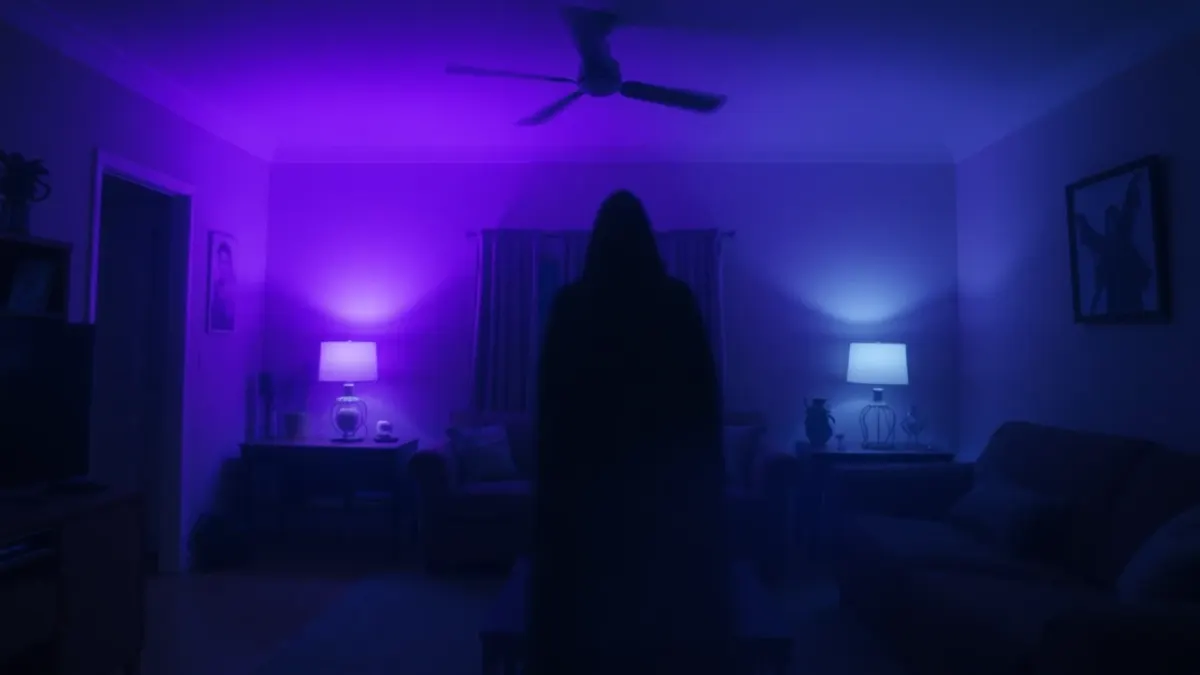
Most monsters obey a simple rule: to get to you, they have to cross the space between. Teleporting enemies do not. That is exactly why teleporting enemies in horror game design are so effective. They break the one rule we rely on to feel safe.
The comfort of walking monsters
A walking or running enemy gives you information. You can estimate its speed, plan a route, hide behind something. Even a terrifying chaser is predictable in a way.
What teleportation changes
Teleportation removes that information. A threat that can appear anywhere is a threat you cannot outrun, outflank or plan around. The only response left is attention.
It also turns space itself into the enemy. Every corner could hold it.
Designing a fair teleporter
Teleporting enemies can feel unfair if there is no warning. Designers give them tells:
- Sound cues. A whisper or distortion before appearing.
- Visual hints. A flicker, a shimmer, a shift in light.
- Patterns. A rhythm the player learns.
- Counterplay. A way to respond once it appears.
Fairness keeps fear from turning into frustration.
The witch archetype
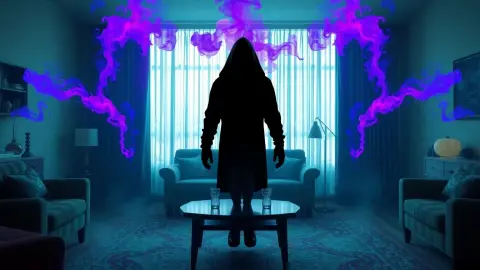
Witches in folklore and fiction are often tied to sudden appearances and spells, so a teleporting witch fits naturally. HAUNTED: Are You Alone? describes its Teleporting Witch with the line: now she is in front of you, now she is not, now she is behind you.
That sentence explains the entire design: your orientation becomes the weak point. Turn left and she is right; look back and she is gone.
Why mixed reality helps
In a flat game, a teleporting enemy changes position on a screen. In a headset, it changes position around your real room. You have to physically turn your head and body. The spatial audio helps: the game lists every scrape and whisper as coming from a real direction in your room.
How to handle one
- Listen first. Sound often precedes appearance.
- Keep turning, not freezing. Head movement keeps you aware.
- Stay inside your boundary. Spinning around can disorient you, so make sure your play area is clear.
- Take breaks. Constant vigilance is tiring.
Contrast with other threats
HAUNTED mixes encounters: arms that smash through walls and can be sliced apart, skulls that crawl, rising blood and drills that follow your eyes. A teleporting witch tests your awareness rather than your aim, which keeps the game from relying on one skill.
Content note
The warnings are blunt: sudden loud sounds, flashing and darkened light, gore and intense jump scares. Children, pregnant people and anyone with epilepsy, heart conditions or anxiety disorders should stay away. Play with a cleared area.
A designer's checklist for sudden appearances
If you were building a teleporting enemy, you would want to answer a few questions. How much warning does the player get? How long does the enemy stay visible? What can the player do in response? How often does it teleport before the pattern becomes boring? And how does it feel when it ends?
Good answers produce a threat that feels powerful but fair. Poor answers produce frustration. As a player, you can use the same checklist to assess why a particular encounter works or fails for you. If you notice yourself getting annoyed instead of scared, it may be because one of those answers is missing, and recognising that can be oddly satisfying.
One more practical point for headset players: spinning around quickly in a living room is a good way to bump into things. If an enemy keeps appearing behind you, turn with your head and shoulders first and let your feet follow, and keep the floor around you free of clutter. Controlled movement also helps against dizziness, so slow down when you feel overwhelmed and take the headset off if the room starts to feel unsteady.
FAQ
Why are teleporting enemies scary?
They remove the predictable movement we use to judge safety.
Is there a teleporting enemy in HAUNTED?
Yes, the Teleporting Witch.
Can I outrun her?
The point of the design is that distance does not protect you. The game keeps the details for you to find.
Where can I play?
On Meta Quest through the store page.