Active Recall vs Passive Review for Language Vocabulary
Active recall vs passive review: why testing yourself beats re-reading when you learn vocabulary, with practical drills you can start today.
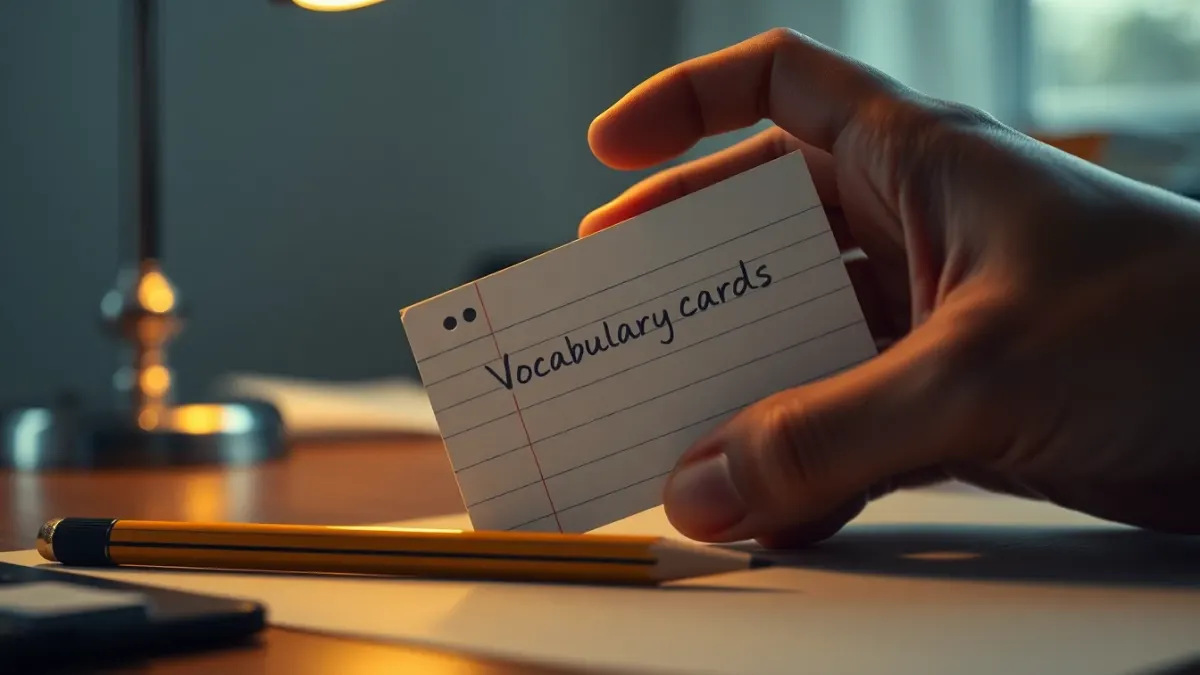
Active recall means retrieving information from memory without looking at it, while passive review means re-reading or re-listening to something you already have in front of you. For language learning, active recall is the stronger habit: struggling a little to produce a word strengthens it far more than seeing it again.
Why re-reading feels better than it works
Highlighting a vocabulary list and reading it again produces a feeling of familiarity. The words look known. But recognising a word on the page is not the same as producing it in a conversation. This gap is sometimes called the illusion of competence, and it explains why people feel prepared and then go blank when someone speaks to them.
Active recall removes the illusion. If you cannot retrieve it, you find out right away, and the effort of trying already begins to strengthen the memory.
Examples of active recall
- Cover and produce. Hide the translation and say the word aloud.
- Translate from your language into the target language, which is harder than the reverse and more useful for speaking.
- Fill the gap. Complete a sentence with the missing word.
- Free recall. Write down everything you remember from yesterday's lesson, then check.
- Retell. After reading a story, summarise it in your own words.
- Games. Quick formats that ask you for answers against the clock.
Examples of passive review
- Re-reading a vocabulary list.
- Listening to a lesson again without responding.
- Highlighting notes.
- Watching a video with full subtitles and no attempt to predict.
Passive review is not worthless. It is a fine way to meet material the first time or to relax with the language. It just should not be your only way to review.
Mixing both sensibly
- First contact: passive and gentle. Read the story or watch the clip to understand.
- Right afterwards: a quick active check. Without looking, recall the three or four new words.
- Later: spaced active review. Test again the next day, then a few days later.
Active recall inside an app
Good learning apps force you to answer rather than just see. In LingFit, lessons and games ask you to produce or choose answers, and speech recognition lets you say phrases out loud and get feedback. The competitive games, Flash, Ping-Pong and Tug-of-War, add a little time pressure that makes retrieval faster.
Make recall slightly hard
If it feels effortless, the benefit is small. If it feels impossible, you are guessing. Aim for the sweet spot: a short pause, a slight strain, then success. When a word is too easy, space it further out; when you miss it, bring it back sooner.
Don't forget production
Recall includes output. Say sentences in the shower, narrate your day, write a three-line diary entry. Imperfect output beats perfect silence, and each attempt shows you what to review.
Mistakes to avoid
- Peeking at the answer too quickly. Count to five first.
- Only testing recognition, e.g. multiple choice between obvious options.
- Skipping review days and relying on cramming.
- Testing only the words you already like or know.
A five-minute drill
Pick five words from yesterday. Write them on the left of a page in your own language. Cover the right side, produce the target words aloud, then check. For each miss, say a short sentence using the correct word three times. Close the page and repeat the misses after ten minutes. In five minutes you have done recall, correction and spacing, which is more than an hour of re-reading usually delivers.
FAQ
What is active recall?
It is the practice of retrieving information from memory without looking at it, for example by testing yourself on a word before checking the answer.
Is active recall better than re-reading?
For long-term retention, generally yes. Re-reading creates familiarity; retrieval builds the ability to produce the information when you need it.
How do I use active recall for vocabulary?
Cover the translation, say or write the word, then check. Do it from your language into the target language, and repeat after spaced intervals.
Can apps train active recall?
Yes, when they ask you to answer, produce or speak, rather than simply showing you content.