Guided vs Unguided Meditation: Which Should You Choose?
Guided vs unguided meditation compared: how each feels, who each suits, and a simple way to move from one to the other as your practice grows.
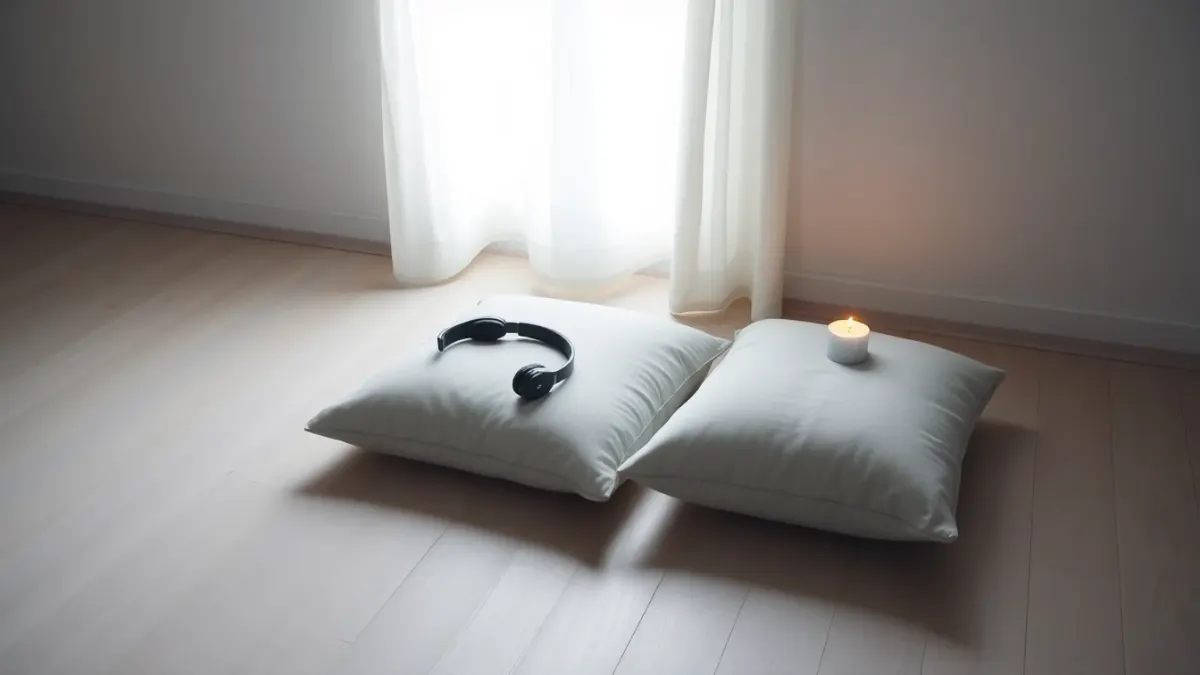
Guided meditation means a voice talks you through the session. Unguided meditation means you sit in silence, or with a timer, and lead yourself. That is the whole difference, but it shapes the experience a lot. If you are choosing between guided vs unguided meditation, the honest answer is that most people benefit from starting guided and experimenting with silence later.
What guided meditation feels like
A narrator tells you where to put your attention: the breath, the feet on the floor, the sounds in the room. You do not have to remember what comes next. When your mind wanders, which it will, the next sentence nudges you back.
Strengths
- Low barrier. You press play and follow along.
- Structure keeps you from wondering whether you are "doing it right".
- Variety is easy because the content changes.
Trade-offs
- A voice you dislike can be distracting.
- You may start to rely on the narration.
- Pace is set by someone else.
What unguided meditation feels like
You decide on an anchor, usually the breath, and sit for a set time. Nothing tells you when to return to it. Noticing that you drifted and coming back is the entire practice, and nobody prompts you.
Strengths
- Complete freedom over pace and length.
- Builds independence, because the skill lives in you rather than in a recording.
- Works anywhere, with no phone required beyond a timer.
Trade-offs
- Silence can feel long, especially in the first weeks.
- It is easy to spend the whole time planning your day and not notice.
- No built-in variety, so some people get bored.
A fair comparison
| Question | Guided | Unguided |
|---|---|---|
| Easier for first sessions | Usually | Often harder |
| Needs a device | Yes | Only a timer |
| Builds self-direction | Slowly | Quickly |
| Handles a stressful day | Voice can steady you | Can feel noisy inside |
Neither column wins outright. The table is a tendency, not a rule.
When guided is the smarter choice
Choose guided when you are new, tired, anxious about getting it wrong or short on time. A spoken prompt every few breaths is a kind of scaffolding. It is also useful on days when your mind is particularly loud, because the voice gives it something to follow.
Guided sessions that speak to your actual situation can be even easier to settle into. MindIsland generates a fresh meditation each morning, and you can tell it what is on your mind first, so the narration is about your day rather than a generic scene.
When unguided is the smarter choice
Choose unguided when you already have some experience, want a very short reset without opening an app, or enjoy the quiet. Many people use silent sits at the end of a long guided session, extending the quiet bit by bit.
A simple way to blend both
- Weeks one to three: guided only, three to five minutes.
- Next stretch: keep your guided session, then add one silent minute afterwards.
- Later: alternate days, guided on busy mornings, unguided when you feel steady.
There is no graduation exam. Plenty of long-term meditators still use guided sessions because they enjoy them.
Common mistakes in both styles
- Judging a session by how quiet your mind was. A wandering mind is normal. Returning is the exercise.
- Switching style every day. Give a style a week or two before deciding.
- Forcing long sessions. Short and regular beats long and rare.
A quick self-check
Not sure where you stand today? Ask three questions. Do I know what I would do with a silent five minutes? Do I get anxious about doing it wrong? Do I have a lot on my mind right now? If you answered no, yes and yes, a guided session is probably the kinder choice this week. If you answered yes, no and no, try a silent sit with a timer and see how it feels. The answers will change over time, and that is the point: your choice is not an identity, just a setting you can adjust whenever your circumstances shift. Many people keep a little of both in the same week.
FAQ
Is guided meditation better for beginners?
Often yes. The voice supplies structure, which reduces the uncertainty many beginners feel. That said, some beginners like silence from day one, and that is fine.
Can I do unguided meditation with a timer app?
Yes. A simple timer with a soft end sound is all you need. You do not need any special equipment.
Does guided meditation work as well as unguided?
They train related skills in different ways. Guided supports you externally, unguided asks you to supply the direction yourself. Which "works better" depends on what you need and enjoy.
Can I switch between guided and unguided?
Absolutely. Many people use guided sessions on most days and add silence when they want a change.