HAUNTED Drills Guide: Why You Must Look Away Fast
Deadly drills in HAUNTED: Are You Alone follow your eyes and strike if you are too slow to look away. Learn the head-turn habit that keeps you alive.
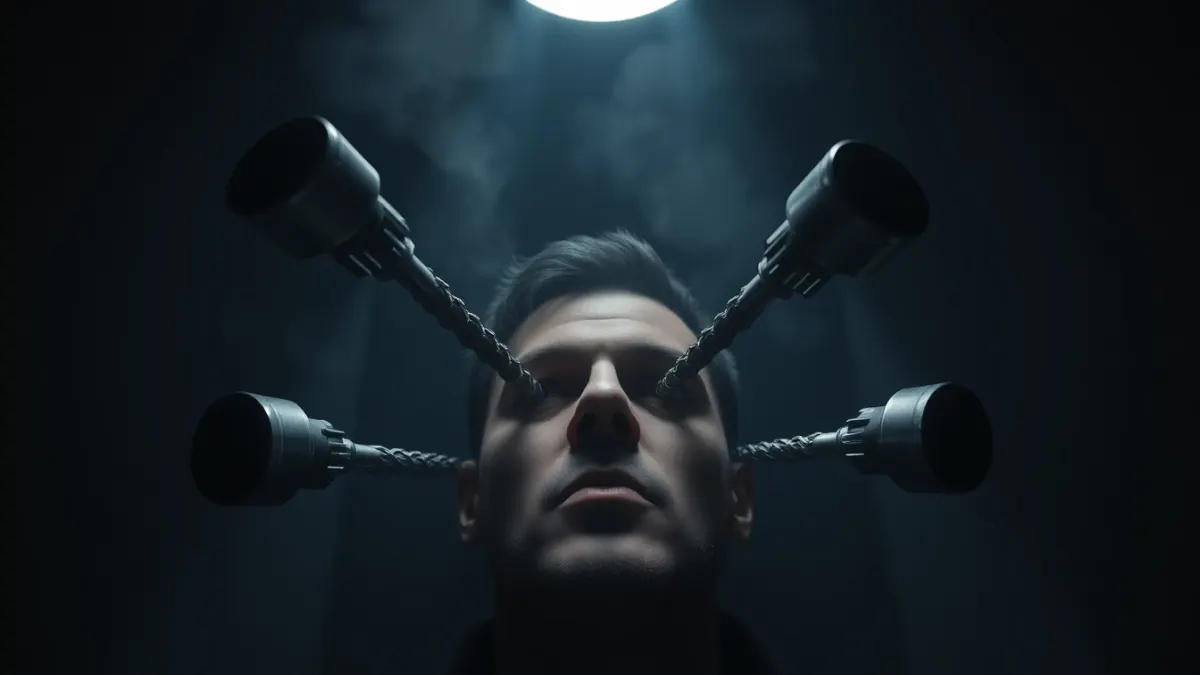
Most horror games punish you for looking away. HAUNTED has a chapter that does the opposite. The page says the deadly drills follow your eyes and strike if you are too slow to look away. This HAUNTED drills guide explains how to rewire a lifetime of horror reflexes.
The one-sentence rule
Drills follow your eyes. If you stare, they strike. That is the whole logic, and it flips the usual urge to keep watching a threat.
What "eyes" means here
According to the privacy policy, the game derives looking direction from your head orientation. It does not use eye tracking or face tracking. So when you read "eyes", think "where your head points". Turning your head is what matters, not darting your pupils.
Train the look-away
The skill here is physical: a quick, decisive head turn. Practise turning your head smoothly away from a threat rather than just glancing sideways. Keep movements deliberate so you do not lose your balance, and remember your real walls are all around you.
Don't stop looking altogether
Looking away works, but you still need to know where the drills are. Develop a habit of turning away, then using sound to track them. Spatial audio puts every scrape and whisper in a real direction, so your ears can keep watching while your eyes dodge.
Stay balanced
Sudden turns can throw you off. Plant your feet shoulder-width apart and turn from the shoulders, not from a tilt. If you feel dizzy, stop and take the headset off. Keep the play area clear and stay inside your boundary.
Beat the freeze reflex
The scariest thing in this chapter is the temptation to freeze and stare. Fear makes the eyes lock on. Coach yourself with a simple cue: "if it follows, I leave." Say it out loud before the chapter starts.
Fighting vs avoiding
Elsewhere you freeze, shoot and slice. This chapter asks for the opposite temperament. Put your weapons down mentally and work on awareness and nerve. Your upgrades matter less here than your discipline.
A practice routine
- Pick a spot in your play area and face it.
- Turn your head quickly to a point 90 degrees away.
- Return smoothly to centre.
- Repeat until it feels natural.
Do this without the headset, in the real room, to build the habit with no pressure.
See the HAUNTED product page for the full list of nightmares.
Common mistakes
- Staring to "check": a quick confirm glance can be enough for the drills to strike. Trust your ears instead.
- Turning too slowly: the page is blunt about it: too slow, and they strike. Commit to the turn.
- Turning into the unknown: before you spin, know where your real walls and furniture are. Space Setup should have placed them, but your body needs to remember.
Why this chapter is a clever design
Horror usually relies on the player wanting to see. Reversing that desire turns your own curiosity into the threat. Understanding that design makes it easier to cope with: when the chapter makes you uneasy, you are experiencing exactly what it was built to do. That awareness is a small comfort, and it is allowed to be one.
If it is too much
Flashing and darkened light plus sudden sounds are part of HAUNTED. If you start to feel unwell, take the headset off. Nothing is lost, and the game saves chapter progress locally on your headset.
One last thought
If a look-away chapter makes your neck sore, shake out your shoulders between attempts and keep your turns smooth rather than jerky. Comfort supports speed.
FAQ
Do the HAUNTED drills use eye tracking?
No. The game uses head orientation for looking direction, not eye tracking.
What happens if I'm too slow?
The drills strike. The page says they strike if you are too slow to look away.
Can I kill the drills?
The page only describes avoiding them. Focus on awareness.
Is this chapter good for beginners?
It needs nerve rather than aim. It asks for composure and quick head turns rather than aim, which suits some players more than others.