Slow Burn vs Jump Scare Horror Games: Pick Your Kind of Fear
Slow burn vs jump scare horror games compared: what each feels like, who enjoys which, and why the most effective experiences tend to mix both styles.
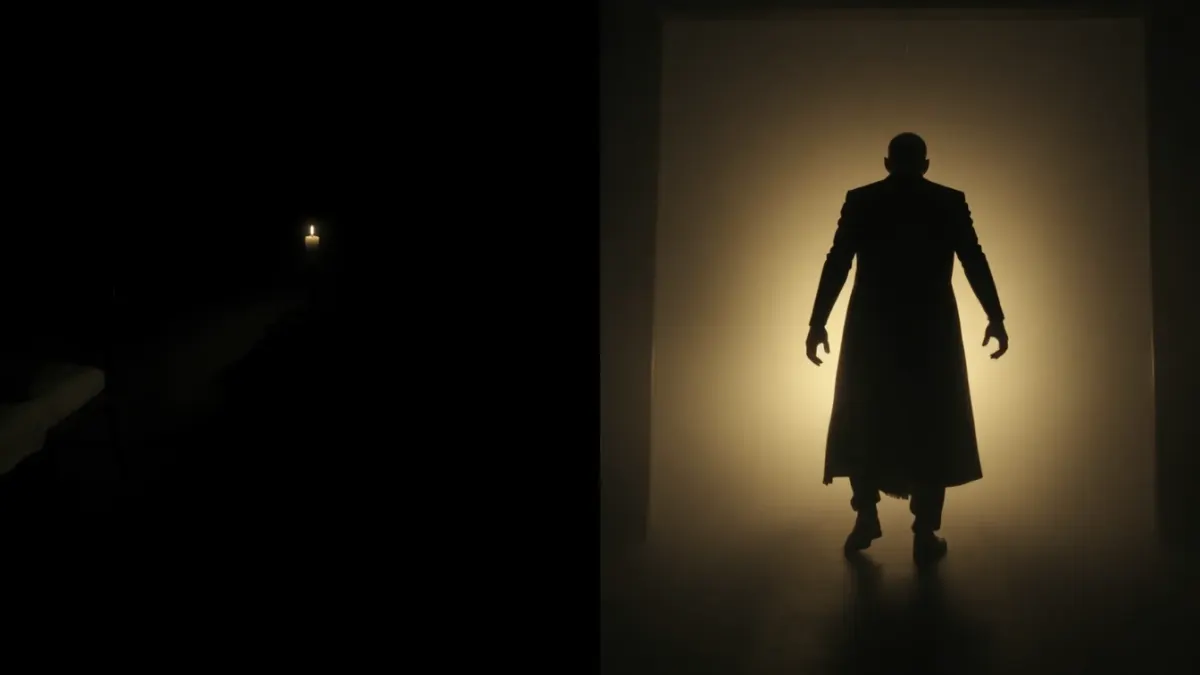
Horror fans tend to split into camps: those who love creeping dread, and those who love the sudden shock. The truth is that slow burn vs jump scare horror is less a rivalry than a menu. Knowing which you prefer helps you choose games you will actually enjoy.
What slow burn means
Slow burn horror builds atmosphere. Little happens, but everything feels wrong. The payoff may come late, or never arrive in a loud way. It relies on:
- Implication over display.
- Environment and sound.
- Uncertainty about what is real.
- Patience from the player.
What jump scares mean
Jump scares are sudden, loud events designed to trigger a startle reflex. They are short and sharp, and they rely on contrast: quiet then loud.
Strengths and weaknesses
Slow burn
- Lingers after the game ends.
- Can feel more sophisticated.
- Risks boring players who want action.
Jump scares
- Reliable and immediate.
- Great to share with friends.
- Can feel cheap when overused or unearned.
They need each other
The best jump scare depends on a slow build, and the best slow burn benefits from occasional release. A horror game that is only silence is fatiguing; one that is only noise is numbing.
Where HAUNTED sits
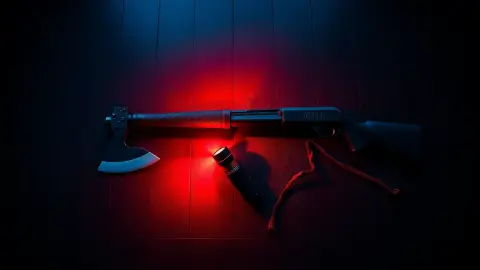
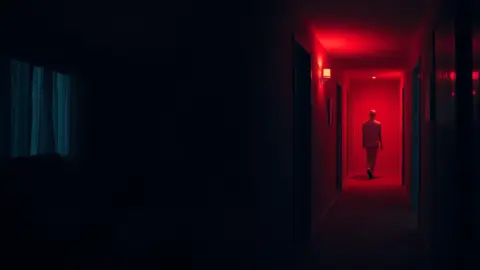
HAUNTED: Are You Alone? is described as having intense jump scares and spatial audio, and it asks you to fight with an axe, sword, flashlight and firearms. That places it closer to action horror than to quiet dread. It still uses patient techniques: the pitch begins with everything looking normal until the wall behind you starts to crack, and some encounters rely on waiting, like a nun waiting in a hallway or a witch who is in front of you, then not, then behind you.
How mixed reality shifts the balance
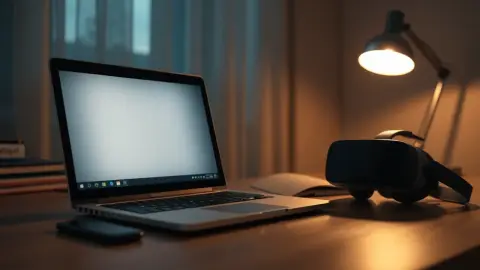
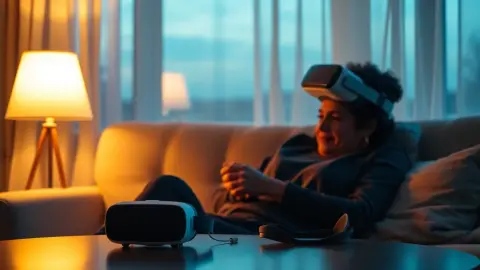
Slow burn depends on your imagination filling the gaps. In mixed reality, your real room is already filling those gaps with familiarity, so you do not need much to feel uneasy. Jump scares gain extra punch because the startle happens in a place you know.
Matching games to moods
- Tired, want a story: slow burn.
- Friends over, want shouts and laughs: jump scares.
- Want exercise plus fear: action horror with movement.
- Want to avoid sleepless nights: choose something milder, or play earlier in the day.
A note on tolerance
Some people handle slow dread easily but cannot stand sudden sound; others are the reverse. Knowing which is your trigger helps you avoid unpleasant evenings. HAUNTED includes sudden loud sounds, flashing and darkened light, gore and intense jump scares, and it is not suitable for children, people who are pregnant, or anyone with epilepsy, heart conditions or anxiety disorders.
Mixing the two in a single evening
If you are playing with friends who disagree about which style is best, sequence the evening. Start with something atmospheric to build the mood, move to a game with sharper scares as the tension peaks, and finish with something lighter so no one goes to bed wired. Treat it like a meal rather than a single dish.
For a headset session, the same applies in miniature. Begin with a calm warm-up (setting up the room, adjusting volume), play a focused session, and finish with a cool-down. A well-paced evening keeps horror fun, and it makes the next session something people look forward to instead of dread.
A final thought on tolerance: the same person can enjoy slow dread on Monday and need something lighter on Friday. Your reaction depends on sleep, stress and mood as much as on the game. If a title that normally thrills you suddenly feels like too much, that is useful information, not a failure. Put it away for another night.
When recommending games to friends, name the style you mean. Saying 'it is scary' tells them nothing, while 'it is loud and sudden' or 'it is quiet and creepy' lets them decide, and avoids the awkward moment of someone being surprised by something they never wanted.
FAQ
Are jump scares bad design?
Not inherently. Unearned jump scares feel cheap, but well-paced ones are effective.
Is slow burn horror less scary?
It is scary in a different way, with dread that lasts longer.
Which style does HAUNTED use?
It leans into action horror with intense jump scares, while using build-up moments as well.
Where can I learn more?
If you want to see which side the game leans toward, the official store page has the description and warnings.