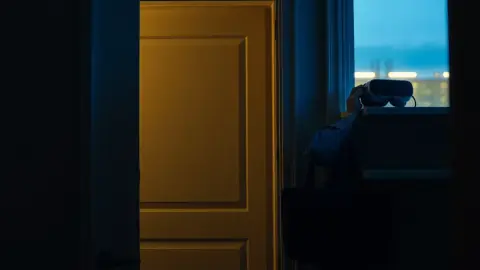
Spatial Audio in Horror Games: Why Sound From Behind You Scares
Spatial audio in horror games explained: how directional sound builds fear, why it matters in headsets and how to get the best audio at home.
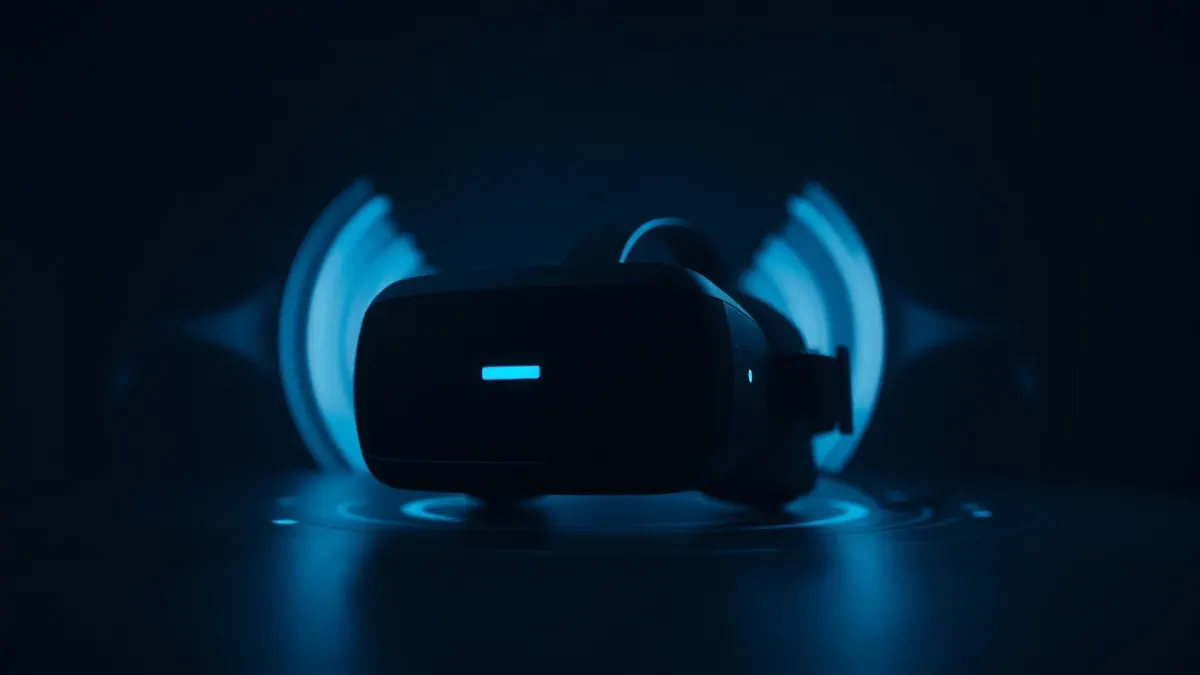
Close your eyes in a quiet house and listen. You can usually tell where a noise came from. That ability is why spatial audio in horror games is so effective: a sound that has a position is a sound that has a source, and a source implies a something.
What spatial audio is
Spatial (or 3D) audio makes sound appear to come from specific directions and distances, using differences in timing, volume and tone between your ears. Headphones or headset speakers reproduce these cues, and the game updates them as you move your head.
Why it matters for fear
- Directional threat. A whisper from your left tells you where to look, or where not to.
- Distance tracking. A scrape that slowly grows louder says something is approaching.
- Off-screen danger. Sounds can come from places you cannot see, such as behind you.
The human mind interprets unknown sounds in dark settings as potential danger. Horror uses that instinct directly.
Spatial audio plus a headset
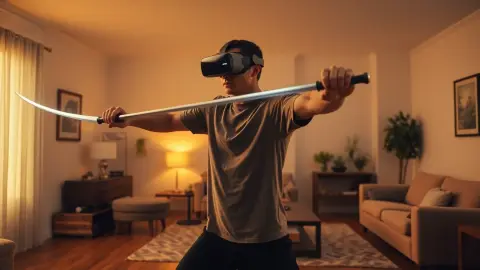
In a headset, your head moves the "camera" and the sound world at the same time. Turn toward a noise and it moves relative to you, exactly as in real life. That consistency is what makes it believable.
HAUNTED: Are You Alone? lists spatial audio and jump scares as features: every scrape and whisper comes from a real direction in your room.
Mixed reality adds a twist
In mixed reality you can see your real room, so a sound that seems to come from your actual doorway is anchored to a real place. Passing a sound through a space that you can see makes it harder to dismiss.
Silence and contrast
Spatial audio is not about constant noise. The most effective moments often involve sudden quiet, followed by one precise sound. Loud effects then land harder against a quiet backdrop.
Getting the best audio at home
- Check the volume before starting; sudden loud sounds are part of the game.
- Make sure nothing blocks the headset's speakers, or use headphones if you prefer.
- Reduce real-world noise: a running dishwasher masks small sounds.
- If anything in the game startles you too much, take the headset off. Nothing is lost.
A note on safety and hearing
HAUNTED contains sudden loud sounds, so avoid starting with the volume at maximum. The game is not suitable for children, people who are pregnant, or anyone with epilepsy, heart conditions or anxiety disorders.
Does the game record sound?
According to the game's privacy policy, it does not use your microphone and does not request microphone permission.
Quick glossary
- Spatial audio: sound positioned in 3D space.
- Ambience: low background noise that sets mood.
- Stinger: a short, sudden sound for a scare.
- Diegetic sound: a sound that exists in the game world.
A listening test you can do at home
Close your eyes, have a friend walk around the room and tap a table at different points. Try to point at each tap. Most people are surprisingly accurate on the left-right axis and less accurate front-to-back or above-below. Game audio engineers know this and compensate with filtering, volume and timing cues, which is why a good spatial mix feels convincing even though it comes from two small speakers or headphones.
For horror, this has a practical consequence: the most startling sounds are often the ones that are hardest to place. A whisper that seems to come from near your ear, but not quite, makes your head turn in the wrong direction first. That brief confusion is exactly where fear lives.
If you have sensitive hearing or live in a building with thin walls, consider the neighbours as well. A game built on sudden loud sounds is best played at a volume that does not startle the people next door, or the people next door may startle you in return. A moderate volume is usually enough for the directional cues to do their job.
FAQ
Do I need headphones for spatial audio?
Many headsets have built-in speakers that produce directional cues. Headphones can improve isolation, but follow the headset's own guidance.
Why do sounds behind me feel scarier?
You cannot see behind you, so the brain treats sounds there as unresolved threats.
Does HAUNTED use spatial audio?
Yes, spatial audio and jump scares are listed features. See the product page.
Can I turn the volume down?
Yes, use your headset's volume controls. Start lower than normal and raise it if you want.