Body Positioning in Laser Thief: Stance, Balance and Footwork
Good body positioning in Laser Thief makes every duck, dodge and crawl easier. Learn the stance, foot placement and weight habits that protect your shield.

Your body is the controller in Laser Thief, so body positioning is the quiet skill underneath everything else. A good stance makes the duck, the dodge, the crawl and the reach easier, while a bad one makes each feel harder than it should. Here is how to build a stance that protects your shield.
The ready stance
Think of an athlete about to move:
- Feet: roughly shoulder width apart, so you are stable without being locked.
- Knees: slightly bent, ready to drop or push.
- Weight: on the balls of your feet, not your heels.
- Chest: upright, not leaning forward.
- Hands: in front of your body, relaxed, where you can see them.
From this position every move you need is a small step away. Return to it between actions.
Why upright matters
Your head position is tracked, and so are your hands. Leaning forward pushes your head into the grid and tends to lift your hips and hands as well. Keeping the torso upright means you can drop with the knees and keep your head steady, which also helps the headset track you cleanly.
Foot placement
Feet are where mistakes start. Practise:
- Small steps. Short, controlled steps are easier to correct than long strides.
- No crossing. Crossing feet is the quickest way to lose balance.
- Awareness of the room. The lasers are drawn around your real walls and furniture, so your real obstacles are always nearby. Know where they are behind you.
Weight transfer
A good dodge is mostly weight transfer. Shift your weight deliberately to one foot before leaning that way. If your weight is already over your standing foot, the lean is smooth. If it is not, you wobble and your hands swing.
Keeping the arms in
Treat your arms like part of the torso. Elbows near your ribs, forearms in front. Extend only when you reach. This keeps the controllers out of beams you are not engaging with. See our guide to reaching for loot for how to extend safely.
Positioning for ducks and crawls
For a duck, the ready stance becomes a squat: hips back, knees bent, chest tall. For a crawl, lower in a controlled way and keep the head level. Our ducking and crawling guides break these down.
Recovery
Everyone ends up out of position now and then. When it happens, do not lunge back; take a slow step to reset and breathe. The support advice is to favour slow, deliberate movement near beams, which includes recovering.
Practice it
In Free Play, try a session where the only goal is returning to the ready stance after every move. It feels slow at first, but it builds the habit that makes everything else faster later.
Mind your limits
Laser Thief is physical. Play in short sessions, stop if anything hurts, and consult a doctor first if you have a condition affecting movement or balance.
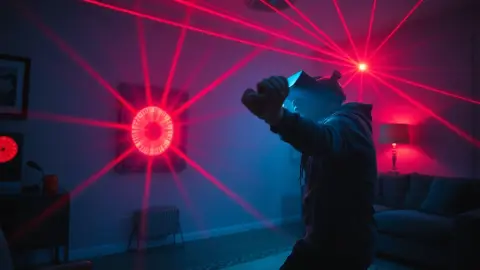
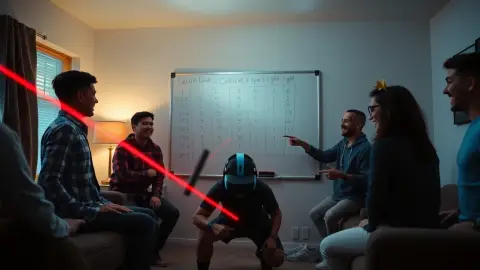
The Laser Thief page shows players in these very poses, and the Meta Horizon Store has the download.
Check your stance with a simple test
You can test your stance without the game. Stand in your ready position, then try to duck, step sideways and return without moving your feet more than a short distance. If you wobble, widen your feet slightly or soften your knees. Close your eyes briefly and notice where your weight sits; it should be centred and slightly forward.
Then try the same in the headset in Free Play. Watch what happens to your hands during the movement. If they swing out, practise holding them nearer your ribs. If your head drifts forward, imagine a string pulling the top of your head upward.
A few minutes of this stance work each session builds the foundation for everything else, and it is also a gentle warm-up in its own right.
FAQ
What is the best stance for Laser Thief?
Feet about shoulder width, knees slightly bent, weight on the balls of your feet, chest upright and hands in front.
Why do I lose balance when dodging?
Usually due to crossed feet, long strides or leaning without shifting weight first.
Does body positioning affect my shield?
Yes. A steady stance keeps head and hand positions clean, and the shield reacts to those tracked positions.
How can I practise stance?
In Free Play, return to the ready stance after each move and aim for zero shield loss.