Competitive VR Games for Friends: A Laser Thief Score War
Looking for competitive VR games to play with friends? Run a Laser Thief Bomb Mode tournament on one Quest 3 with simple house rules and fair play.
Some friend groups cannot play anything without keeping score. If that is yours, you do not need a game with a built-in ranked ladder. You need a challenge that is easy to judge and fun to lose. This guide shows how to run Laser Thief as one of the more entertaining competitive VR games with friends, using a single Meta Quest 3 or 3S and a few house rules.
First, the format
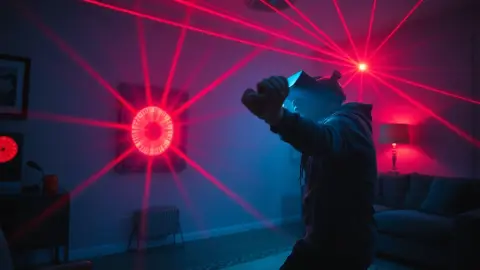
Laser Thief is played with one headset, so the competition is sequential: one player at a time, others watching. That is actually good for trash talk. Everyone sees the player's real room and real body, so you can judge style and, with luck, heckle it.
The game offers three modes, and for competition two are useful:
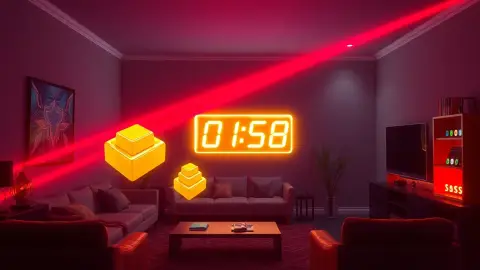
- Bomb Mode: you get 120 seconds to grab as much loot as you can before the whole place goes up. Identical time limit for everyone makes it fair.
- Story Mode levels: each level is a little harder than the last, so you can compare who gets furthest or who clears the same level with the most shield left.
Free Play, random levels with no timer, is better as practice than as the contest.
Setting up a fair tournament
Fairness is the whole point, so agree the rules first.
- Same headset, same room, same setup. Run Space Setup once and do not move furniture mid-contest.
- Equal attempts. Give each person the same number of Bomb Mode rounds, say three, and take the best or the total.
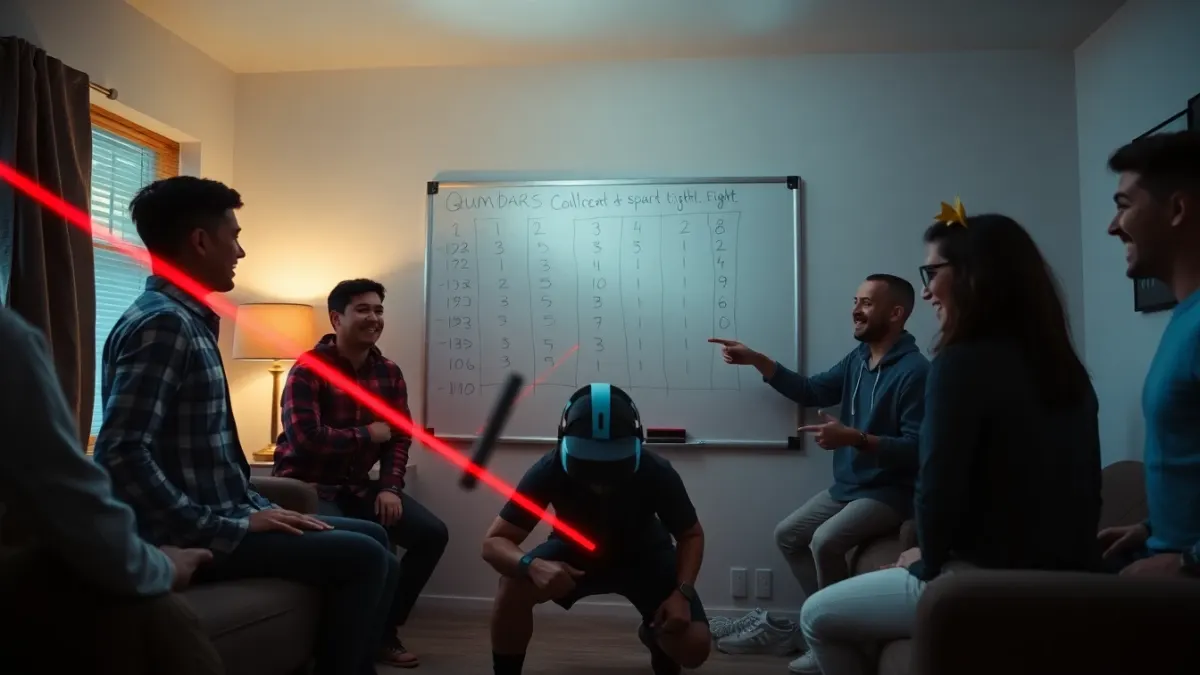
- Paper scoreboard. The game stores best scores locally on the headset, but a whiteboard keeps the whole group honest and visible.
- No coaching during a round, coaching allowed between rounds. Or reverse it for chaos.
- Order matters. Rotate who goes first so nobody gets stuck with the cold-start disadvantage.
Strategy talk for your rivals
Since this is a "Tips & Strategy" piece, here is what the game's design suggests about winning Bomb Mode:
- Greed is rewarded, hesitation is not. Deciding quickly pays off, but touching beams shrinks your shield, so the fastest path is not always the straightest.
- Pre-plan the path. Glance at the grid, pick a route, then move. Mid-grid corrections burn time.
- Stay low and smooth. Crawling and ducking are the game's core moves. Jerky motion is how you brush a beam.
- Do not stand still. In some worlds, drifting poison bubbles punish anyone who stays put too long.
- Know your worlds. Different worlds have their own loot and laser patterns, so a specialist in one may stumble in another.
Keeping it friendly
Competition goes bad when someone gets hurt or humiliated. A few guardrails:
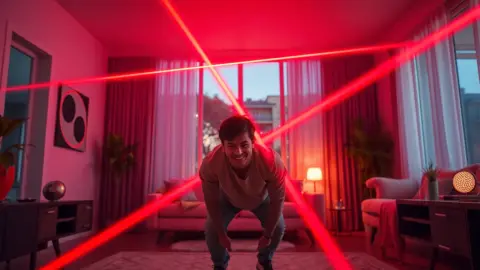
- Clear about 3 × 3 metres (10 × 10 feet) and keep spectators outside it.
- Remove drinks and cables from the floor. Excited losers like to flail.
- Take breaks. A tired player moves sloppily, which is both a worse score and a worse risk.
- Stop at once for dizziness or pain.
- Anyone with a condition affecting movement, balance or the heart should check with a doctor before playing.
A joke penalty for last place (they cook, they pay for pizza) is better than anything involving physical risk.
Why this beats a typical score chase
Because the game uses your actual room, no two living rooms play identically, so the contest is also against the space. Playing at the same host's home keeps it fair. It also makes losing funnier, since the loser can see exactly where they fell apart.
It is worth being clear about limits: the game does not have online head-to-head matches or leaderboards described in its materials, so this is a local, in-person competition.
Ready to start a rivalry?
If you have a Quest 3 or 3S in the group, Laser Thief is a very good excuse to get everyone round. The game is on the Meta Horizon Store.
FAQ
Can friends compete against each other online in Laser Thief?
The game's materials describe a single-player experience with local progress and scores, so competition happens in person by taking turns.
What is the fairest mode for a contest?
Bomb Mode, because everyone gets the same 120-second limit.
How do we track scores?
The game stores best scores on the headset, but keeping a paper or whiteboard scoreboard is easier for a group.
How many people can take part?
As many as can take turns on one headset. Keep each turn short so nobody waits too long.