How to Meditate With Noise Around You (and Still Focus)
Can you meditate with noise around? Yes. Learn to use sound as your anchor, set up headphones and make a noisy home or office work for you.
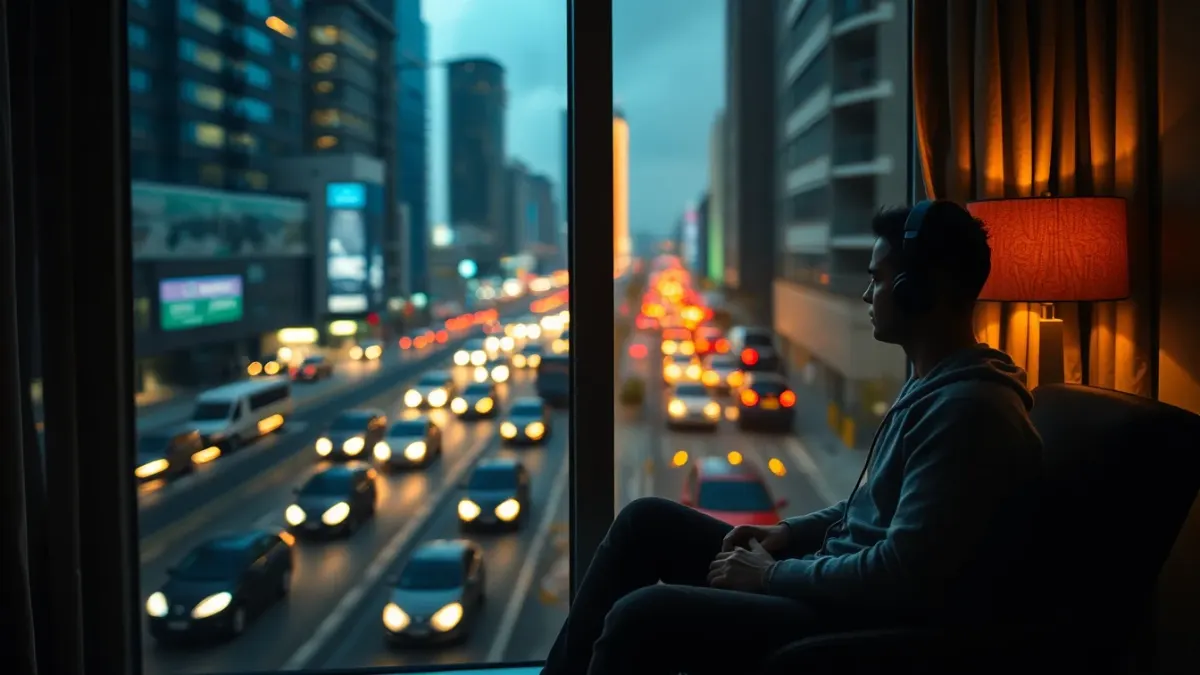
You can meditate with noise around you, and for many people that is the only way it ever happens. Waiting for perfect silence is a classic reason never to start. Instead, you can learn to treat sound as part of the practice, and adjust your setup so the noise is less of a fight.
Stop waiting for silence
A truly silent room is rare: neighbours, traffic, a dishwasher, kids, a fridge hum. If silence were required, most of us would never sit down. A more useful skill is learning to hear a sound without building a story around it ("that's so rude", "they always do this").
Technique 1: make the noise your anchor
Instead of treating sounds as intruders, use them as the object of attention.
- Close your eyes and take three slow breaths.
- Notice the loudest sound. Describe it silently: high, low, steady, pulsing.
- Let the sound come and go. Notice that it has a beginning and an end.
- When you catch yourself thinking "that's annoying", label it "judging" and return to simply hearing.
This turns the traffic from an enemy into a training partner.
Technique 2: choose the breath as the anchor
If a sound pulls you too strongly, return to feeling the breath in your belly or nostrils. Imagine the noise as weather in the background. You are not blocking it; you are choosing where to stand.
Technique 3: use headphones
For a noisy open-plan office or shared flat, headphones are the simplest fix. Noise-cancelling pairs help, but ordinary earbuds with a calm voice and soft ambient sound can be enough. MindIsland offers a choice of calm voices and optional mood-based background music that gently ducks under the words, which can help the guidance stay present against the clatter around you.
Technique 4: pick your moment
Even in a loud home there are quieter windows: before the household wakes, during a child's nap, right after everyone leaves. A three-minute morning session at the quietest time of day often beats a perfect-silence plan that never happens.
Technique 5: create a tiny sanctuary
- A corner of a bedroom with a cushion or chair.
- A bathroom with the door closed, in a pinch.
- A parked car.
- A stairwell at work.
- A simple "five minutes, please" agreement with housemates or family.
Telling people you will be unavailable briefly is a small boundary that pays off.
What to do about sudden noises
A door slams, a siren passes, a phone rings. Your body may jump. Notice the startle, feel your heartbeat for a breath or two, and return. You have not ruined the session; you have practised recovery, which is arguably the whole skill.
What about persistent irritation?
If a sound truly grates (a neighbour's drill, a barking dog), you have two honest options: switch to headphones or shorten the session. Pushing through anger rarely helps. Say "this is irritating", then see where you feel it in the body. Sometimes that curiosity softens it; sometimes it doesn't, and that's allowed too.
Practise on the move
When you travel, noise is guaranteed. MindIsland keeps your last ten meditations on your device, so you can listen on a train or in a busy café with no connection. Combine that with earbuds and a three-minute session, and a noisy waiting room becomes a practice spot.
Set realistic expectations
You might not feel deep peace in the middle of a street, and that's fine. What you are building is steadiness: the ability to keep returning even when the world is loud. A caution: never meditate in a situation where you need to stay alert, such as while driving, cycling or crossing roads.
Quick checklist for a noisy day
- Choose three minutes instead of ten.
- Put headphones in before you sit.
- Pick one anchor (breath or sound) and stick with it.
- Forgive yourself for every distraction.
- Try again tomorrow at the same time.
FAQ
Can I meditate with background noise?
Yes. You can use the noise as an anchor, switch to the breath, or soften it with headphones and a guided session.
Is noise-cancelling necessary?
No. It helps in very loud places, but ordinary headphones and a guide often work well enough.
What if kids are making noise?
Try a short three-minute session at the quietest part of the day, or breathe together for a minute. Even a short pause counts.
Should I use background music?
Optional ambient music can be helpful. MindIsland lets you choose whether to have mood-based background music under the voice.