Meditation Posture Explained: Chair, Cushion or Lying Down
Meditation posture explained simply: how to sit on a chair, a cushion or lie down, what actually matters, and common comfort fixes for beginners.
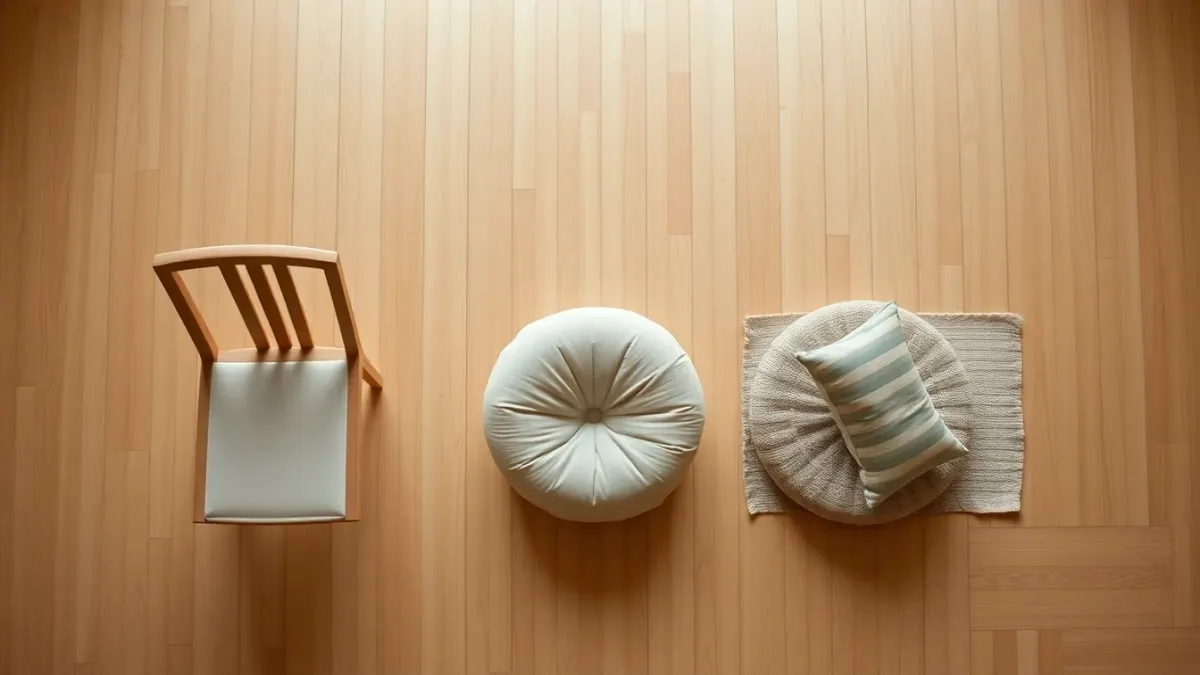
Pictures of meditation often show someone in a perfect cross-legged pose on a mountain. Real life is more flexible. Meditation posture matters mainly for two reasons: comfort, so the body is not shouting at you, and alertness, so you do not nod off. Beyond that, you have a lot of freedom. This guide covers the main options and what to watch for.
The two goals of any posture
- Stable and comfortable. You should be able to stay for a few minutes without pain or numbness.
- Upright enough to stay alert. A gently lengthened spine helps, though it does not have to be rigid.
If your posture achieves these, it is good enough, whatever it looks like.
Option 1: sitting on a chair
The most accessible choice, and perfectly legitimate.
- Sit toward the front of the seat, feet flat on the floor, knees roughly at hip height.
- Let the back be upright but not stiff, with a small natural curve.
- Rest your hands on your thighs or in your lap.
- Soften your shoulders and let the jaw unclench.
If your feet do not reach the floor, place a book or folded blanket under them.
Option 2: sitting on a cushion or bench
Many people enjoy sitting on the floor with a firm cushion raising the hips above the knees. This tilts the pelvis slightly forward and makes an upright spine easier.
- Cross your legs in any comfortable way. You do not need a full lotus.
- Support your knees with extra cushions if they float.
- A low meditation bench is another option; it takes weight off the legs.
Avoid forcing flexibility. Pain is not progress.
Option 3: lying down
Lying on your back with a pillow under the knees is comfortable and suits body scans and evening practice. The trade-off is sleepiness. If you want to stay alert, keep your eyes slightly open or choose a seated posture instead.
Option 4: standing or walking
Standing meditation can be useful for people who get drowsy or stiff. Keep your knees slightly soft and feet hip-width apart. Walking meditation is another movement-based anchor.
What to do with hands, eyes and face
- Hands: on thighs, in the lap or one resting on the other. Whatever feels natural.
- Eyes: closed, or open with a soft downward gaze. Pick whichever helps you stay present.
- Face: relax the forehead, soften the jaw, let the tongue rest.
Common problems and fixes
| Problem | Try this |
|---|---|
| Back aching | Raise your seat or move to a chair with support |
| Knees hurt | Sit on a higher cushion or choose a chair |
| Feet falling asleep | Shift position slightly; it is okay to move |
| Slumping | Imagine a gentle thread lifting the top of your head |
| Sleepiness | Open your eyes slightly, sit up straighter or meditate earlier in the day |
Can I move during meditation?
Yes. If an itch or pain becomes the entire experience, adjust slowly and mindfully. Moving with awareness is part of practice. Gritting your teeth through genuine discomfort is not.
Posture and guided meditation
If you use a guided meditation, you can listen in whichever posture feels good. MindIsland, for example, generates a fresh meditation every morning in three, five or ten minutes, and you can listen at your desk, on the sofa or in bed. A quiet setting and a comfortable position matter more than the exact pose.
A note on health
If you have back problems, joint pain or other physical conditions, choose positions that suit your body and consult a health professional when unsure. Meditation is a mental practice and should not cause physical strain.
Quick setup routine
- Choose your seat.
- Take three breaths to settle.
- Check feet, hips, shoulders, jaw.
- Set a timer or press play.
- Adjust once if needed, then begin.
Setting up a spot you will use
A dedicated corner removes friction. Choose a chair or cushion, keep a folded blanket nearby and place the spot away from your desk so it feels different. A plant or a lamp can make it inviting, but the main thing is that it is easy to reach and always ready. If you live in a small flat, a pillow stored beside the sofa is plenty. Consistent surroundings act as a cue, and a comfortable seat is the single best investment in a habit, because discomfort gives your mind an excellent excuse to quit early.
FAQ
Do I have to sit cross-legged to meditate?
No. A chair works just as well, and so does lying down for certain practices.
What is the best posture for beginners?
Sitting on a chair with feet flat and an upright but relaxed back is simple and comfortable.
Should my eyes be open or closed?
Either. Closed eyes reduce distractions; a soft gaze can help if you get sleepy.
Is it okay to meditate lying in bed?
Yes, especially in the evening, though you may fall asleep. That is fine if relaxation is your goal.