What Passthrough Horror Does Differently From Normal Horror
What passthrough horror does differently: real rooms, a shared space and no safe distance. Learn why this format plays by its own rules for fear.
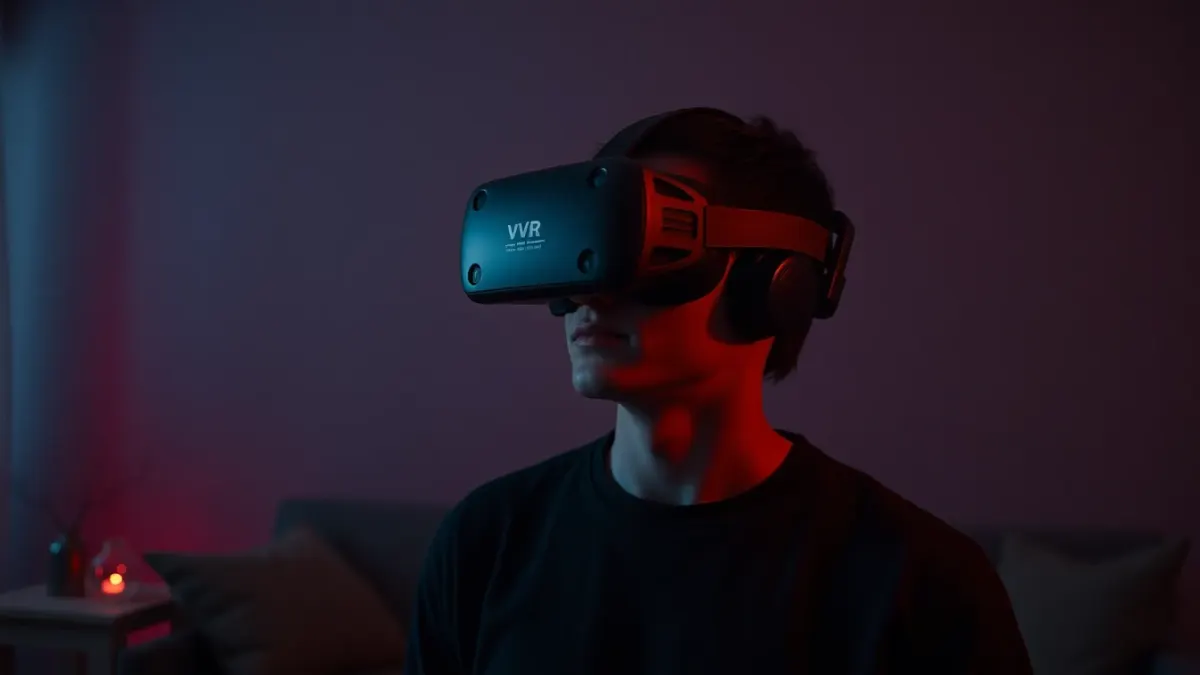
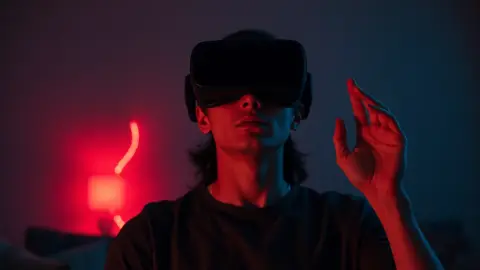
Passthrough horror is a young format, and it breaks several habits of traditional horror games. Instead of building a spooky world for you to visit, it uses the camera view of your actual room and then corrupts it. Here is what that changes.
1. The setting is free, and also uncontrollable
A traditional horror game controls every pixel. Passthrough horror borrows your room, which means its biggest set piece costs nothing and is unique to each player. It also means the designer cannot control how big the room is, how bright it is or where the furniture sits. Games must be flexible about all of that.
HAUNTED handles this by reading your layout through your headset's Space Setup, so walls, floor and furniture are known to the game.
2. No loading into "the scary place"
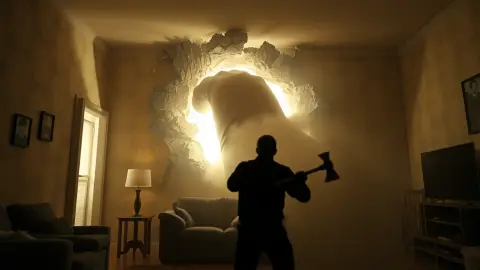
Normal horror often has a threshold: a door you step through, a chapter title, a level load. Passthrough horror starts where you already are. The scariest moment in HAUNTED's pitch is simple: put on the headset, everything looks normal, then the wall behind you starts to crack.
3. Your safe space becomes the threat
In ordinary horror, home is where you escape the fear. In passthrough horror, home is the arena. That reversal is what players tend to remember. Something standing in your real doorway is a different feeling from something standing in a fictional one.
4. Movement is honest
You do not push a stick to turn around; you turn around. You do not press a button to duck; you duck. That makes fear and physical action the same thing. In HAUNTED you slice apart arms with an axe or sword by swinging, and you shake a dying flashlight back to life.
5. Distance cannot be faked
Because virtual objects share space with real ones, their distance matters. A skull crawling toward you across your floor is closer than any model on a monitor. Spatial audio adds to this by placing sound where the threat is.
6. Safety becomes part of design
A game that puts you in a real room must treat the real room as a risk. Hence the practical advice that accompanies HAUNTED:
- Clear the play area.
- Stay inside your boundary.
- Keep fragile objects away.
- Remove the headset whenever you feel unwell.
Virtual walls breaking does not mean you can walk through real ones.
7. Quality depends on your hardware
Colour passthrough is a big factor in how convincing the effect looks, which is why HAUNTED is best on Quest 3 and 3S, though it also supports Quest 2 and Quest Pro.
Is it just a gimmick?
It can be, when a game places a monster in a room without using the room. The format works best when the architecture matters: walls that crack, floors that fill with blood, doorways that hold something waiting. That is the approach behind HAUNTED: Are You Alone?.
A reminder about content
Passthrough horror feels more personal, so the warnings matter more. HAUNTED contains sudden loud sounds, flashing and darkened light, gore and intense jump scares, and it is not suitable for children, people who are pregnant, or anyone with epilepsy, heart conditions or anxiety disorders.
Checklist: is a game really using your room?
Store pages can be vague. Before you buy a game for the mixed reality effect, look for these signals.
- The description mentions passthrough, mixed reality or room setup explicitly.
- It says what it does with your walls, floor or furniture.
- It lists headset requirements and says which headsets look best.
- It has a support page that talks about room layout problems.
HAUNTED ticks these boxes: its pages describe arms breaking through your walls, skulls crawling from your floor, a nightmare built on your own walls, floor and furniture, and a Space Setup step. A game that only places a floating monster in the air is using passthrough as a background, not as a stage. Both can be fun, but they are different products.
FAQ
What is passthrough on a Quest headset?
Passthrough uses the headset's cameras to show you the real world inside the display, so virtual content can be added to your actual surroundings.
Is passthrough horror the same as AR horror?
They are related. Mixed reality via a headset keeps you in a full display with real-world video and anchored 3D content; AR on a phone overlays content on a small screen.
Do I need a big room?
You need a clear play area where you can swing and turn. Check the store page for details.
Does the game use eye tracking?
According to the game's privacy policy, no. Looking direction is derived from head orientation, and the game uses no eye or face tracking.