Why Horror in Your Own Room Is Scarier Than a Haunted House
Why horror in your own room is scarier than any fictional haunted house, and how mixed reality uses the places you know best to unsettle you.
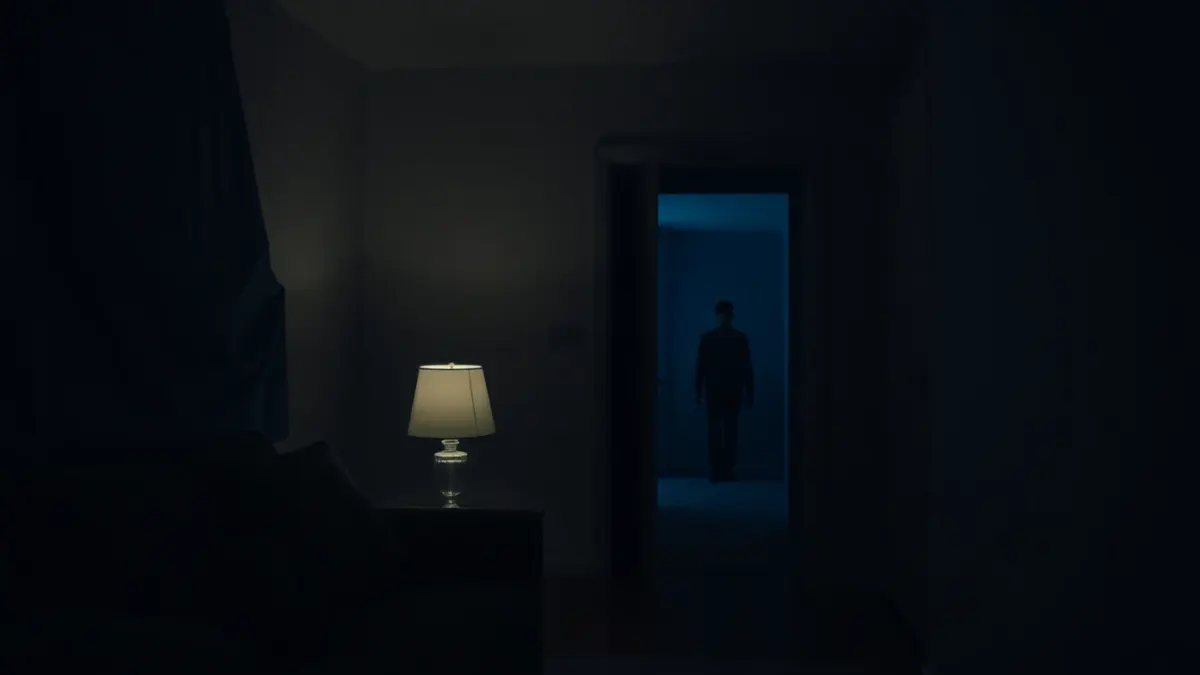
A haunted mansion on a hill is easy to leave behind. You close the book, shut off the screen, and the mansion stays where it belongs: somewhere else. Why horror in your own room is scarier comes down to that one fact. When the nightmare happens in a place you actually live, there is no "somewhere else" to retreat to.
Mixed reality games such as HAUNTED: Are You Alone? are built on exactly this idea. Here is why it works.
Familiar places carry a sense of safety
Your living room is where you relax. You know where the light switch is, how the floor creaks, what that corner looks like in daylight. Your brain has a detailed map of it and files it under "safe."
Horror works by breaking expectations. In a fictional castle there is not much to break, because you never expected anything there. In your own room, every familiar thing is a promise, and every broken promise registers. A crack in a wall you have stared at for years means more than a crack in a set designed to look cracked.
The distance between you and the story disappears
Most horror media keeps a comfortable gap: a screen, a page, a character who is not you. That gap is a safety rail. Mixed reality removes it by putting the monster inside your actual space. In HAUNTED, enormous arms smash through your walls and skulls crawl out of your floor, and the walls and floor in question are yours.
You are no longer watching someone in danger. You are standing in the location where the danger is happening.
Your body already knows the room
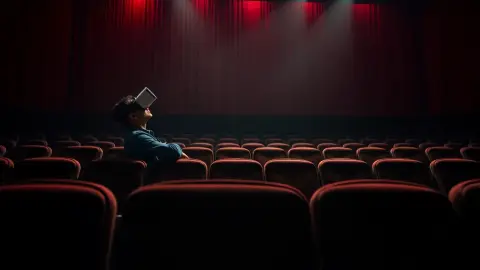
When you play in your own room, you move through it with your whole body. You turn to check the doorway, you step back from the sofa, you duck. Those are not abstract gamepad inputs; they are real movements in real space, and your body treats the space as real because it is.
That is also why good mixed reality horror asks you to look around. The central question of HAUNTED, are you alone?, is not rhetorical. You genuinely have to turn your head and check.
Darkness and doorways do extra work
Rooms have natural fear anchors: dark corners, the space behind you, the doorway to the next room. In a fictional location, designers have to build these. In your home they come pre-installed. A game only has to point at them. In HAUNTED, the Cursed Nun has been waiting in your hallway the whole time, and a hallway is a place you walk through every day without a thought.
It lingers differently
After a movie ends, you return to a living room that has nothing to do with the film. After a mixed reality horror session, the room itself has been used. You may glance at that doorway twice. This is not magic, just association: the brain links places with what happened in them.
What it does not mean
Being scarier does not mean it is for everyone. HAUNTED has sudden loud sounds, flashing and darkened light, gore and intense jump scares, and it is not suitable for children, people who are pregnant, or anyone with epilepsy, heart conditions or anxiety disorders. Taking the headset off is always an option, and nothing is lost when you do.
If you want to try it
- Run Space Setup on your headset so the game knows where your walls, floor and furniture are.
- Clear the play area. You will swing, duck and turn quickly.
- Quest 3 and 3S give the most convincing effect because of colour passthrough, though the game also runs on Quest 2 and Quest Pro.
- Play when you feel curious, not when you already feel on edge.
The official store page is here.
A small experiment you can run without a headset
Try this: sit in your living room tonight with only one lamp on and listen for two minutes. Notice how many sounds you normally filter out, the fridge, the pipes, the building settling. Now imagine one of them coming from the wrong place. That tiny exercise shows why familiar spaces are such good raw material for horror: you hold a detailed model of what is normal, and fear lives in the gap between that model and what you perceive.
Horror creators have long known this. Stories set in ordinary suburban houses often unsettle readers more than castles, because readers can substitute their own hallway for the one on the page. Mixed reality simply skips the substitution step and uses the real hallway.
FAQ
Is mixed reality horror scarier than regular VR horror?
For many players, yes, because the setting is a place they already know. Fear is personal though, and some people find fully fictional VR worlds more intense. The difference is that mixed reality refuses to let you leave the scene behind.
Why does my own room feel different after a horror game?
Your brain associates places with events. A hallway where something frightening "happened" can feel slightly charged for a short while afterwards. It fades, and it is a normal memory effect rather than anything supernatural.
Does HAUNTED really use my actual walls and floor?
Yes. The game reads the room layout from your headset's Space Setup, so walls can break, skulls can crawl from the floor and something can stand in your real doorway.
Can I play if I get scared easily?
You can stop at any time by taking the headset off. If you have anxiety disorders or heart conditions, the content warning advises against playing at all.