Active Screen Time for Teens: Can VR Get Them Moving?
Worried about sedentary gaming? Active screen time for teens can include VR games like Laser Thief. Learn the upsides, limits and ground rules for parents.
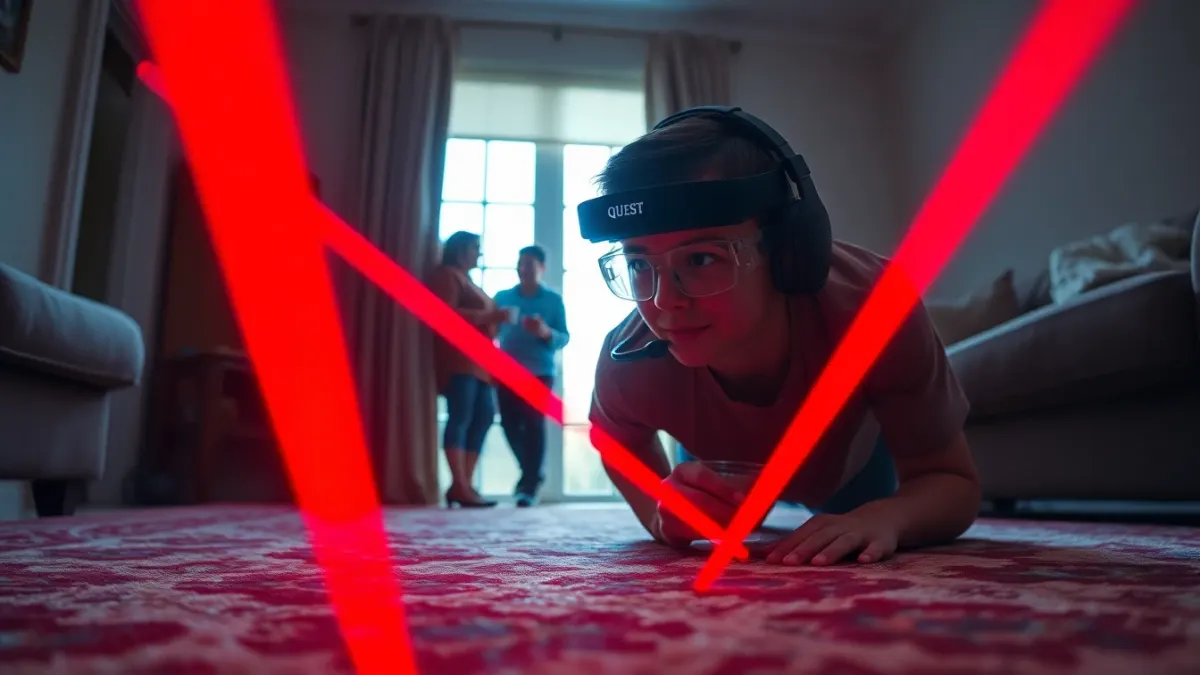
Screen time debates usually treat all screens as the same. A teenager slumped on a sofa with a controller and a teenager ducking under lasers in the middle of the living room are doing very different things with their bodies. If you are curious about active screen time for teens, mixed reality is worth a look, and Laser Thief is a concrete example.
Not all screen time is equal
We are not going to claim that VR solves anything, and nobody should treat a game as a substitute for sport, friends or outdoor time. But there is a difference between sedentary and active play. Laser Thief has no joystick. Players duck, dodge, crawl and reach with their real bodies, and the game's page describes it as a workout disguised as a heist.
For a parent, that means an hour of this looks and feels different from an hour of a seated game. It also tends to tire teens out in a way they can notice, which naturally limits the length of sessions.
What your teen will actually do
The headset's passthrough cameras show the real room, and the game draws laser grids between the walls and furniture. Teens will:
- Duck under chest-height beams.
- Dodge by leaning, twisting and stepping through gaps.
- Crawl when the grid drops to floor level.
- Reach for loot without touching light.
There are 150+ levels across seven worlds, plus Bomb Mode (120 seconds to grab as much loot as possible) and Free Play (random levels, no timer). The tone is comedic, with a narrator who celebrates wins and enjoys mistakes.
Age and suitability
Check the age line first: PEGI 12, not directed at children under 13, and the headset platform sets its own minimum age on top. The tone is heist comedy rather than shooter, though the last world, Warzone, brings explosives and more tension. You know your own child best, so play a level before handing over the headset.
Ground rules that work
Parents tend to do best with clear, simple rules agreed in advance.
- Room first. Play in a cleared area of about 3 × 3 metres (10 × 10 feet), with no cables, toys or fragile items. Preferably the living room rather than a cluttered bedroom.
- Time boxes. Short sessions with breaks. The game's support page recommends this anyway.
- Stop signs. Dizziness, nausea or pain means stop at once, no arguments.
- Warm up. A minute of stretching before crouching is sensible.
- Footwear. Non-slip shoes or bare feet on a safe surface, not socks on a slick floor.
- Spectators stay out. Siblings and pets watch from the sofa.
Also remember that hydration and snacks matter. A teen who has just been crawling around will be thirsty.
Making it social
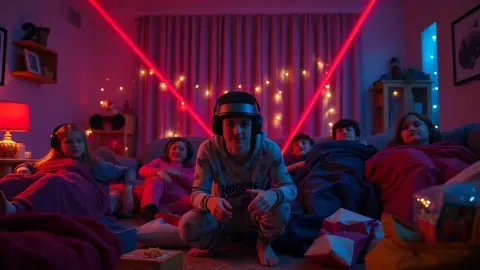
One of the best things about mixed reality is that parents can see what is happening. Because the player is in the real room, you can watch, laugh and even take a turn. Teens who normally retreat to headphones may enjoy showing a parent how to survive the Money world's tight grid. It is a headset for one player at a time, so think of it as turn-taking with an audience.
Privacy points worth knowing
The privacy policy states that there is no account system, no personal data collection and no third-party advertising or tracking SDKs, and that passthrough camera images are not recorded, stored or transmitted. Progress is stored locally on the headset. As a parent, that is a reassuring baseline, although you should still check the headset platform's own settings and policies, since purchases and store services go through Meta.
Realistic expectations
Do not expect miracles. Some teens will love it for a week and move on. Others will make it a regular thing. As a parent, you are not buying fitness; you are offering an option that happens to keep a teen on their feet. For details, see the Laser Thief page or the Meta Horizon Store.
FAQ
Is VR good exercise for teenagers?
Games that make players move can add physical activity, but they are not a replacement for sport or outdoor play. Laser Thief asks players to duck, crawl, lean and reach.
How long should a teen play Laser Thief?
Short sessions with breaks are recommended, and they should stop if they feel dizzy or sore.
Is the game safe for teens?
It is rated PEGI 12. Clear the room, run room setup and supervise early sessions.
Does the game collect my teen's data?
The privacy policy says it collects no personal data and has no third-party ad or tracking SDKs.