Shields, Health Bars and Hit Points: How Game Health Works
Understand how shields and health systems work in games, why some are forgiving, and how Laser Thief's shrinking shield turns near-misses into drama.

Every game has to answer the same question: what happens when you make a mistake? Hit points, lives, checkpoints and shields are all answers. This guide looks at how a shield health system in games works, why designers choose them and what Laser Thief's shrinking shield adds to a physical dodge game.
The classic options
Hit points (HP). A number that goes down when you're hurt. Simple and familiar.
Lives. A fixed number of attempts. Failure feels final but the stakes are clear.
Checkpoints. You restart from a nearby point. Gentle and good for long games.
Regenerating health. Recover if you avoid damage for a while. Keeps action flowing.
Shields. A buffer that absorbs mistakes before the "real" consequence. Sometimes recharging, sometimes not.
Each choice sets the emotional temperature of the game.
What shields are good at
Shields do something subtle: they make small mistakes feel survivable. You can touch danger and live, which means you'll take more interesting risks. A game with instant failure rewards only perfect caution; a game with a buffer rewards bold attempts and recovery.
They also create a readable state. A glance at your shield tells you how careful you need to be right now.
Laser Thief's shrinking shield
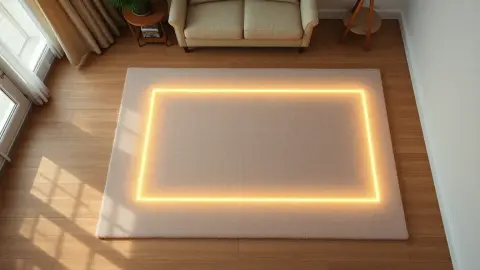
In Laser Thief, brushing a laser shrinks your shield, and when you run out of shield the heist is over. The word "shrinking" matters: damage is not a number you read, it's a physical sense of the shield getting smaller. That adds three things:
- Feedback with weight. You feel a graze.
- Graduated stakes. A small mistake costs a little, a big one costs more.
- A budget to manage. You decide when to spend shield on a risky grab.
That makes it a very good fit for a body-driven game, where tiny errors are common. Nobody can duck perfectly forever, and the shield keeps the experience from feeling harsh.
Why physical games need forgiving health
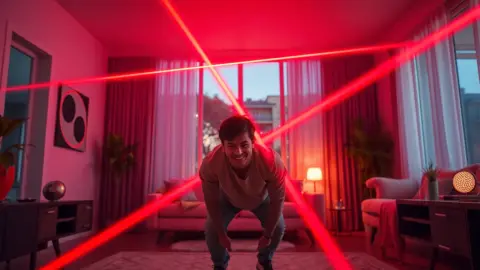
In a button game, a mistake is a mistimed press. In a physical game, it might be your elbow, your hip or a slightly late step. These errors are more frequent and less controllable. A forgiving buffer makes the game enjoyable for a wider range of players, including those still learning the moves.
It also helps with the tracking reality of mixed reality. The shield reacts to head and hand positions as the headset tracks them, which is why Laser Thief's support advice includes good lighting and uncovered controllers, plus slow, deliberate movements near beams.
Designing around failure
Good failure design has a few rules:
- Make it clear. Players should know what they did wrong.
- Make it fast to retry. Quick restarts keep motivation up.
- Make it funny, not cruel. Laser Thief's narrator enjoys your mistakes a little too much, which turns frustration into laughter.
- Make it fair. Rules should be consistent.
Playing smarter with a shield
If you want to get more from the system:
- Protect the shield early. Treat the first levels of a new world as practice.
- Spend it deliberately. A single graze for a big prize may be worth it in Bomb Mode.
- Slow down near tight grids. Rushing is how most shield damage happens.
- Check your tracking. Good light helps prevent unexpected losses.
A word on real safety
A virtual shield protects nothing in your living room. Keep the floor clear, warm up and stop if anything hurts. For more on the game, see the Laser Thief page.
Comparing shield styles
Some games use a recharging shield that refills if you stay out of trouble; others use a fixed pool that only a pickup restores. Each shapes behaviour. Recharging shields encourage hit-and-hide play. Fixed pools encourage caution throughout. When you meet a new game, spend a minute working out which kind it uses, because that tells you whether to play in bursts or at a steady pace. Laser Thief's page describes the shield simply as something that shrinks when you brush a laser and ends the heist at zero, so treat it as a resource and watch it during tight grids.
FAQ
How does the shield work in Laser Thief?
Brushing a laser shrinks it, and when it runs out the heist is over.
Why do games use shields instead of simple lives?
Shields soften small mistakes and let players take risks, which suits action and body-driven games.
Why am I losing shield without touching a beam?
Check that the room is well lit, controllers are uncovered and tracking is clean. Moving slowly near beams also helps.
What happens when the shield runs out?
The heist is over, and you can start again.