Gentle VR Exercise for Seniors: Is Laser Thief Suitable?
Considering gentle VR exercise for seniors? An honest look at whether Laser Thief fits older adults, who should skip it and how to stay safe.
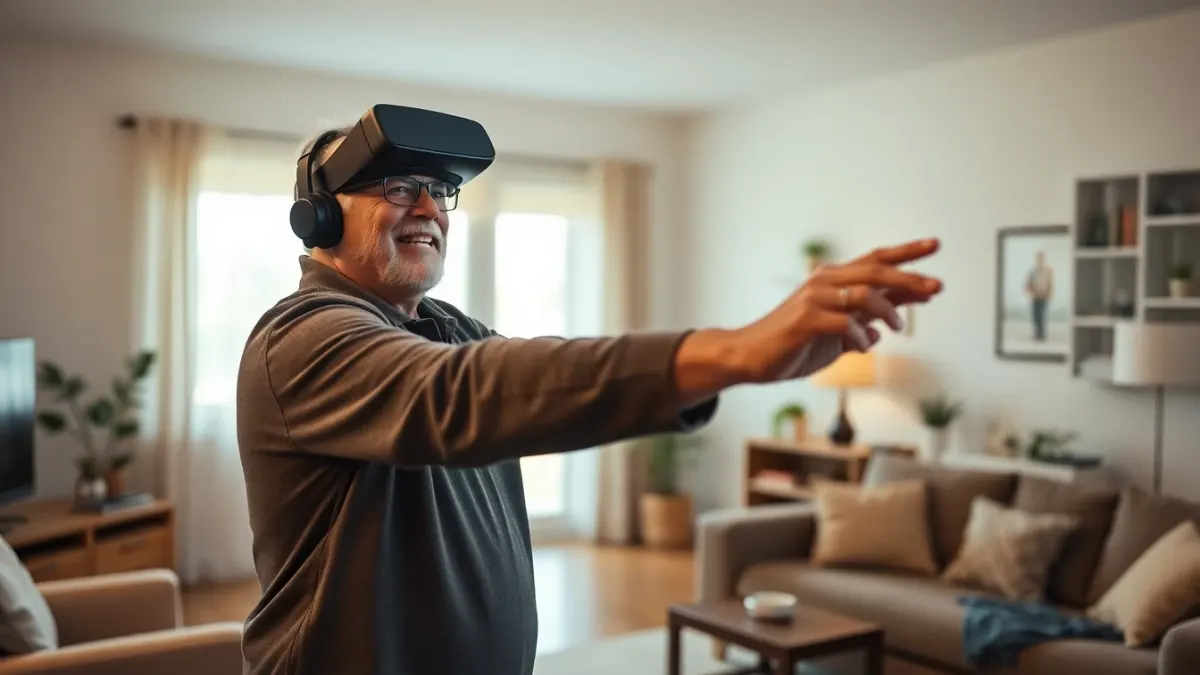
Grandparents who see their grandchildren in VR headsets often ask the same thing: could I try that? It is a fair question, and the honest answer for Laser Thief is "maybe, carefully". If you are searching for gentle VR exercise for seniors, you deserve a realistic picture rather than a sales pitch, so here is one.
Start with the truth: it is not a gentle game by default
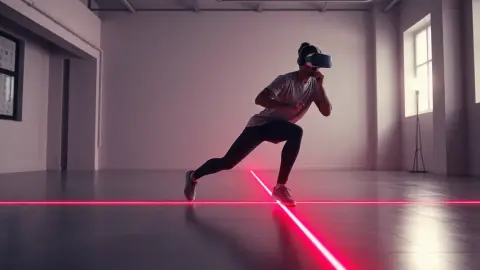
Laser Thief asks players to duck, crouch, crawl, lean and stretch. The game's own support page says it is more physically demanding than most games and advises people with a condition that limits movement to check with a doctor first. The terms say the same about balance, movement or heart conditions.
So this is not a chair-based, low-effort title. It can still suit active older adults who are comfortable getting down and up, have good balance and enjoy a challenge. For others, it is the wrong choice, and that is fine.
Who might enjoy it
Think of the person, not the age. Someone who gardens, walks daily, does stretching or yoga, and has no balance concerns may find the early levels very manageable. The game gets a little harder with every level, so the first ones are about leaning and reaching rather than anything athletic.
The Free Play mode gives random levels with no timer, which means you can take your time, rest between levels and avoid pressure. Story Mode lets you progress at your own speed through seven worlds with a narrator who has opinions about your technique, and the humour often helps people relax.
Who should probably skip it
- Anyone with balance problems, dizziness or a history of falls.
- People who cannot comfortably get down to the floor and back up.
- Anyone told by a doctor to avoid exertion, or with heart conditions, unless cleared first.
- Anyone who feels unwell in headsets. The game's guidance is to stop immediately if you feel dizzy or uncomfortable.
If in doubt, ask a doctor or physiotherapist. We are not able to offer medical advice, and nothing here is a health claim.
How to make a trial as safe as possible
If an older relative is keen to try, set it up like a cautious experiment.
- Have a helper present. A spotter stays close but out of the way, ready to steady an arm.
- Clear a larger area than required. The game suggests about 3 × 3 metres (10 × 10 feet). Remove rugs, cables and low tables that could trip someone.
- Use Free Play first. No clock, random levels, no urgency.
- Keep sessions very short. Five to ten minutes, then a break and a glass of water.
- Wear stable, non-slip footwear and keep the room well lit.
- Agree on a stop signal. A hand wave is enough to end the session.
- Skip Bomb Mode at first. Its 120-second race for loot is exciting, but it encourages hurried movement.
Also remember that virtual lasers do not protect against real furniture, so place a sturdy chair within reach if the player wants a place to hold onto between levels.
What about the headset itself?
The Meta Quest 3 and 3S headsets are worn on the face and can feel heavy for some. Make sure it fits comfortably over glasses if needed, and adjust straps carefully. We cannot describe fitting details beyond that, so check the headset's own instructions. Because Laser Thief uses passthrough, the player sees the real room, which many find less disorienting than fully virtual worlds.
Setting expectations
Be modest about benefits. It is a fun, light way to move and laugh together, not a rehabilitation programme. The best outcome is often social: a grandchild coaching a grandparent through a level and everyone cheering. That alone makes it worthwhile for some families.
You can find more information on the Laser Thief page, and the game is for sale on the Meta Horizon Store.
FAQ
Is Laser Thief safe for seniors?
It can be for active, steady older adults, but it involves crouching, crawling and stretching. Check with a doctor if you have any movement, balance or heart concerns.
Is there a seated mode?
The game's materials do not describe a seated mode. Movement is central to play.
What is the gentlest mode?
Free Play offers random levels with no timer, so it is the most relaxed way to try the game.
Should an older person play alone?
Having someone nearby is wise, especially in the first sessions.