The Uncanny Valley in Horror Games Explained Simply
The uncanny valley in horror games explained simply: why almost-human faces unsettle us, how designers use it and where mixed reality fits in.
You have probably felt it: a face that is nearly right, yet something is off, and you want to look away. The uncanny valley in horror games is the name people give to that feeling, and designers use it on purpose. Here is a plain-language look.
The idea in one paragraph
The uncanny valley is a popular hypothesis suggesting that as an artificial figure becomes more human-like, our comfort increases, until it becomes almost human, at which point comfort drops sharply. The "valley" is that dip. It is an idea, not an exact law, and researchers continue to discuss how well it holds.
Why almost-human is unsettling
Several explanations are discussed:
- Mismatch. Small errors in movement, eyes or skin stand out when everything else looks right.
- Category confusion. Is it alive or not?
- Threat detection. Something that looks slightly sick or lifeless can trigger instinctive wariness.
We do not need to settle the debate to see how it applies to fiction.
How horror designers use it
- Stillness. A figure that does not blink.
- Jerky or too-smooth movement. Motion that is not quite natural.
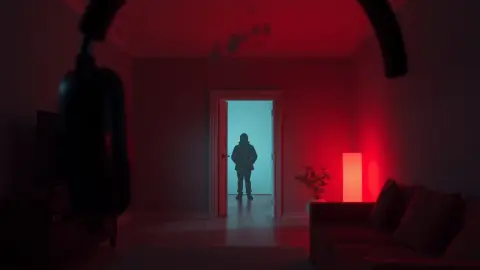
- Hidden faces. Hair, veils and shadows leave the viewer to imagine the worst.
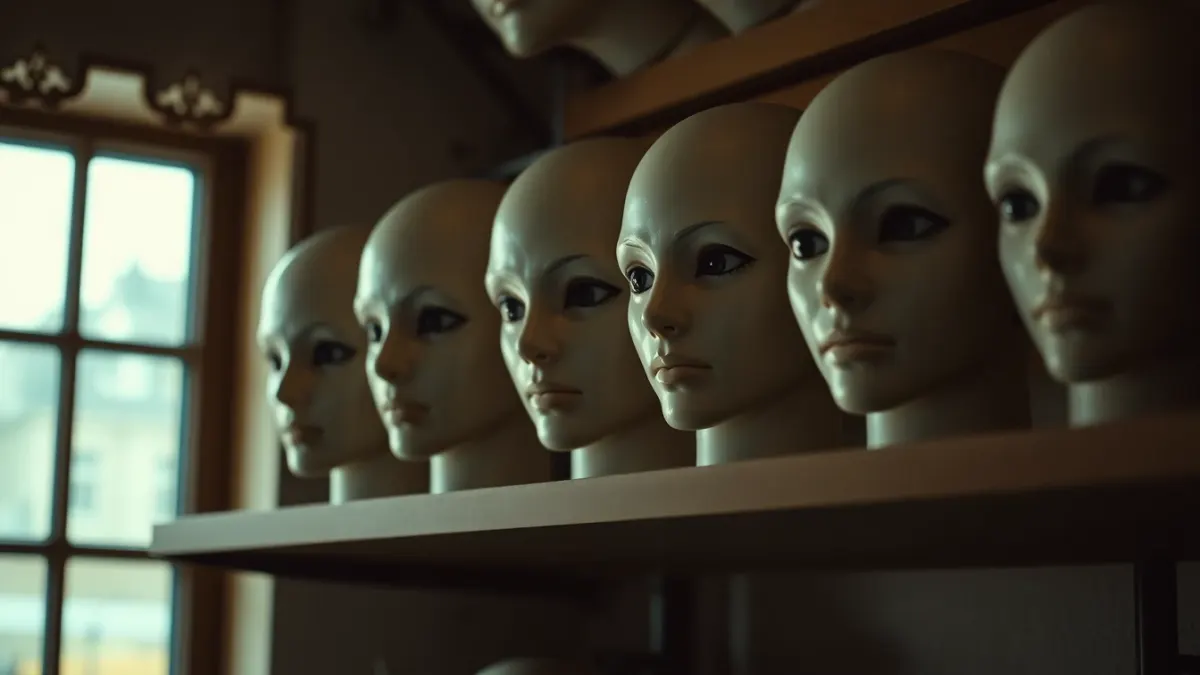
- Dolls and mannequins. Human shapes without life.
Hiding is often stronger than showing
Detail can ruin the effect. Many effective horror figures conceal their faces: long hair, dark cloth, shadow. HAUNTED's Cursed Nun is described as a pale figure with long, blood-soaked black hair, a design that keeps the focus on shape and presence rather than a readable expression.
Dolls and the dance
HAUNTED: Are You Alone? also has a cursed doll you dance with until it decides the dance is over. Dolls sit squarely in the uncanny category: a toy made to look like a tiny person.
Mixed reality changes the valley
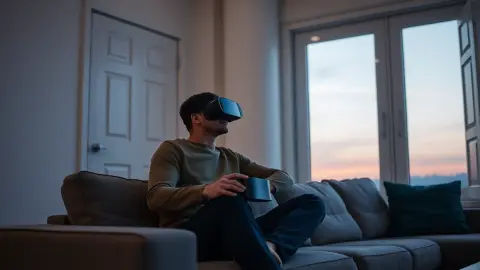
In mixed reality, the background is a real video view of your actual room. A virtual character must live next to real objects, with their natural textures and lighting. That can make small inconsistencies stand out, which is a challenge for realism. For horror, though, "slightly off" can be an asset. Stylised, exaggerated monsters (enormous arms breaking through walls, crawling skulls) sidestep the issue by being unmistakably fantastical.
Takeaways for players
- If a character unsettles you, that is the design working.
- Looking away is allowed. You can also take the headset off.
- Fear of human-like figures varies a lot between people.
Content note
Faces that unsettle you are only one ingredient. The official list also names sudden loud sounds, flashing and darkened light, gore and intense jump scares, and the game is meant for adults without epilepsy, heart conditions, anxiety disorders or pregnancy.
What this means for stylised monsters
A lot of successful horror avoids realism altogether. Exaggerated, stylised monsters like giant arms, skulls and shadowy figures sit comfortably outside the uncanny valley because nobody mistakes them for people. They frighten by scale, motion or surprise, not by subtle wrongness.
This is a useful insight when you compare games. A realistic human character in a game can unsettle you through tiny flaws; a fantastic monster unsettles you through what it does. Both approaches work, and many games combine them. When you play, notice which kind of unease you feel: the quiet 'something is off' feeling, or the loud 'that should not exist' feeling. They come from different places.
If you ever want to test the idea, look at a few images of figures with different levels of realism, from simple cartoons to detailed human likenesses, and notice at which point your comfort changes. Your answer may differ from your friends', which is itself a reminder that discomfort is personal. Treat the valley as a useful lens, not a law of nature.
FAQ
Who came up with the uncanny valley?
The idea is commonly credited to a Japanese roboticist in the 1970s. Treat it as a hypothesis rather than a proven law.
Why are dolls creepy?
They resemble humans but are lifeless, which falls into the uncanny zone for many people.
Do horror games need realistic graphics?
No. Atmosphere, sound and pacing matter more than realism.
Where can I experience a cursed doll encounter?
In HAUNTED, available on the Meta Horizon Store.