A Short History of Heist Games and Where Mixed Reality Fits
A friendly look at the heist game genre, from stealth and planning to physical dodge games, and how mixed reality adds a new twist to the thief fantasy.
Heist stories are about fantasy: you plan the impossible, slip past the guards and walk out with the prize. Games have been serving that fantasy for a long time in many forms. This short heist game genre history is deliberately high-level, because the genre is blurry, but the broad shape is clear, and it explains why a title like Laser Thief makes sense today.
The ingredients of every heist
Before the games, the formula. A heist usually needs:
- A target worth stealing.
- An obstacle that makes it hard, such as guards, alarms or lasers.
- A plan or at least a route.
- Tension as you execute.
- An escape.
Different game genres emphasise different ingredients.
Stealth: the patient thief
One long-running branch focuses on sneaking. You watch patrol patterns, hide in shadows and choose between speed and silence. The fun is in observation and timing. This approach emphasises the obstacle and plan ingredients, and it is mostly played from a chair with a controller.
Planning and crew: the mastermind
Another branch is about preparation: choosing equipment, scouting the building, assigning roles. The thrill is in the planning and the moment the plan goes sideways. It emphasises the plan ingredient and often adds co-operation.
Puzzle heists: the safe-cracker
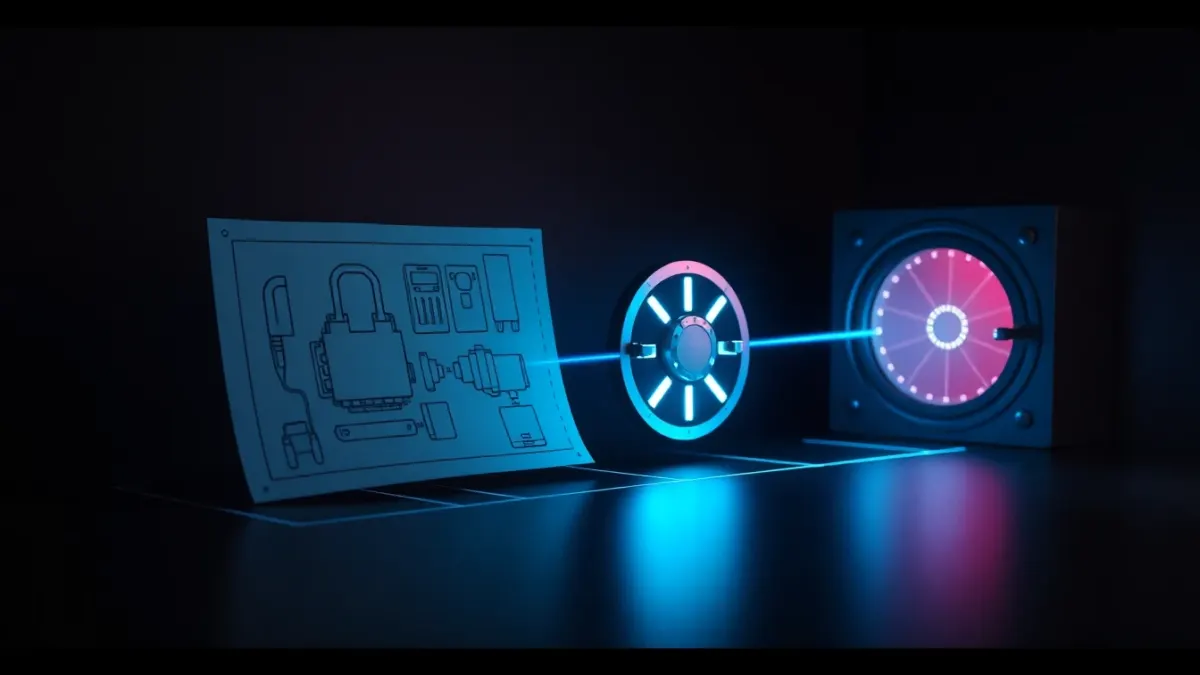
Some games reduce the heist to a puzzle: pick the lock, open the vault, find the route through the security system. Here the laser corridor appears as a pattern problem to be solved by the mind.
Physical heists: the acrobat
The laser corridor is also the point where the thief fantasy touches the physical world. Real laser-maze attractions let you move through beams with your body. Motion-based and VR games have explored the same idea: instead of pressing a button to duck, you duck.
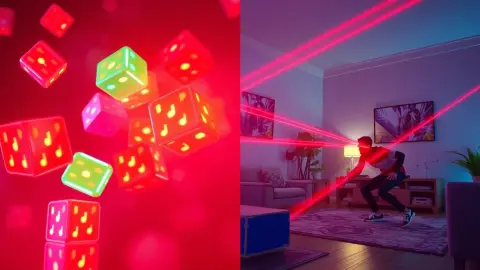
That is the branch where Laser Thief lives. Its toolbox is physical: duck under chest-height beams, dodge through gaps, crawl when the grid drops low, reach for loot without touching the light.
What mixed reality adds
VR already allowed physical dodge games, but fully virtual worlds replace your room. Mixed reality brings a new twist: the heist takes place in your actual surroundings. Meta Quest 3 and 3S use full-colour passthrough, and Laser Thief uses it to draw laser grids between your real walls and furniture. The game's pitch is simply: your room is the vault.
That reverses an old problem. In earlier heist games the building was fiction and you needed imagination to feel inside it. Now the building is your lounge, so the imagination part is half done.
Tone matters too
Early heist stories were often serious, but the genre has long had a comedic side: the over-complicated plan, the clumsy accomplice. Laser Thief embraces that. A narrator celebrates your wins and enjoys your mistakes a little too much, and levels are themed around things like a kitchen guarding its snacks, a Viking longhouse and a vault of gold bars. It plays the thief fantasy with a wink.
Where the genre might go
We won't predict the future. But it is easy to see why mixed reality suits heist fantasies: the genre is about trespassing into guarded places, and nothing feels more like trespassing than your familiar room suddenly full of light you must not touch.
If you want to try the physical-heist branch yourself, see the Laser Thief page or the official store listing.
Why the physical branch keeps growing
There is a simple reason: the physical heist is the one you cannot fully fake with a screen. Watching a thief slide through a beam is exciting; doing it makes you notice your own balance, the length of your legs and how hard it is to hold a stretch for three seconds. That personal discovery is the hook. It also makes every player's experience slightly different, because every room and every body is different.
FAQ
What is a heist game?
A game built around stealing something from a protected place, often with planning, stealth or obstacles such as lasers and alarms.
Are there physical heist games?
Yes. VR and mixed reality titles such as Laser Thief ask you to use your body to duck, dodge and crawl through laser grids.
Do I need experience with stealth games to enjoy Laser Thief?
No. The rules are simple: do not touch the beams. The game ramps up over more than 150 levels.
Is Laser Thief a multiplayer heist?
The Laser Thief page does not mention multiplayer, so check the store listing for the latest details.