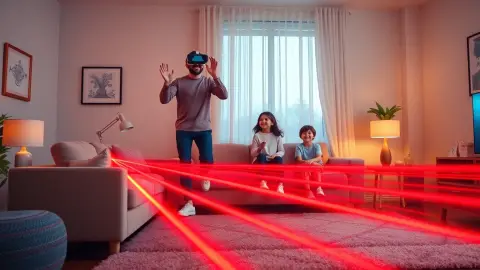
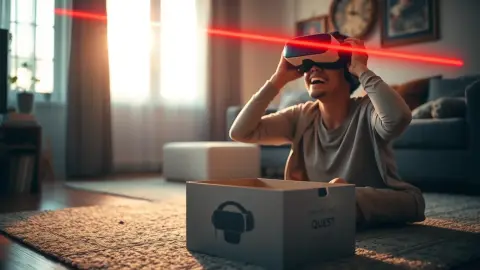
What Does Room-Scale Mean in VR? A Plain-English Guide
What does room-scale mean in VR and mixed reality? Learn how it differs from standing and seated play, how much space you need and how Quest handles it.
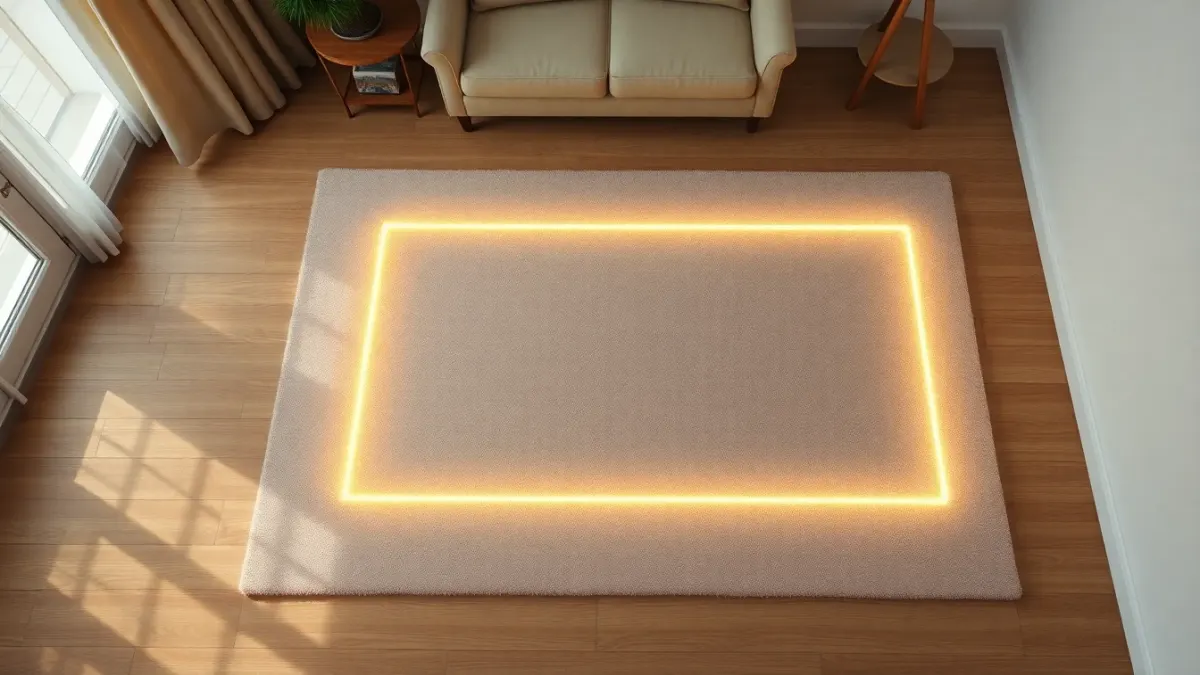
You will see the phrase everywhere on store pages: "room-scale". If you are new to headsets, it sounds technical. It is not. Room-scale means you can physically walk and move around a real area, and the game tracks it. That is the whole idea, and it changes how games are designed. Here is what it means in practice.
Three ways to play
Headset games generally fall into three comfort categories:
- Seated: you sit and use controllers. Minimal space.
- Standing: you stay roughly in one spot, turning and reaching.
- Room-scale: you move through a clear area, stepping, crouching and walking.
Room-scale is the most physical of the three, and the one that benefits most from tracking and from knowing where your walls are.
How the headset tracks you
Modern headsets such as Meta Quest 3 and 3S track your head and controllers using on-board cameras and sensors, with no external base stations. As you move, the headset updates your position in the virtual space. A boundary or play area, set up once, tells the headset where it is safe to move.
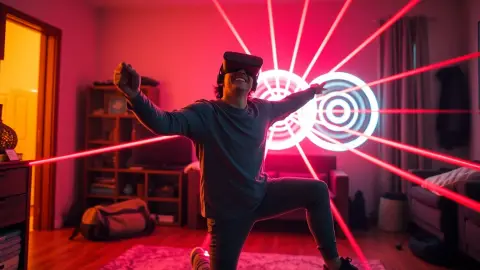
In mixed reality titles, there is an extra step: your headset also understands the room itself. You run Space Setup once, capturing the floor, walls and large furniture. A game like Laser Thief reads this layout and maps its beams and loot to your real surroundings.
How much space is "room-scale"?
There is no strict rule. Many games work in a few square metres. For active titles, a roomier area helps. Laser Thief recommends about 3 × 3 metres (10 × 10 feet) of clear floor, and says the more room you have, the wilder the laser grids can get. It will work in smaller rooms, but the levels are designed around a space you can really move in.
Why room-scale is more than a size
Room-scale changes the language of a game:
- Natural movement: you walk instead of pressing a stick.
- Physical choices: step left or lean left becomes the actual decision.
- Spatial memory: you remember where things are in your room.
- Body as controller: ducking, crawling and reaching are the inputs.
That last point is the core of Laser Thief. There is no joystick for it. When a beam is at knee height you step over it; when the grid drops to the floor you crawl.
Preparing a room-scale space
- Clear the floor. Shoes, toys, cables and pets.
- Move breakables. Lamps and glassware near the edges.
- Check overhead. Ceiling fans and low lights matter when you stretch.
- Light the space. Tracking is more reliable in good light.
- Re-run room setup after changes. If you rearranged the furniture, update the layout and restart the game.
Room-scale limitations
Not every home has a 3 × 3 metre clearing. You can push furniture to the walls for a session, play in a hallway or use a larger room. Some people play in a garage or an empty lounge. The important thing is safety, not hitting a perfect number.
Also remember that the headset can't see through you or around corners. Other people and pets entering the area are a real risk, so let the household know when you are playing.
Room-scale and mixed reality together
Combining the two is what makes games like Laser Thief feel special. You move around a real area, and the game's content responds to the real walls and furniture within it. For more, see the Laser Thief page.
A tiny room-scale checklist before you start
Walk the area once in normal light, looking for anything at ankle height, then at head height. Open doors that swing into the space should be closed, and chairs pushed under tables. Tell the household you are about to play. If someone might walk in, a simple sign on the door is more effective than hoping for the best. Two minutes of preparation prevents the most common headset accidents.
FAQ
What does room-scale mean on Quest?
It means a game that lets you physically walk and move within a cleared play area, with the headset tracking your position.
How big should my room-scale area be?
Active games like Laser Thief recommend about 3 × 3 metres (10 × 10 feet), but smaller areas can work.
Do I need sensors or base stations for room-scale on Quest 3?
No. The headset tracks you with its own cameras and sensors.
Is room-scale safe?
It is with preparation: clear the area, light the room, take breaks and stop if you feel unwell.