VR Fitness vs Mixed Reality Fitness: What Actually Differs
VR fitness vs mixed reality fitness compared: space, safety, immersion and motivation, plus how a game like Laser Thief fits between the two.
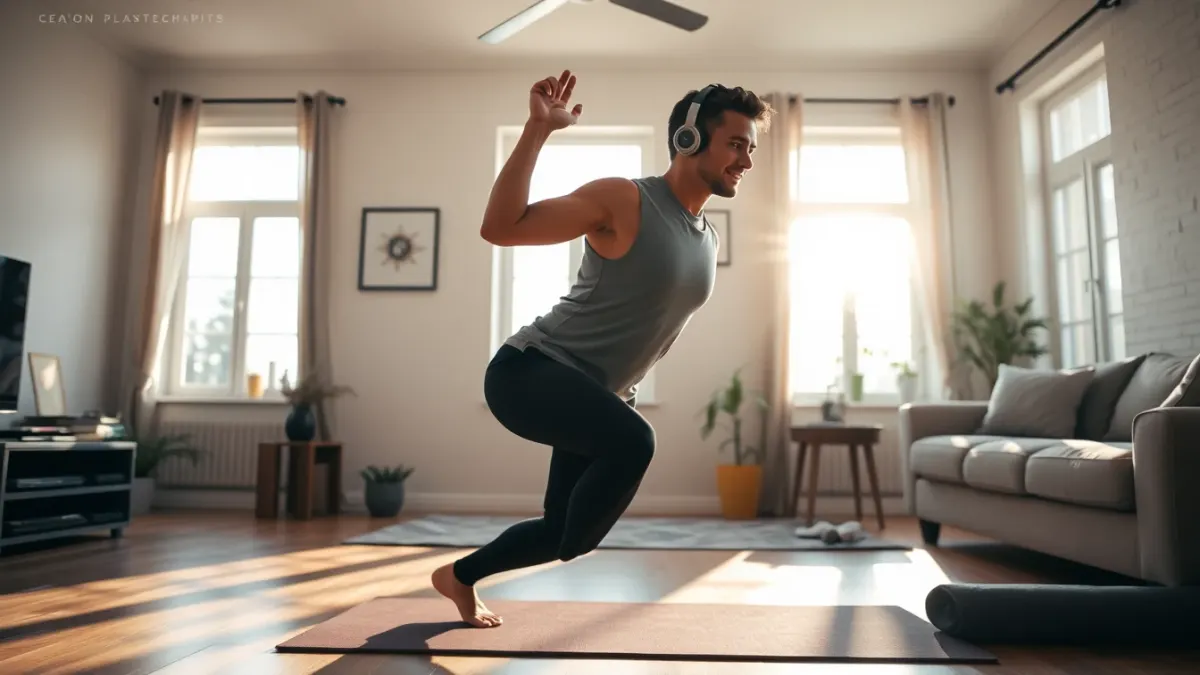
Both can get you moving, but they feel different. When people weigh VR fitness vs mixed reality fitness, the decision usually comes down to how much they want to be somewhere else versus how much they want to stay grounded in their own room. Here is a practical comparison.
The basic difference
In VR fitness, the headset replaces your surroundings with a virtual world: a boxing ring, a mountaintop, a rhythm tunnel. In mixed reality fitness, you keep seeing your real room, and digital elements join it.
Neither is "better". They suit different moods and different rooms.
Immersion
VR can transport you. If you want to forget your spare room, a fully virtual environment does the job. Mixed reality is more modest: you remain in your space, but the space becomes the game.
Laser Thief is a clear example of the second approach. The lasers, loot and safes are placed around your real furniture, and the whole point is that your room is the vault.
Safety and awareness
Seeing your room can be reassuring. In mixed reality you can notice a pet wandering in or judge the distance to the wall with your own eyes (via passthrough). In fully virtual experiences you depend on the boundary system.
That said, neither removes the need for common sense. Clear the floor, remove cables and breakables, and keep the room lit. Laser Thief's terms say it plainly: virtual lasers do not protect you from real furniture.
Types of movement
VR fitness often features repeated motions: punching, slashing, squatting to a beat. These are great for rhythm and endurance.
Mixed reality games can build movement around your actual space. In Laser Thief you duck under chest-height beams, lean and twist through gaps, crawl when the grid drops and reach for loot. The movement is varied and puzzle-like rather than strictly repetitive.
Motivation
What keeps you coming back?
- VR fitness often uses music, streaks and coaching.
- MR fitness can lean on challenge and curiosity: "Can I clear this grid without touching a beam?"
Laser Thief offers Story Mode through seven worlds, a 120-second Bomb Mode and a Free Play mode without a timer. Free Play is a gentle way to warm up; Bomb Mode is a short, intense burst.
Space requirements
Both need floor space. Laser Thief recommends about 3 × 3 metres (10 × 10 feet), and notes the game works in smaller rooms but is designed around a space you can move in. A larger area gives wilder laser grids.
Which should you choose?
Pick VR fitness if you want escape, rhythm or a structured workout class feel. Pick mixed reality if you like playful challenges that use your own room and don't want to lose sight of it.
Many people do both. The best fitness tool is the one that you will actually pick up again tomorrow.
Being sensible about it
Warm up, play in short sessions, stay hydrated and stop if anything hurts. Check with a doctor first if you have a condition affecting movement, balance or your heart. These games are fun exercise, not medical treatment. You can see how Laser Thief frames itself on the game page.
A sample week mixing both
You do not have to choose one forever. A relaxed way to combine them: use a fully virtual rhythm or boxing title for two sessions a week when you want to zone out, and a mixed-reality game for one or two sessions when you want playful problem-solving. Keep each session short at first, say 15 to 20 minutes, and notice how you feel the next day. Your legs, hips and lower back often tell you how much crouching and crawling you actually did.
In a game like Laser Thief, Free Play with no timer is a natural warm-up, then a few Story levels, and Bomb Mode only when you feel loose. Finish with a few minutes of gentle stretching away from the headset.
Costs you do not see on the box
Active play has hidden requirements: a tidy room, decent lighting, a bit of towel-and-water discipline and a willingness to look a little silly. Mixed reality adds one more: you must be comfortable with the headset seeing your room. If that matters to you, read each game's privacy policy. Laser Thief states that camera images and room layout stay on the headset.
FAQ
Is mixed reality good for fitness?
It can be, if the game asks you to move your whole body. Laser Thief involves ducking, crawling and stretching, so expect to work up some effort.
Is VR or mixed reality better for beginners?
Either can work. Mixed reality lets you see your room, which some beginners find more comfortable. Start with short sessions.
Do I need a lot of space for mixed reality fitness?
Active games like Laser Thief recommend roughly 3 × 3 metres of clear floor.
Can mixed reality replace the gym?
Treat it as an enjoyable addition to your activity, not a guaranteed replacement. Intensity varies by game and by how you play.