Full-Colour Passthrough on Quest Explained (And Why It Matters)
What is full-colour passthrough on Meta Quest 3 and 3S, how is it different from black-and-white views, and why games like Laser Thief depend on it?
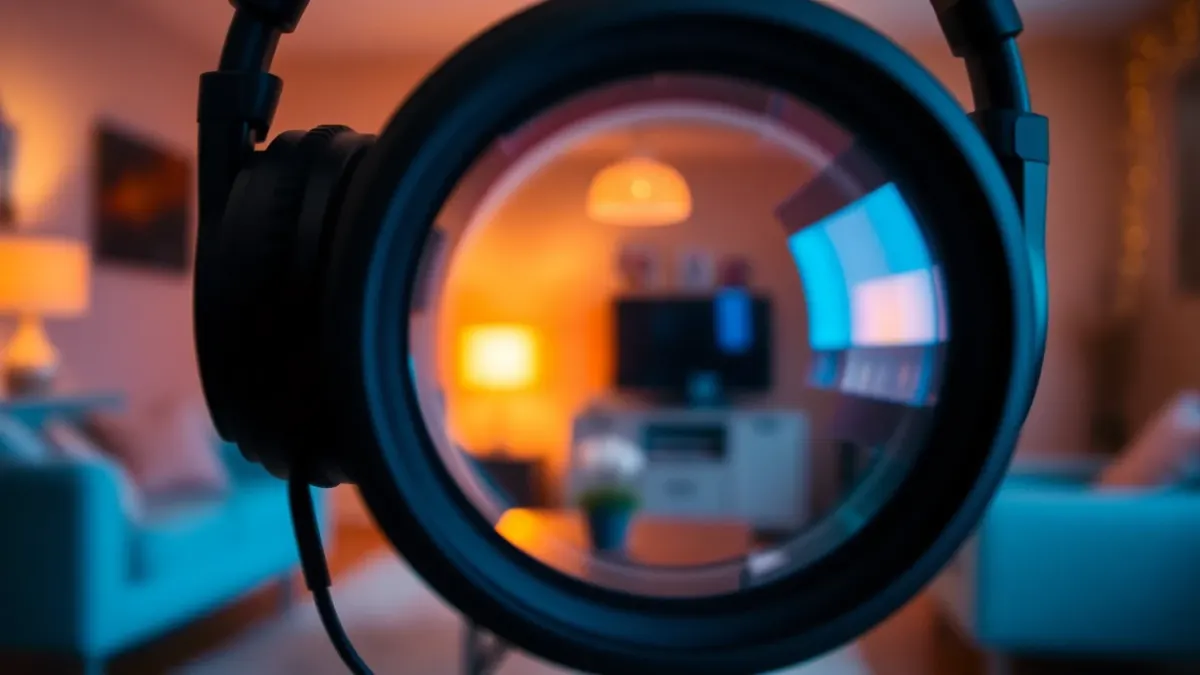
If you have used older headsets, you may remember the grainy, black-and-white view of the room that appeared when you stepped outside your boundary. Full-colour passthrough on Quest is the upgrade that makes the real world look like, well, the real world, and it quietly changes what a game can do. Here is what it is and why it matters.
What passthrough actually is
A VR headset blocks your eyes from the room. Passthrough works around that: cameras on the front of the headset capture the world and the headset shows that image on its internal screens. You are not looking through glass; you are looking at a live video feed that is processed fast enough to feel natural.
On Meta Quest 3 and Quest 3S, that feed is in colour. That sounds cosmetic, but it has some practical consequences.
Why colour changes more than looks
Recognition. In colour you immediately tell a red sofa from a brown door, a glass of water from a black remote. That helps you move confidently.
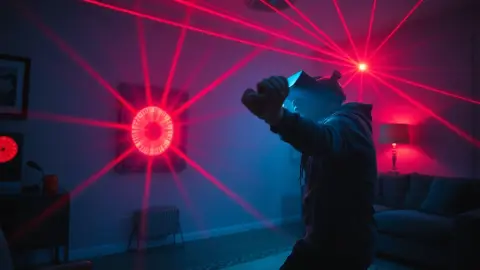
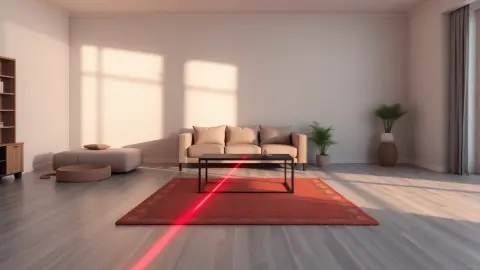
Believability. Virtual objects look more "present" when the real background has accurate colour and lighting. A glowing red laser looks great against a dim, warm living room.
Comfort. Many people find that a clear, colourful view makes mixed-reality play less disorienting than a murky one.
Design freedom. Developers can build experiences that assume you can see your environment properly, instead of treating passthrough as a last-resort safety view.
How games use it
Mixed reality games combine passthrough with room understanding. You run a room setup once on the headset (Space Setup), capturing floor, walls and large furniture. The game then places content to match.
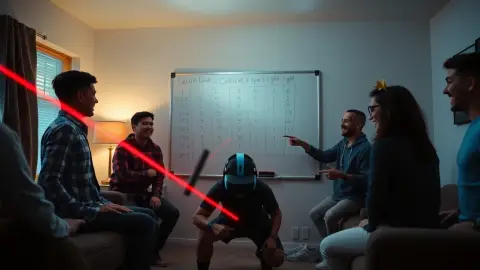
Laser Thief is built for exactly this. It draws laser grids between your real walls and furniture, and puts loot where your room's surfaces are. The support page notes that it relies on colour passthrough and room understanding, which is why it is designed for Quest 3 and 3S and not for headsets without those features.
What passthrough does not do
It is not a perfect window. There can be a slight delay, some distortion at close range and sensitivity to lighting. The headset also does not "see" through objects, so you still have to manage real hazards on the floor.
Privacy is a fair question here too. Whether a game can use the camera feed depends on the platform's permissions. In Laser Thief's privacy policy, passthrough data is processed by the headset's own runtime; the game does not record, store or transmit camera images.
Getting the best passthrough view
- Light the room well. Dim, flickering light degrades both the picture and hand/head tracking.
- Clean the front cameras and lenses. Smudges reduce clarity more than you'd think.
- Re-run room setup after rearranging. If lasers or loot appear in odd places, an updated layout fixes most issues.
- Remove reflective clutter. Mirrors and glossy surfaces can confuse tracking.
Passthrough and active games
Active games magnify the benefits. When you duck, step and crawl, you want to see the floor, the coffee table and the doorway. Full-colour passthrough lets you judge distances more naturally, which makes a game like Laser Thief feel both more immersive and more manageable. You can learn more on the Laser Thief page.
A quick before-and-after test
If you want to feel the difference rather than read about it, try this. Put the headset on in a lit room and look at something with strong colour, such as a bookshelf or a plant. Notice how quickly your brain accepts the view as "the room". Now imagine the same scene in muddy greyscale: you would still avoid walking into the wall, but you would not trust the picture for anything finer, like judging whether a beam at knee height clears your coffee table. Colour gives the brain more cues for depth and material, and active games lean on those cues every second.
What to expect as a player
Do not expect the view to be identical to your eyes. There is a small amount of latency and slight warping near the edges, and very bright windows or very dark corners can look different from real life. Most players stop noticing within minutes. If you feel uneasy, take the headset off, rest and try again later with shorter sessions.
FAQ
Do Quest 3 and Quest 3S both have full-colour passthrough?
Yes. Both are built for colour mixed reality, and Laser Thief is designed for both.
Is passthrough the same as augmented reality?
Passthrough is the technology that shows the real world inside a headset. Mixed reality is what you get when apps place digital objects into that view.
Why do lasers sometimes not line up with my room?
Usually the room setup is out of date or the lighting is poor. Re-run Space Setup, then restart the game.
Can I play in the dark?
Not ideal. A well-lit room helps the headset track you and keeps the passthrough picture clear.