Damage Types in Tower Defense: Why Variety Matters
Damage types in tower defense explained: how physical, frost, lightning, fire and explosive attacks create strategy, with Sozo's 8 towers as the example.
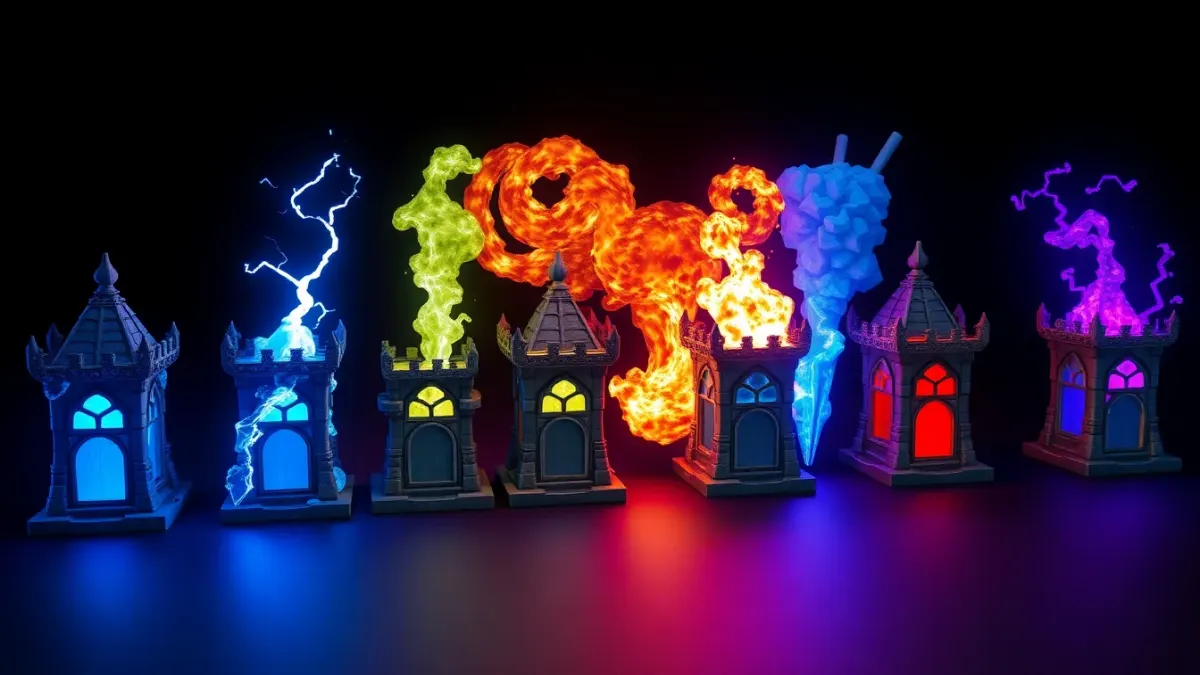
If every tower in a tower defense game did the same kind of damage, the genre would collapse into a simple question: who has the biggest number? Damage types exist to prevent that. They turn tower choice into a puzzle with real answers. Here is how the idea works, using the eight towers of Sozo Tower Defense as concrete examples.
The problem damage types solve
Without variety, the best strategy is to spam the strongest tower. Designers want players to ask better questions: What is coming, and what is the right tool? Damage types make some towers excellent against certain enemies and weak against others, so no single option wins everywhere.
Common damage categories
Most tower defense games use some version of these:
- Physical. Reliable and straightforward. Good all-round damage.
- Explosive or area. Hits groups, ideal when many enemies bunch together.
- Elemental (frost, fire, lightning). Adds side effects like slowing, burning or shocking.
- Energy or magic. Often positioned as high-end damage that gets past defenses.
How Sozo's eight towers use them
Sozo Tower Defense gives each tower a clear identity:
- Ballista: precise physical bolts, the reliable backbone of every defense.
- Cannon: explosive shells that blast whole groups of ground enemies.
- Frost Spire: frost damage that slows the wave and buys your other towers time.
- Tesla Coil: lightning that shocks anything that wanders into range.
- Flamethrower: short range, constant fire, and a burn that keeps on hurting.
- Missile Battery: explosive missiles that reach up and knock flyers out of the sky.
- Prism Laser: focused energy beams that melt even the toughest monsters.
- Arcane Obelisk: arcane power for when nothing else gets through.
Each tower can be upgraded through three tiers, so a choice you make early keeps growing.
Damage type meets enemy trait
The real design magic happens when damage types meet enemy traits. Sozo's realms put it into practice: Clockwork Citadel has armored machines that shrug off weak hits, so heavy towers matter. Verdant Hollow monsters regenerate unless finished off, which rewards burst damage. Flyers skip the path entirely, so you need something that can reach them.
This is why the game's own description says to find the combination that holds. Slow the wave with frost, burn it, shock it, blast it.
Designing for combinations, not counters
A weak design is a pure rock-paper-scissors: tower A beats enemy B, end of story. Better designs reward combinations. A slowing tower makes everything else more effective; area damage works best on bunched-up groups that a slow created. That is the sense in which towers are partners rather than independent solutions.
Tips for using damage types well
- Identify the threat first. Check what the next wave contains before building.
- Build one tower that slows. Slowing multiplies the value of your other towers' time in range.
- Keep an answer for the air. Flyers ignore the path, so do not rely only on ground coverage.
- Do not over-invest in one type. Diversify so a new trait does not shut down your defense.
A worked example: three waves, three answers
Imagine a level that opens with a fast swarm, follows with an armored brute and ends with a flyer. A single favourite tower fails somewhere. Cannon shells are great against the bunched-up swarm, but they do little against the flyer. A Missile Battery covers the air, yet it is a poor use of budget against ground crowds. Heavy single-target damage handles the brute while a slowing tower keeps everything in range longer.
Walking through a wave like this before you place anything is the core skill the genre teaches. You are not memorising a table of strengths and weaknesses; you are reading the situation and picking tools that complement each other. That is also why the same level can be solved in several different ways, and why replaying it with a new combination stays fun.
FAQ
What are damage types in tower defense?
They are categories of attack, such as physical, explosive, frost or lightning, that behave differently and are effective against different enemies.
How many tower types does Sozo have?
Sozo has 8 tower types, each upgradeable through three tiers, as well as 48 enemy types.
Which tower should I build first?
A reliable all-rounder such as the Ballista is a sensible start, and then you can adapt to what the wave shows. Get the game on the Meta store.