Designing Games for Every Room: The Play-Space Problem
How do mixed reality developers design for every living room? The play-space problem explained, with the level builder approach as one practical answer.
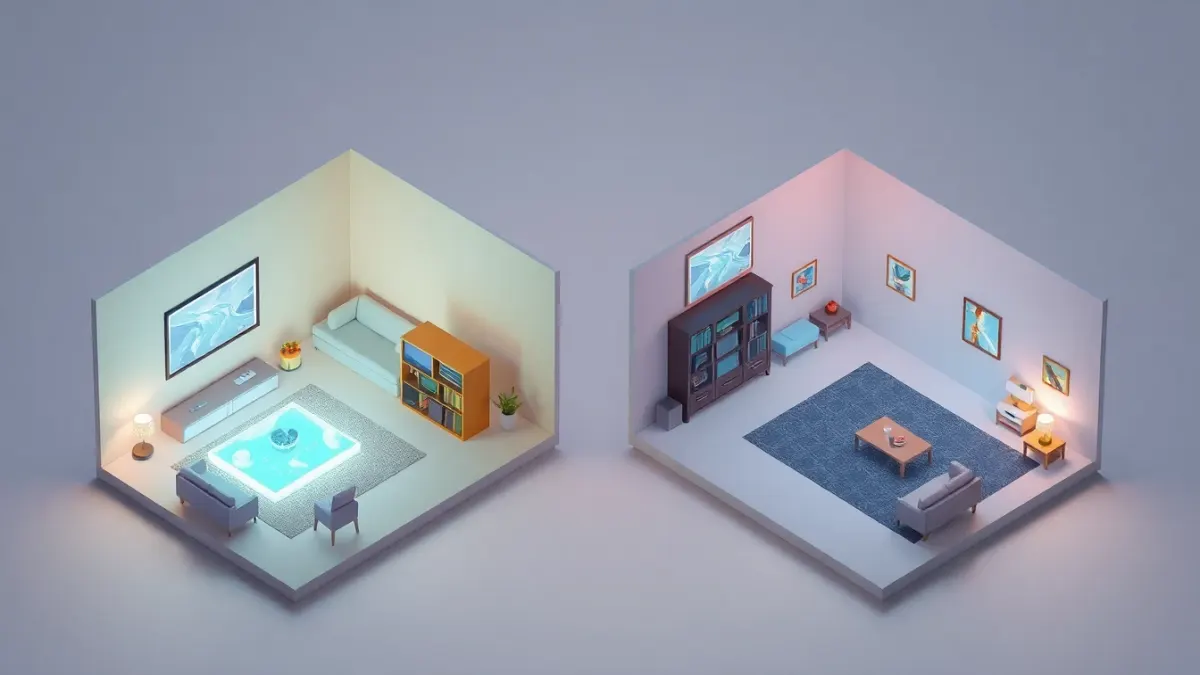
Every living room is different. One has a sofa along the wall and a low table; another is nearly empty; a third is a narrow hallway with a bookshelf. Developers of mixed reality games cannot see your room, yet they must make a game that works in it. This is the play-space problem, and it explains a lot about how room-aware games are designed. Here are the common solutions, with the approach used by Tank Avenger: Mixed Reality.
The problem in a sentence
A designer wants precise level geometry, but the player's room offers unpredictable geometry. Precision and unpredictability collide.
Solution 1: Use only what the room guarantees
The simplest approach is to ask for a modest clear area and a floor, and design for that. Tank Avenger's support page suggests a clear floor area of roughly 2 × 2 metres, which is a realistic baseline for many homes. Designing for a known minimum keeps the experience reliable.
Solution 2: Read the room data
Headsets let players capture their floor, walls and furniture in room setup. Games can use that data to place content on real surfaces. Tank Avenger builds the battlefield on your real floor and furniture, and its support page advises keeping your room setup current: re-run it after moving furniture, then restart the game so it re-reads the layout.
Solution 3: Let the player decide
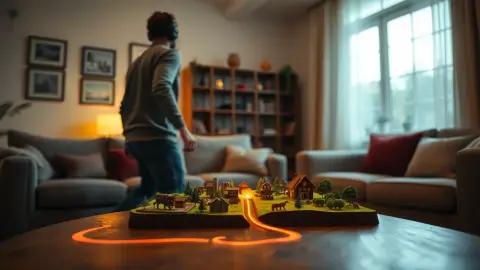
Instead of the developer guessing, give the player tools. Tank Avenger's Level Builder is designed around your real-world play space: place blocks on the coffee table, walls along the sofa and spawn points by the door. The player knows their room best, so the player shapes the arena.
Solution 4: Keep the action scalable
Good designs work at several sizes. A table-sized arena is great for a small flat; open floor allows more room. Tank Avenger says a table or coffee table makes a great arena, and also lets events burst out across the floor, as enemies roll across it and air strikes cut through the kitchen.
Solution 5: Prioritize safety
The best adaptation to a room is protecting the player in it. Developers should remind players to clear obstacles and respect boundaries. Tank Avenger's terms list the basics: clear the area of obstacles, cables and fragile objects, complete the headset room setup, keep boundary features enabled, play in a well-lit room, take breaks and stop if you feel unwell.
Trade-offs in each approach
| Approach | Strength | Weakness |
|---|---|---|
| Fixed minimum area | Reliable | Can feel generic |
| Reading room data | Personal and grounded | Depends on setup quality |
| Player-built levels | Maximum fit | Takes player effort |
| Scalable action | Works in many homes | Hard to balance |
What players can do to help the game
- Keep room setup current.
- Clear the area before each session.
- Choose a table or floor spot with good lighting.
- Avoid mirrors and large glass surfaces if your game struggles to place content.
- Use the level builder to fit levels to your space.
Privacy side of room data
Reading a room raises fair questions. Tank Avenger's privacy policy says the room layout is processed on the headset by its own runtime, and the developer never receives images or the layout of your room. Always read a game's policy to see what it does.
The bigger lesson
The strongest mixed reality designs treat the room as a collaborator, not an obstacle. They plan for variety, give players control and communicate safety clearly. See how one game does it on the Tank Avenger page.
A checklist before every session
Before you start, glance at the floor for cables and shoes, check that the lighting is even, confirm your boundary is still correct and make sure nothing fragile sits within reach. It takes under a minute and prevents most problems. If you recently moved furniture, rerun room setup. With these habits, a game that adapts to your room can do its best work, and you can focus on the fun instead of worrying about the space.
FAQ
Why is designing for the player's room hard?
Because every room has different dimensions and furniture, while level design usually needs predictable geometry.
How does Tank Avenger handle different rooms?
It places the battlefield on your real floor, table and walls and offers a Level Builder designed around your own play space.
What if my furniture changes?
Re-run your headset's room setup and restart the game.
How much space do I need?
Roughly 2 × 2 metres of clear floor works well, and a coffee table can be the arena.