Mixed Reality vs Augmented Reality: What's the Difference?
Mixed reality vs augmented reality explained simply, with examples from phones and headsets, and why room-aware games like Tank Avenger sit in the middle.
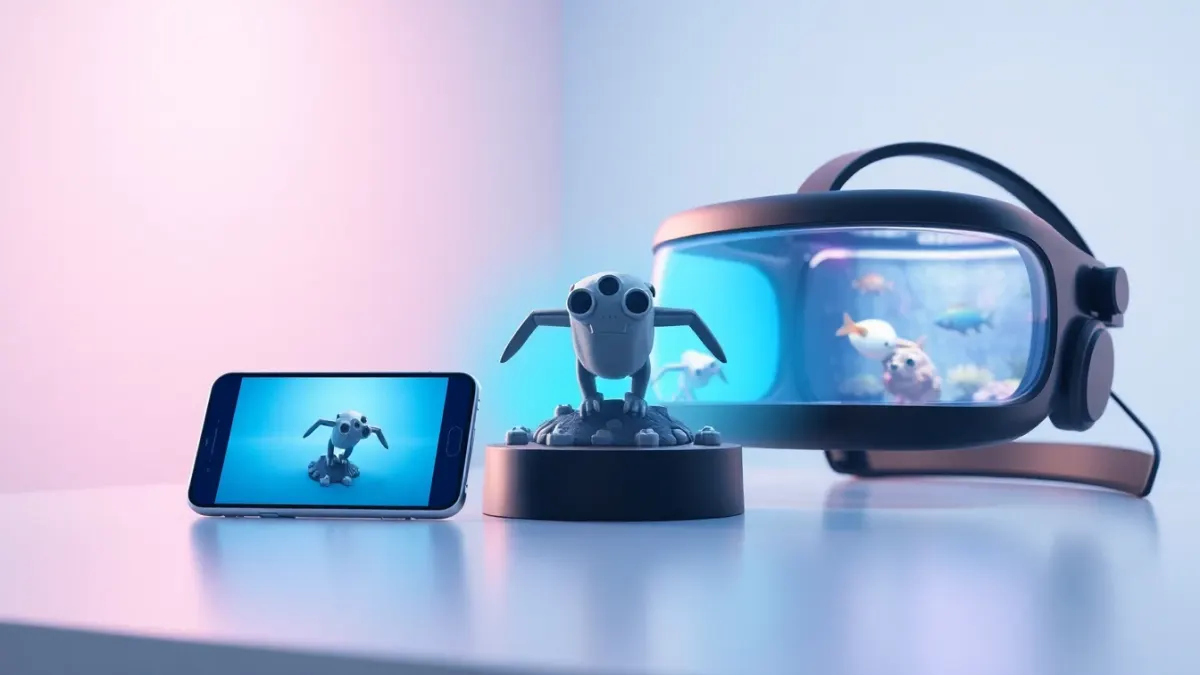
Augmented reality (AR) adds digital content to a view of the real world, usually through a phone screen. Mixed reality (MR) goes further: the digital content is aware of the physical space, sits in it convincingly and often responds to it. The line between them is blurry, and even industry people argue about it. This guide gives you a practical way to tell them apart.
A quick vocabulary
- VR (virtual reality): the real world is blocked out; you see only a digital one.
- AR (augmented reality): digital elements are overlaid on the real world, commonly viewed through a phone or glasses.
- MR (mixed reality): digital and physical elements coexist and interact, usually via a headset with passthrough cameras.
- XR: an umbrella term covering all of the above.
The "does it understand the room?" test
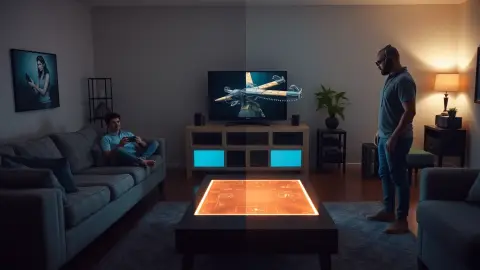
The most useful distinction is how much the software knows about your space. A simple AR app might drop a character onto a flat surface it detected. A mixed reality game on a headset can use the floor, walls and furniture captured in your room setup, so a block can rest on a table and an object can be hidden or constrained by the room's geometry.
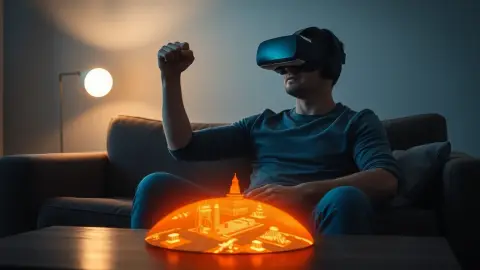
That is the approach behind Tank Avenger: Mixed Reality. It asks your headset for the layout of your floor, walls and furniture and builds the battlefield around them. Its Level Builder even lets you place blocks on your coffee table, walls along your sofa and spawn points by the door.
The "where do you look?" test
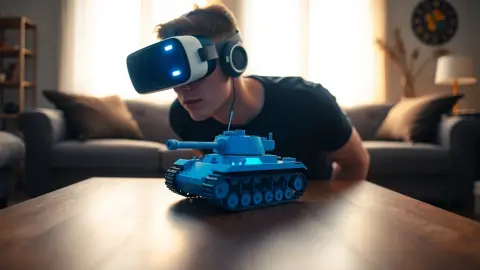
With phone AR you look through a small window at the world. With a headset you look at the world with both eyes and move your head naturally. The field of view feels bigger and depth is easier to judge, which matters when a shell bounces across your floor.
Examples of each
Typical AR: pointing a phone at a table to preview furniture, or catching a creature in a park through the screen.
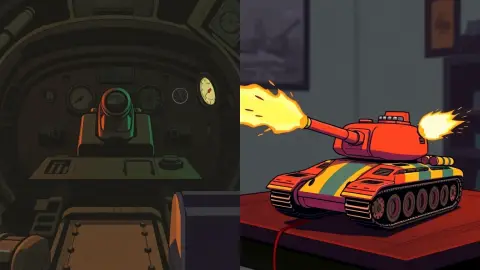
Typical MR game: a headset experience where enemies roll across your floor, helicopters hover above your table and air strikes cut through your kitchen, as in Tank Avenger.
Why the difference matters for games
- Hands and body. Headsets free your hands. Tank Avenger even has you catch a launched nuke with your own hands and throw it away.
- Persistence of space. A headset can keep a battlefield in place while you walk around it.
- Immersion. Wearing a headset removes the phone-screen frame, so the virtual objects feel less like an overlay.
Where the terms blur
Marketing uses "AR" and "MR" loosely. Some headset apps with simple overlays get called MR; some phone apps with clever surface detection get called AR. Rather than worrying about labels, ask what the experience does: does it respect your furniture, let you walk around it and react to the room? If yes, it behaves like MR.
Choosing what to try
If you own only a phone, AR is the accessible entry point. If you own a Meta Quest, mixed reality games give you the richer version. Tank Avenger offers 200 levels, four worlds, six upgradeable weapons and four modes, all anchored to your own space. See it on the product page.
What this means for buying decisions
If a store page says AR, check whether it is describing a phone experience or a headset one. If it says mixed reality, look for the words passthrough and room setup, which tell you the game actually looks at your space. For headset owners, reading the support page is the quickest way to learn what a game does with your room. Tank Avenger's support page, for instance, spells out that passthrough is required, which tells you immediately that it belongs firmly in the mixed reality camp rather than the pure VR one.
FAQ
Is mixed reality just advanced augmented reality?
You can think of it that way. MR is usually described as AR with a deeper understanding of, and interaction with, the physical environment.
Does mixed reality need a headset?
In practice, yes. Rich MR experiences generally use a headset with passthrough cameras and room mapping.
Which one is better for gaming?
Headset mixed reality offers more immersion and free hands, while phone AR is easier to access. For action games played in your living room, headset MR is the stronger fit.
Is Tank Avenger an AR game?
It is a mixed reality game for Meta Quest headsets. It uses passthrough and your room layout rather than a phone screen.