The Flashlight in Horror Games: Light, Darkness and Dread
Why the flashlight mechanic in horror games works: limited light, what it hides and how HAUNTED turns a flickering beam into a survival tool.
A flashlight is the most basic tool a horror game can hand you, and one of the most effective. The flashlight mechanic in horror games works because it gives you something you desperately want (sight) in a limited, fragile form. Here is how designers use it.
Light as a resource
Darkness is the default; light is something you hold. When you have a beam, you decide where to point it, and everything outside the beam becomes uncertain. That is a clever trick: the player creates the unknown by choosing what to look at.
The two kinds of fear
A flashlight helps with two opposite fears:
- What is out there? The beam reveals it.
- What did I just uncover? The beam shows it.
Sometimes finding the monster is worse than not seeing it.
Fragility makes it tense
If a flashlight were permanent, it would be a tool. When it can flicker or die, it becomes a source of stress. In HAUNTED, the flashlight flickers out and you shake it back to life, fast. The game's own support note says that if your flashlight goes dark, it is not a bug: shake it and it comes back to life, and try not to take too long.
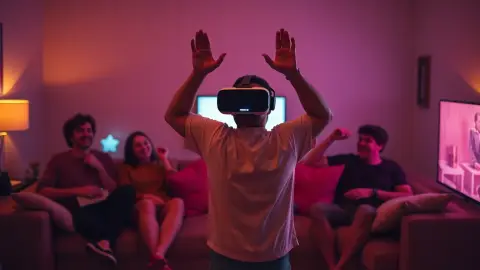
That small action is clever because it is physical. In a headset, shaking a flashlight is a real movement made in a real, dim room.
Light as a weapon
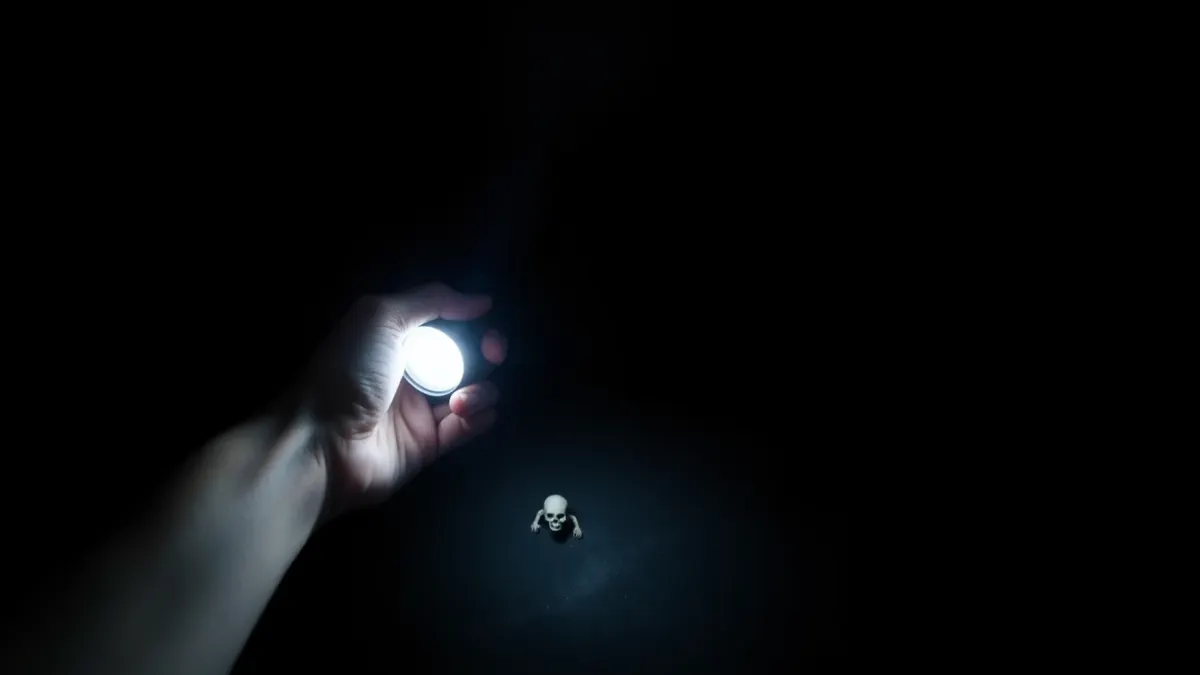
In HAUNTED: Are You Alone?, the flashlight is also an answer to a specific threat: skulls crawling out of your floor can be shot, or frozen in your flashlight beam. This turns light into a defence, not just a means to see.
Mixed reality and darkness
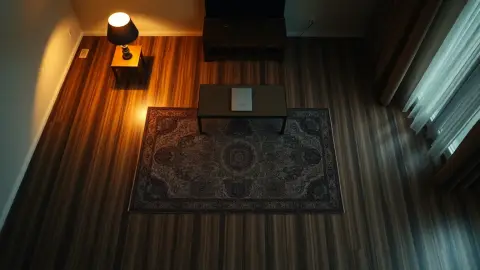
The darkness in mixed reality games is complicated, because the real room is still visible. Games darken or dim passthrough to create atmosphere, and your own lamp or ceiling light can influence what you see. Good lighting also helps hand tracking, so there is a trade-off. In practice, find a balance: dim enough to feel eerie, bright enough for tracking.
Design lessons
- Limits create tension. A flickering light is more interesting than a steady one.
- Tools should be physical. Shaking, aiming and pointing are satisfying gestures.
- Light should be a decision. Where you point it matters.
- Darkness is not just black. Shapes, sounds and hints make it scary.
Tips for playing
- Keep the beam moving; do not stare in one place.
- Listen. Sound often reveals what the light cannot.
- If the light goes out, act immediately instead of panicking.
- Take the headset off any time you feel unwell.
Content note
Darkness is part of the design here, so the content warning matters for lighting in particular: the game uses flashing and darkened light, along with sudden loud sounds, gore and intense jump scares. It is not suitable for children, people who are pregnant, or anyone with epilepsy, heart conditions or anxiety disorders.
The psychology of the beam
A beam of light has an edge, and the edge is where fear lives. Everything inside is known, everything outside is not, and horror designers love that boundary because the player controls it. Moving the beam rapidly reveals more but never everything, and the player can feel their own vigilance rising as a result.
There is also a social-media-friendly side: a flickering flashlight is a perfect source of shared jokes. Telling a friend "shake it, shake it!" is a small moment of connection in the middle of terror. Mechanics that invite spoken reactions are good for streaming, for couch audiences and for building memories, and a flickering light is one of the cheapest ways to get there.
As a practical matter, remember that a flashlight in a headset game is not a real light. It will not help you see your actual room, so keep the real-world lighting at a level where your boundary and furniture remain visible. Atmosphere is wonderful, but you should always be able to see where you are standing.
FAQ
Why are flashlights so common in horror?
They provide a limited view, which is exactly what horror wants.
What do I do if the flashlight dies in HAUNTED?
Shake it and it comes back to life.
Does the flashlight damage enemies?
The game's description says crawling skulls can be frozen in the flashlight beam.
Where can I find the game?
On the store page.