Difficulty Curves in Movement Games: From Warm-Up to Warzone
How difficulty curves work in physical movement games, why climbing gradually matters, and how seven themed worlds help keep Laser Thief fresh.
If you have ever abandoned a game because it got too hard too fast, or because it never got interesting, you have met a bad difficulty curve in games. The curve is the shape of how challenge grows as you play, and in a movement game it matters even more, because your body has to keep up. Let's unpack how it works and how Laser Thief approaches it.
What a difficulty curve is
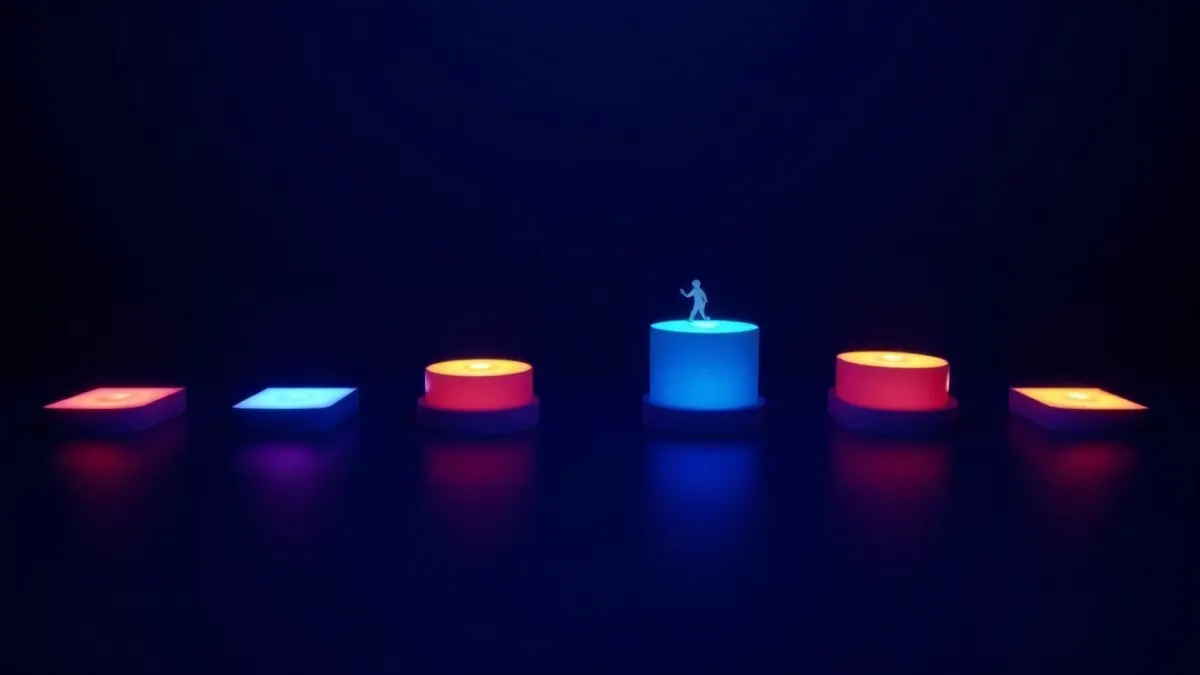
Imagine a line: the horizontal axis is time, the vertical axis is challenge. A good curve is not a straight ramp. It rises, plateaus so you can consolidate, then rises again. Players need moments to feel competent before the next stretch.
Why movement games are special
In a button game, getting better means faster fingers and better decisions. In a body game, it also means flexibility, balance and endurance. These develop more slowly and tire you out. A body game therefore needs:
- Gentler early levels while you learn what your body can do.
- Rest moments so you don't get exhausted.
- Optional intensity so you can choose your effort.
How Laser Thief shapes the curve
The game offers more than 150 levels across seven worlds: Food, Viking, Transport, Garbage, Furniture, Money and Warzone. The story-mode path climbs from the warm kitchen to the final test, where the descriptions promise explosives everywhere and no room for error. Every level is a little harder than the last.
That structure means the game can introduce ideas in a friendly setting and then recombine them in tougher ones. The vault comes with the tightest laser grid yet; the Garbage world brings poison bubbles that punish anyone who stands still too long. Each world adds flavour as well as challenge.
Three modes, three curves
One of the neat tricks is that the game offers three modes with different shapes:
- Story Mode: a long, gradual climb with a narrator along the way.
- Bomb Mode: a 120-second spike of pressure.
- Free Play: random levels, no clock, a flat curve you control.
You can match the mode to your day: Free Play when you're tired, Bomb Mode when you want adrenaline, Story Mode for progress.
Signs of a healthy curve
How do you know the pacing is working? Look for these:
- You fail often enough to feel challenged but rarely feel cheated.
- New levels teach through situation rather than text.
- You feel a small win every few minutes.
- Difficulty spikes are followed by relief.
Managing your own curve
You can improve the experience by shaping your own difficulty:
- Warm up in Free Play to find your range of motion.
- Take breaks when your legs feel wobbly. Fatigue makes every grid harder than it is.
- Replay a tough level the next day. Your body consolidates skill during rest.
- Don't force poses that hurt. Challenge should never mean pain.
Why themes help
Variety hides repetition. Even if the verbs stay the same (duck, dodge, crawl, reach), moving between a kitchen, a longhouse and a showroom resets your attention. Themed worlds are a pacing tool as much as a visual one.
A note on physical limits
Because this is an active game, your personal "hard" is different from someone else's. Choose a comfortable pace, play in short sessions and check with a doctor if you have a condition affecting movement, balance or your heart. Explore the full world list on the Laser Thief page.
Reading your own plateau
Plateaus are normal. If you are stuck on a level for several tries, try a different approach before concluding it is too hard: change which foot leads, lower your crouch earlier, or reach with the other hand. If your legs are tired, a day of rest will do more than a tenth attempt. Movement skill improves between sessions as much as during them, which is another reason short, regular play beats a single marathon.
FAQ
How many levels does Laser Thief have?
More than 150 levels across seven worlds.
Does Laser Thief get harder?
Yes. Story Mode climbs in difficulty, with the final world, Warzone, described as the ultimate test.
Can I play without difficulty pressure?
Free Play offers random levels with no clock or pressure.
Why do I get tired quickly in movement games?
Crouching, crawling and stretching use muscles that rarely work this way. Keep sessions short and build up.