Duck, Dodge, Crawl, Reach: The Four Moves of a Laser Heist
Duck, dodge, crawl and reach explained: what each movement in a mixed reality laser heist asks of your body, and how to practise each one safely.
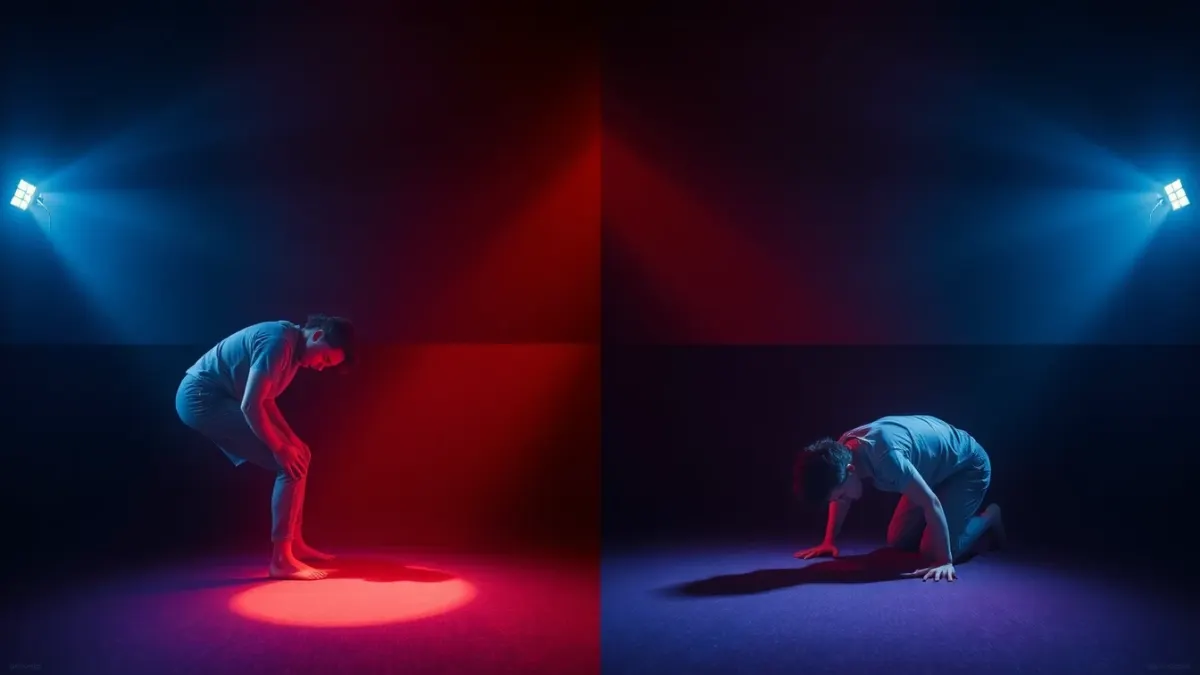
Laser Thief boils a whole game down to four physical verbs. If you understand duck, dodge, crawl and reach, you understand how every one of its 150+ levels works. This guide explains what each move asks of your body, when the game calls for it, and how to practise without hurting yourself.
Duck
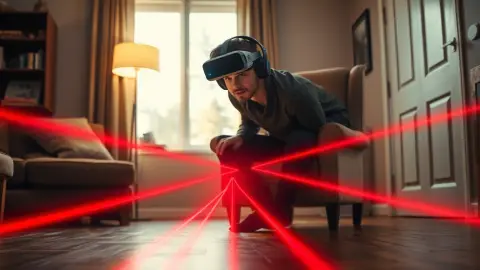
Ducking is the entry-level move: drop under a beam that crosses at chest height. It is mostly knees and hips, with the head and shoulders following.
What helps: bend at the knees, keep your back reasonably straight and look at the beam rather than the floor. Because the headset tracks your head position, a clean, controlled duck tells the game where you are.
Common mistake: ducking with only your head, leaving shoulders in the beam. Think "lower the whole upper body".
Dodge
Dodging means leaning, twisting and stepping through gaps. This is the most varied move, because gaps come in every shape.
What helps: pick your path before moving, then step deliberately. A short sidestep often beats a big lunge. Keep your centre of gravity over your feet.
Common mistake: speed. The game rewards precision, and fast movements make accidental touches more likely and tracking less clean.
Crawl
When the grid drops towards the floor, you get low. Crawling is the most demanding move for knees, wrists and thighs, so respect it.
What helps: a clear, comfortable floor surface, a slow pace and short bursts. Cushioned flooring or a rug can help, and you should avoid slippery surfaces.
Common mistake: forcing a crawl when something hurts. Stop and rest. No level is worth sore joints.
Reach
Reaching is the moment you grab the loot without touching a beam. It combines the other three: you often hold a low or twisted position while extending an arm.
What helps: plan the approach so your hand arrives last. Slow the final inch. Think of it as threading a needle with your whole arm.
Common mistake: rushing the grab. The prize rarely escapes; your shield, however, shrinks fast.
How the moves combine
Levels mix the verbs. You might duck under one beam, dodge through a gap, crawl beneath a low grid and finish with a reach. The Story Mode path across seven worlds shuffles the order and tightens the spacing. Bomb Mode adds a 120-second clock where hesitation is not rewarded, and Free Play lets you practice any combination without a timer.
A simple practice routine
- Warm up. Shoulder rolls, hip circles and a few slow squats.
- Start in Free Play. Random levels, no clock.
- Focus on one verb per session. Today is crawling, tomorrow is reaching.
- Rest between runs. Your muscles learn during the pauses.
- Cool down. Gentle stretching away from the headset.
Space and safety
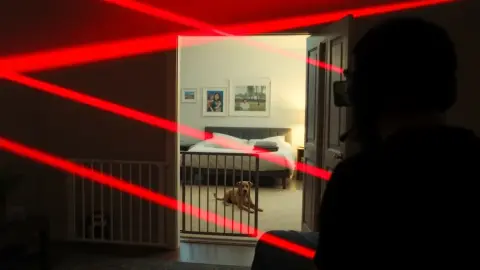
The recommended play area is about 3 × 3 metres (10 × 10 feet). Clear shoes, cables and fragile objects. Light the room well for tracking. Virtual lasers do not protect you from real furniture, so keep your real surroundings in mind, especially during low crawling and wide reaches. Stop if anything hurts, and if you have a condition affecting movement, balance or heart health, ask a doctor before playing.
Why four moves are enough
Simple verbs make a game easy to learn and hard to master. You never have to remember a button layout, so all your attention goes into your body and the grid. Visit the Laser Thief page to see them in action.
Reading which move a grid wants
With practice you start to see the answer in the grid itself. Horizontal beams at chest height scream "duck". Vertical or diagonal beams with gaps suggest dodging. A dense low grid is a crawl. A lone target surrounded by light is a reach. Spend a few seconds identifying the dominant move, then plan the transitions between them. Many mistakes happen at the changeover, when you are finishing one posture and starting the next, so slow down at those points.
Warming up the right muscles
Each move leans on different muscles. Ducking uses quads and glutes, dodging uses hips and core, crawling uses wrists, shoulders and knees, and reaching uses shoulders and balance. A short warm-up that includes bodyweight squats, hip circles, gentle wrist rolls and arm swings covers most of them. Cool down with a calf, quad and shoulder stretch afterwards.
FAQ
What movements does Laser Thief use?
Ducking, dodging, crawling and reaching.
Do I have to crawl on the floor?
Crawling is part of the game when the grid drops low, so be ready to get low. Take it at your own pace.
Is Laser Thief hard on the knees?
It can be demanding. Use a comfortable surface, take breaks and stop if you feel pain.
Is there a mode without a timer?
Yes. Free Play has random levels and no clock.