The History of Tank Video Games: From Arcades to Your Room
A short history of tank video games, from simple arcade shooters to bouncing-shell arenas and mixed reality battles fought on your own living room floor.

Tank video games have been around for as long as video games have existed in public spaces, and their core idea has barely changed: maneuver, aim, shoot, and use walls to your advantage. What has changed is where the battle happens. This is a broad tour of how the genre evolved, and where mixed reality fits in.
A note on method: this is a genre-level overview, not a definitive timeline. Dates and "firsts" in game history are often disputed, so treat the stages below as broad eras rather than exact claims.
Era 1: The arcade arena
Early tank games were simple. A tank was a few pixels, the maze was a few lines, and the fun came from reading the geometry. Players learned that a shell fired at a wall comes back, and that the best shot is sometimes the one you cannot see yet. Those basics never went away.
Era 2: Top-down and maze shooters
As hardware improved, designers built denser mazes, destructible walls and waves of enemy tanks. Level-based structure took hold: clear the screen, move to the next stage, face a new layout. This is the DNA you can still recognize in today's tank arenas, including the idea of simple rules with endless layout variation.
Era 3: Simulation and "serious" tanks
A different branch aimed for realism: armor angles, ammunition types, crew roles. Simulation tank games trade quick fun for depth, and they attract players who enjoy learning systems. This split between arcade and simulation still defines the genre, and we compare them directly in our arcade vs simulation guide.
Era 4: Online and team modes
Networked games brought team modes, capture-the-flag variants and survival waves to tank combat. Many of those mode ideas live on. Tank Avenger, for instance, includes Deathmatch, Capture the Flag, Juggernaut and Survival modes, a nod to this long lineage of match types.
Era 5: VR and mixed reality
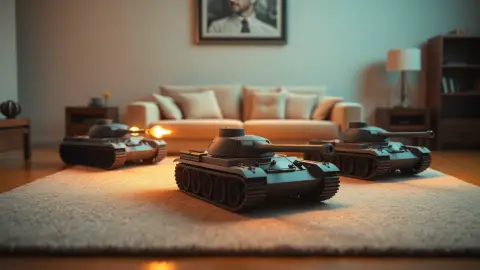
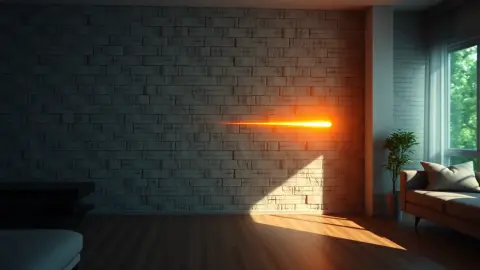
Virtual reality put players inside vehicles or above battlefields. Mixed reality takes a different path: it brings the battlefield into your actual room. In Tank Avenger: Mixed Reality, enemies roll across your floor, helicopters hover over your table and air strikes cut through your kitchen.
It is also a return to something older than video games: model battlefields on a table.
What stayed the same
- Walls matter. Cover and ricochets create tactics out of geometry. Tank Avenger's Normal Gun bullets bounce once off walls; the Fast Gun's bounce twice.
- Variety through arenas. New layouts and new surfaces keep the same rules fresh. Tank Avenger spreads 200 levels over City, Desert, Jungle and Ice worlds.
- Escalating arsenals. Better guns and special tools make progression feel rewarding. Tank Avenger has six upgradeable weapons, from the Normal Gun to the Triple Gun.
What is new
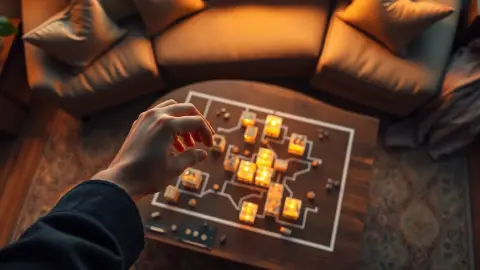
The big shift in mixed reality is the arena. It is no longer drawn on a screen; it is your floor and table. The Level Builder in Tank Avenger carries this to its conclusion by letting you design battlefields around your real play space, with blocks on your coffee table and walls along your sofa.
Why history helps you choose games
Knowing the lineage tells you what to expect. If you enjoy the arcade branch, you want clear rules, fast rounds and satisfying shots. If you prefer simulation, you want realism and depth. Mixed reality currently leans toward the arcade side because short, readable action works well in a living room.
What the history teaches designers
Looking back, the genre's survivors share a few traits: simple rules that anyone can learn, geometry that creates tactics, and enough variety to keep levels from blurring together. Games that tried to add too many systems at once often lost the clean readability that made the early ones addictive. Modern mixed reality titles can learn from this. Passthrough and room-scale movement are exciting new tools, but the best use of them is still the oldest trick in the genre: give players a small, readable battlefield and let them find clever solutions.
FAQ
What was the first tank video game?
Different sources point to different early arcade titles, and "first" depends on definitions. It is safer to say tank games date back to the early arcade era.
Are modern tank games more realistic?
Some are, particularly simulations. Arcade-style tank games keep the focus on quick, readable fun rather than realism.
Where does Tank Avenger fit in tank game history?
It sits in the arcade lineage of level-based tank arenas with ricocheting shots, but plays out in mixed reality on your real floor and furniture.
Can I build my own tank levels in modern games?
In Tank Avenger you can, using its Level Builder, which is designed around your real-world play space.