Mixed Reality Explained for Beginners (With a Game Example)
Mixed reality explained in plain English: how it differs from VR and AR, what passthrough does, and how a game like Laser Thief uses your real room.
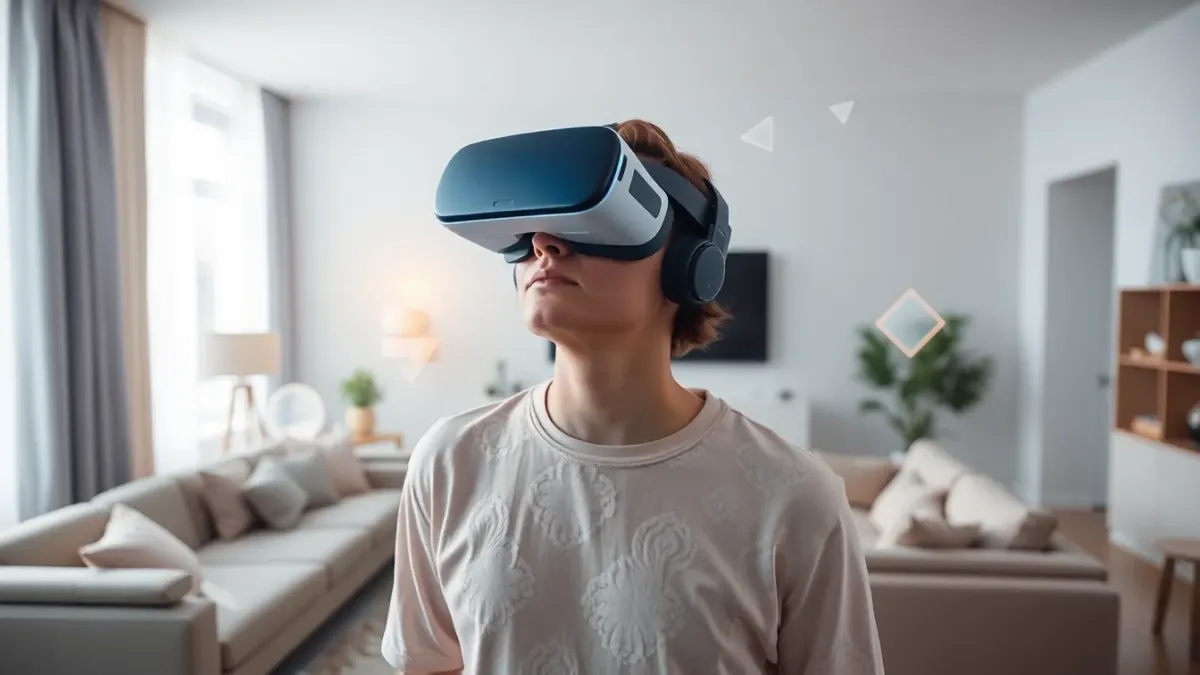
Mixed reality sounds like marketing jargon until you see it. Then it clicks in seconds. Here is the short version: mixed reality (MR) blends digital objects into the real world you can still see, and those objects can react to your space. This guide gives you mixed reality explained without the buzzwords, using a concrete example along the way.
Three terms people confuse
Virtual reality (VR) replaces your surroundings. Put on the headset and you are somewhere else entirely: a spaceship, a castle, a stadium. The real room disappears.
Augmented reality (AR) overlays information on the real world, often through a phone screen. Think of a phone showing a virtual character on your table.
Mixed reality (MR) sits between them. You see your real room, and virtual things appear inside it and respond to it. A virtual object can sit on your actual table, hide behind your actual sofa, or cast a glow across your actual floor.
The boundaries are blurry, and companies use the words differently. For a Quest owner, the practical question is: does the game use passthrough and understand my room?
What makes it possible: passthrough
Headsets like Meta Quest 3 and 3S have cameras on the outside. They show you the real world on the headset's screens, in full colour. That is called passthrough. Software can then draw digital objects on top of that live camera view. The headset also builds an understanding of your space, such as floor, walls and large furniture, through a one-time room setup that you run on the headset (called Space Setup on Meta Quest).
Once the headset knows where the walls and furniture are, games can place things sensibly. A virtual creature does not float through your wardrobe; a virtual picture sits on a real wall.
A concrete example: laser beams in your room
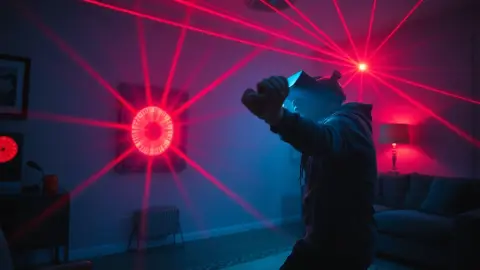
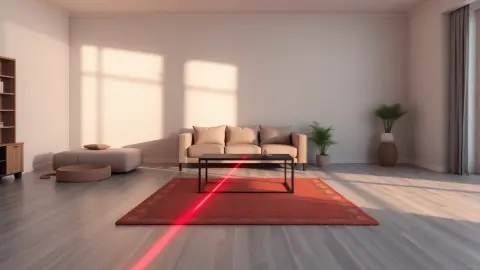
Laser Thief is a good way to understand MR because it could not work as a normal VR game. It uses the passthrough cameras to draw laser grids between your real walls and furniture. The game maps beams and loot to the room layout you captured in Space Setup, so the vault in the game is literally your living room.
That means:
- You see your own sofa, with a virtual safe or loot on top.
- You step over a beam at knee height in your real space.
- When the grid drops to the floor, you really crawl.
Why designers like MR
It feels safer. Because you can see the room, many people feel less disoriented than in fully virtual worlds. You still need clear floor space, though, and virtual lasers do not protect you from real furniture.
It makes small ideas big. A simple concept (a laser beam) becomes powerful when it appears next to your own bookshelf.
It is sociable. Others in the room can see what you are doing and may enjoy watching you duck and crawl.
What MR is not
It is not magic and it is not perfectly precise. Tracking depends on lighting and on your headset's understanding of the room. Games therefore ask for a reasonably lit, tidy space. In Laser Thief's own support notes, if lasers do not line up, the fix is usually to re-run room setup and restart the game.
It is also not only for games. People use MR for productivity, design and creative tools. But games are an easy way to see what it does.
Getting started
- Clear a patch of floor (about 3 × 3 metres works well for active games).
- Run Space Setup on your Quest 3 or 3S.
- Pick a game that clearly says it supports mixed reality.
- Start with short sessions and take breaks.
If you want a game that makes the "room becomes the game" idea obvious, see the Laser Thief page.
FAQ
What is the difference between mixed reality and augmented reality?
AR typically overlays graphics on a camera view, often on a phone. MR blends virtual objects into the real environment and lets them react to it, usually through a headset with passthrough.
Do I need a special headset for mixed reality?
You need a headset with passthrough cameras and room understanding. Meta Quest 3 and 3S are built for it, and Laser Thief requires one of them.
Is mixed reality safer than VR?
Seeing your room can help, but no headset makes a cluttered room safe. Clear the floor, keep the room lit and stop if you feel uncomfortable.
Do mixed reality games record my room?
Laser Thief states that passthrough images and room layout are processed on the headset and never sent to the developer. Check each game's privacy policy for its own approach.