Sore Muscles After Laser Thief: What Is Normal and What Helps
Aching thighs or shoulders after Laser Thief? What next-day soreness usually means, easy recovery habits and when to stop playing and get advice.

You played one enthusiastic evening of Laser Thief and now the stairs feel like a negotiation. Sore muscles after a VR workout are common, especially in the first couple of weeks, and the pattern is usually easy to explain. This is general advice, not medical guidance, and the game's own message is clear: stop if anything hurts.
Why Laser Thief makes you sore
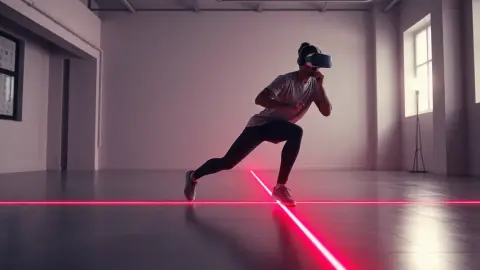
The game asks for ducking, dodging, crawling and reaching. Ducking under a chest-high beam loads your thighs and glutes like a squat. Crawling brings in shoulders, wrists and core. Reaching slowly for loot uses small stabilising muscles you rarely notice in everyday life. Because every level mixes these movements unpredictably, you tend to work muscles in ways a regular walk or a seated game does not.
Add the fact that the game is fun enough to lose track of time, and it is easy to do more than you planned. The support page itself says the game is more physically demanding than most.
Normal soreness versus a warning sign
Normal next-day soreness feels like a dull, widespread ache in the muscles you used. It tends to peak a day or two after and then fade. It should ease as you move around.
A warning sign feels different: sharp pain, pain in a joint rather than a muscle, swelling, numbness or tingling, or an ache that gets worse instead of better. Those are reasons to stop playing and get advice. Our article on knee comfort in crawling games goes into joint care.
What usually helps
- Gentle movement. A walk or easy stretching tends to feel better than lying still.
- Water and normal meals. Nothing special is needed beyond looking after yourself.
- Sleep. Recovery happens mostly while you rest.
- A lighter next session. Switch to relaxed play in Free Play rather than a high-pressure Bomb Mode round while you are stiff.
For the minutes right after you play, our cool-down routine covers what to do before the stiffness sets in.
Preventing the worst of it
Most heavy soreness comes from doing too much too soon. Three habits keep it manageable:
- Warm up. Five minutes of leg, hip and shoulder movement makes a difference. Try the stretching routine.
- Keep early sessions short. Fifteen to twenty minutes is plenty when you start. See the advice on session length and breaks.
- Build gradually. Add a few minutes per week rather than doubling your time on a good day.
A structured approach can help too: our seven-day training plan spaces effort out so no single day does the damage.
Which muscles to expect
Players commonly notice their thighs and glutes first from the ducking, then shoulders and upper back from reaching and crawling, and sometimes the calves from stepping over low beams. If one area is far more sore than the others, check your technique. Dropping with a rounded back instead of bending the knees, for example, shifts load where you do not want it. Our guide to body positioning and stance helps with that.
When to take a rest day
If you still feel stiff the next morning, take a rest day or play only gently. Soreness is information: your body has not finished adapting. Coming back too early tends to make movement sloppier, which can mean more shield loss and more risk of bumping into furniture.
Know your limits
If you have a condition that affects movement, balance or your heart, the game's terms say to see a doctor before playing at all. Even without one, soreness that is severe, unusual for you or accompanied by worrying symptoms deserves a professional opinion.
When you are feeling loose again, the vault is waiting on the Laser Thief page.
FAQ
Is it normal to be sore after playing Laser Thief?
Yes, mild next-day soreness in the legs, shoulders and core is common when you start an active game. It should fade within a few days.
Should I play through soreness?
Light, relaxed play is usually fine if the ache is mild, but rest if you feel pain in a joint or your movement gets sloppy.
How can I avoid sore muscles in VR?
Warm up, keep early sessions short and build gradually.
When should I see a doctor?
If you feel sharp or joint pain, swelling, numbness, or soreness that gets worse, stop playing and seek professional advice.