Why Themed Worlds Work: Level Design From Kitchen to Vault
Why themed worlds work in game design: how seven settings from food to warzone keep a simple set of moves fresh across 150+ levels in Laser Thief.
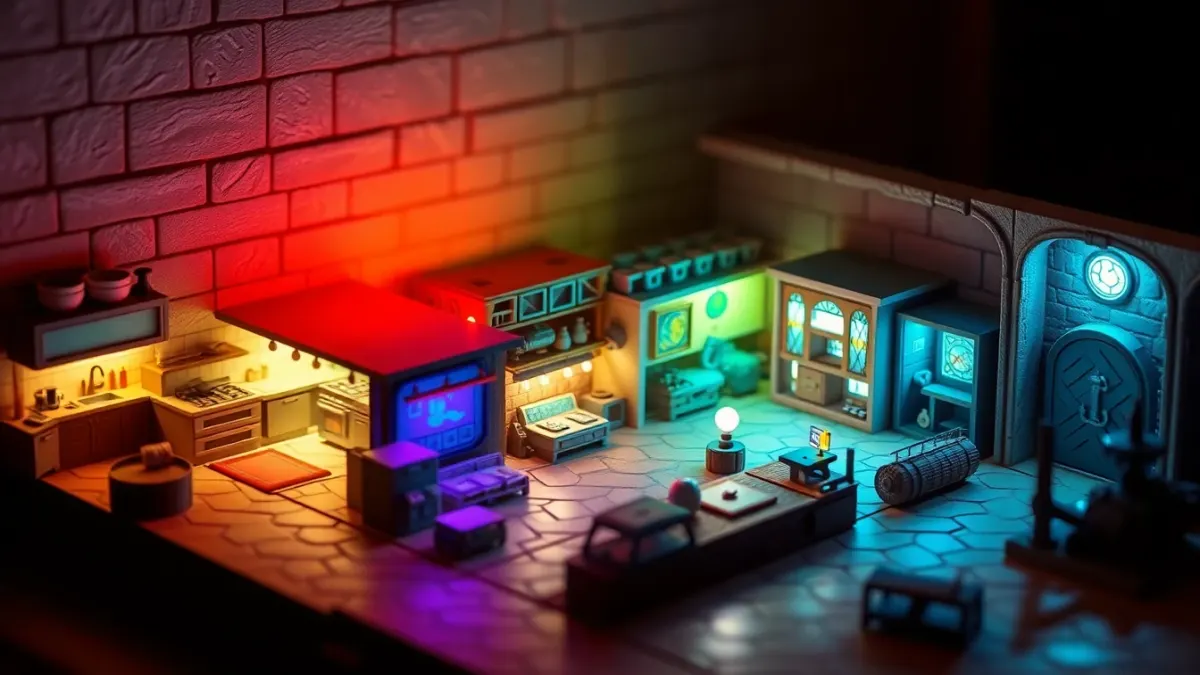
Take any game with a small set of verbs and ask: what keeps it from feeling repetitive across hours? Very often the answer is themed worlds in game design. A change of setting resets your attention, adds personality and lets the designer reshuffle the same ideas. Laser Thief is an excellent case: four simple moves, seven distinctive worlds.
The challenge: lots of content from few verbs
Laser Thief has a deliberately small toolbox: duck, dodge, crawl and reach. Over 150 levels, those could easily blur together. Themes counter that.
Seven worlds, seven moods
The game's worlds, as listed on its page, are:
- Food turns a snack-obsessed kitchen into the first obstacle course.
- Viking sends you into a longhouse after relics, horns and a very heavy helmet.
- Transport parks luxury cars, bikes and a plane on your sofa for you to steal.
- Garbage is a junk heap where one thief's trash is treasure, guarded by poison bubbles.
- Furniture is a showroom to be emptied one designer chair at a time.
- Money is the vault, full of gold bars and cash bundles behind the tightest laser grid so far.
- Warzone closes the route with explosives everywhere and no margin for error.
Notice how each has an emotional flavour: comic, rugged, glamorous, gross, stylish, tense, dangerous.
What themes do for players
Orientation. A new theme tells you "something changed", which refreshes interest.
Memory. "The Viking one with the heavy helmet" is easier to recall than "level 47".
Anticipation. Knowing the next world is Money or Warzone gives you something to look forward to.
Humour. Silly settings lower the stakes and make failure funnier.
What themes do for designers
A theme provides constraints, and constraints spark creativity. A kitchen suggests certain loot and layouts. A vault suggests precision and glamour. Themes also provide a natural place to add a new rule: in Garbage, poison bubbles punish anyone who stands still for too long. A rule tied to a setting feels organic rather than arbitrary.
Themes also help with pacing. Moving to a new world marks a milestone, and the difficulty can step up with a story reason.
Themes in mixed reality
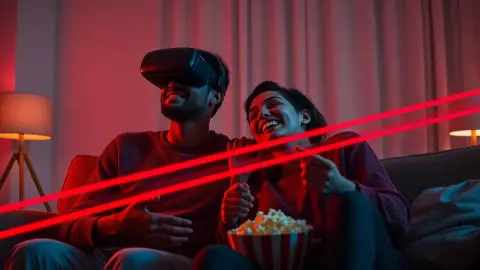
In mixed reality there's an extra layer. The theme sits in your real room. A supercar parked on your couch in the Transport world is funny precisely because it's your couch. The real furniture gives each theme a surprising stage, and the game's beams and loot adapt to your walls and furniture via room setup.
Do themes have to be elaborate?
No. Often a few cues are enough: colour palette, loot type, a line from the narrator. Laser Thief's narrator adds humour across worlds. The goal is a distinct identity, not a huge production.
How to enjoy the variety
- Play Story Mode in order to feel the progression.
- Use Free Play for random levels when you want a mix.
- Notice patterns by world. Some themes reward quick movements, others slow ones.
- Take screenshots or clips of funny moments if your platform allows.
A design takeaway for your own projects
If you are designing a game, start with the verbs, then ask what moods could reframe them. Seven moods are plenty. For a taste of how it looks, visit the Laser Thief page.
How to read a world like a designer
When you enter a new world, take ten seconds before moving. What colours dominate? What kind of loot is on offer? Where are the beams relative to your real furniture? The answers usually tell you what the designer wants you to feel and which moves the level will ask for. A cramped, dense grid suggests crawling; a sparse, wide grid suggests dodging at speed. Learning to read this language makes you faster at adapting and also makes the game more fun to think about.
Variety without confusion
A common mistake is to make themes so different that the rules feel inconsistent. Laser Thief avoids this by keeping the core promise constant: lasers are always dangerous, loot is always the goal, the shield always shrinks when you touch light. The theme changes the costume, not the contract, and that consistency is what lets players relax into each new setting.
FAQ
What worlds does Laser Thief have?
Food, Viking, Transport, Garbage, Furniture, Money and Warzone.
Do the worlds change gameplay or only visuals?
Each has its own loot, laser patterns and difficulty curve, and some bring special elements such as poison bubbles in Garbage.
Which world is the hardest?
Warzone is described as the final test, with explosives everywhere and no room for error.
Can I play worlds out of order?
Free Play offers random levels. For the structured path, use Story Mode.