Arcade Score Chasing: Why We Replay Games for Better Runs
Why arcade score chasing is so addictive, how short runs and best scores drive replay, and how it shows up in a modern mixed reality laser game.
Before sprawling open worlds and endless progression bars, there was the arcade: a short run, a number on a screen and the burning urge to beat it. Arcade score chasing games run on a simple engine: you try again because you can see exactly how you could do better. That engine still works today, even inside a headset in your living room.
The anatomy of a score chase
Every score-chasing loop has four parts:
- A short run. Minutes, not hours.
- A clear metric. A number you can compare.
- Skill expression. Better play produces a higher number.
- Instant retry. Almost no friction to go again.
When those four are present, "one more go" is nearly automatic.
Why short runs are powerful
A short run means each attempt is cheap, so you take risks. It also gives frequent feedback. In an hour you might play a dozen runs, each teaching you something. Compare that to a long campaign where a single mistake might cost half an hour.
Skill, not just luck
Score chasing is satisfying when you can see your own improvement. You fail, notice why and fix it. The next run is a little cleaner. Good arcade design makes this learning loop visible.
How Laser Thief borrows the idea
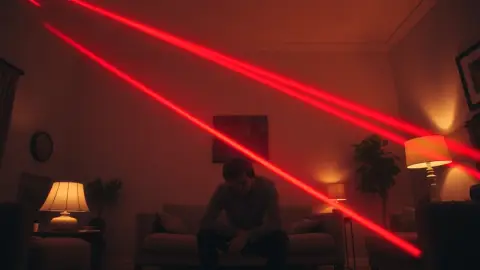
Laser Thief offers three modes, and Bomb Mode is the closest to the arcade tradition. You have 120 seconds to grab as much loot as you can before the whole place goes up. Greed is rewarded, hesitation is not. The game also stores your best scores locally on your headset, so there is something to beat.
Story Mode adds progression across seven worlds, and Free Play offers random levels without a clock for practising. Together they combine arcade tension with room to learn.
What changes in a body-driven version
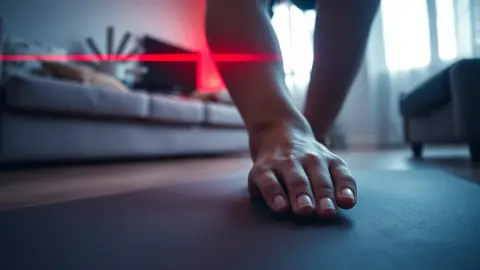
Classic arcade games reward quick fingers. A body-driven version rewards movement quality: smooth steps, controlled crouches, patient reaches. The metric still looks like a number, but the skill is physical. That adds a new dimension to practising: you can feel yourself getting better, in your legs and balance.
Mixed reality adds one more twist. The playfield is your living room, so the "cabinet" is the space you live in.
Tips for chasing a better run
- Learn the pattern before racing it. Use Free Play to rehearse.
- Prioritise safe loot first, then gamble.
- Don't rush the final seconds. Panic breaks beams.
- Keep a rhythm. Breathing helps you stay smooth.
- Rest between runs. Tired muscles produce messy scores.
- Stop while it's fun. Fatigue is when injuries happen.
Healthy score chasing
Chasing numbers is fun, but it shouldn't override your body's signals. Set a cap on runs per session, warm up and drink water. Remember that virtual lasers don't protect you from real furniture, and a heated "one more try" is when elbows meet bookshelves.
Sharing the chase
Part of the arcade tradition was the crowd behind you. At home you can recreate it: friends watch, call out advice and take their turn. Even if the headset has one wearer at a time, the audience adds energy. Find out more on the Laser Thief page.
Why numbers motivate us
A score is a mirror. It tells you, without judgement, how your last attempt compared with the one before. That makes it a motivating tool: it turns vague feelings of "I'm getting better" into evidence. It also gives you a private goal that does not depend on anyone else. You can chase your own best on a quiet Tuesday without anyone watching, and the satisfaction is just as real.
Balancing chase and comfort
One caution for body-driven scoring: the best runs usually come when you are relaxed, not tense. If you notice your shoulders creeping up or your breath getting short, pause for a moment. A calm body moves more precisely, and precision is what keeps beams unbroken. Treat breathing as part of your technique.
FAQ
What is score chasing?
Replaying a short game to beat your best or someone else's score.
Does Laser Thief track high scores?
It stores your unlocked worlds, levels and best scores locally on your headset.
Which mode is best for score chasing?
Bomb Mode, with its 120-second loot rush, is the most arcade-like.
Is there a mode without time pressure?
Yes. Free Play has random levels and no clock.