Best Floor Surface for Crawling in VR and Laser Thief
Carpet, hardwood, tile or a mat? Find the best floor surface for crawling in VR games like Laser Thief, plus cheap fixes for sore hands and knees.
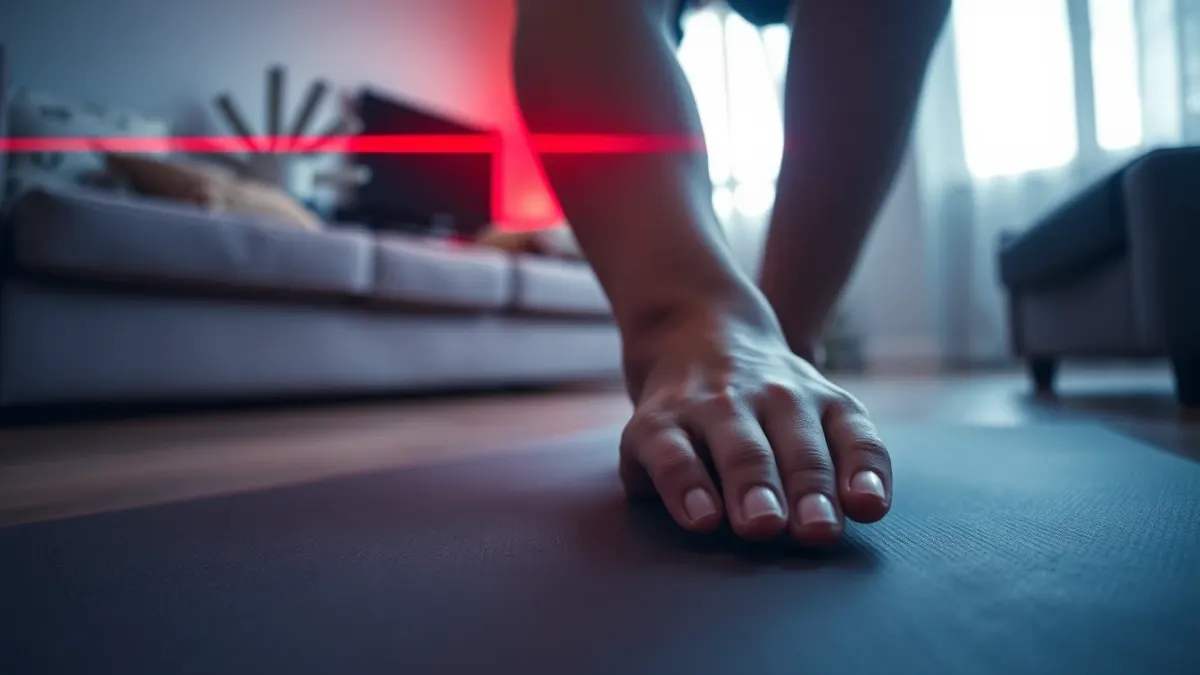
Nobody tells you before you buy a laser-dodging game that you will spend a chunk of the evening on all fours. When the grid in Laser Thief drops to the floor, crawling is the move, and your floor suddenly matters. Here is how to pick the best floor for crawling in VR and how to fix the one you have.
What you want from a crawl surface
Three things: grip, cushion and cleanliness. Grip stops hands and feet sliding. Cushion protects knees, palms and wrists. Cleanliness matters because your face is closer to the floor than usual and you are wearing a headset that blocks your view of what is under your hands.
Floor types compared
Carpet
Usually the most comfortable. It cushions knees and grips well. The trade-offs: a thick, loose-pile rug can bunch under your hands, and carpet can hide small objects like Lego or pins. Vacuum before you play.
Hardwood or laminate
Fine for grip with bare hands, but hard on knees and slippery in socks. Wearing shoes with grip, or playing barefoot and using a mat, is better. Be careful with polished floors if you are in socks.
Tile or stone
Cold and unforgiving on knees. Add a mat or skip long crawl sessions here.
Rugs on top of hard floors
Convenient but dangerous if they slide. Anchor with a non-slip underlay, or take the rug up entirely if it moves when you shift weight. Loose rugs are a classic trip hazard in our safe clearing guide.
The cheap upgrade: a mat
A foam exercise mat or interlocking play tiles transform any floor. Choose one that is:
- Thick enough to cushion knees without being squishy and unstable.
- Non-slip on the bottom so it stays put.
- Large enough to cover the area where you will crawl, with no curled edges.
Remember a mat is another thing the headset may not know about and one more edge to catch a toe. Keep edges flat and avoid stacking.
Footwear
The game's terms recommend suitable footwear. For crawling, that means shoes with a flat sole you can move in, or grippy socks if your floor allows. Avoid loose slippers, heavy boots that can catch on a mat, or bare feet on a cold slippery floor.
Protect your wrists and knees
- Crawl with your weight spread, not slammed down.
- If your knees complain, take a break. Our piece on knee comfort in VR crawling games has more.
- Keep sessions short, especially when you are new. See how long to play Laser Thief per session.
Hygiene
Wipe or vacuum the crawl zone first. Hands go down, then often up to your headset or face. A quick hand wipe between rounds is a sensible habit.
Check the practical stuff
Make sure the floor in your room setup is captured accurately. The game maps beams to your floor level, so a good Space Setup matters as much as the mat itself.
Then, when you are ready, get low in Laser Thief.
Matching the surface to how you play
Think about how much crawling your sessions really contain. If you are mostly ducking and dodging and only drop to the floor now and then, a bare carpet or a single thin mat is plenty. If you are working through the later worlds, where grids sit low more often, treat the floor like a gym floor: a proper mat, a clean surface and a short break whenever your palms or knees start to complain.
It also helps to test the surface before the headset goes on. Get on all fours in your socks, shift your weight forward and back, and see whether anything slides or digs in. Thirty seconds of that tells you more than a product description will, and it costs you nothing.
FAQ
Can I play Laser Thief on carpet?
Yes. Carpet is typically comfortable for crawling. Just make sure it is flat, clean and free of small objects.
Do I need an exercise mat for Laser Thief?
Not required, but it helps if your floor is hard. A non-slip foam mat protects knees and palms.
Is hardwood too slippery for VR?
It can be, especially in socks. Wear shoes with grip or use a non-slip mat.
Is it okay to crawl on a rug?
Only if it is fixed in place. A sliding rug is a trip and slip hazard, so remove it or use non-slip underlay.