Playing Laser Thief in a Small Room: Tips That Actually Help
Short on floor space? Tips for playing Laser Thief in a small room or apartment on Quest 3, from moving furniture to slowing down your dodges.
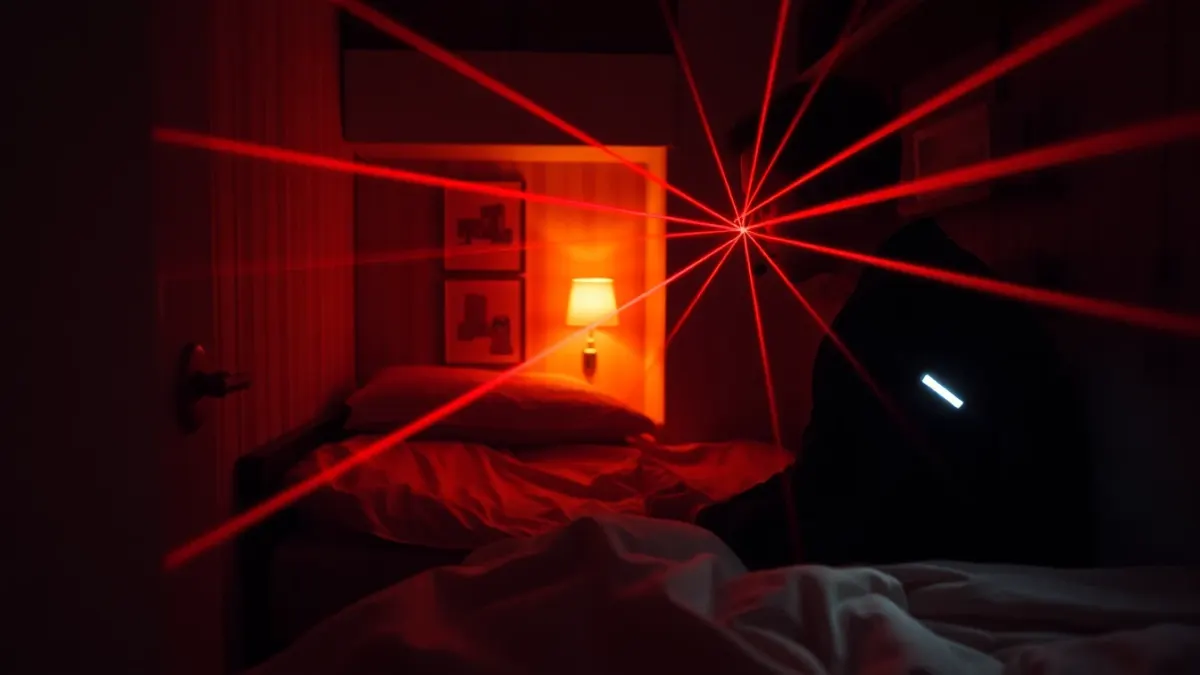
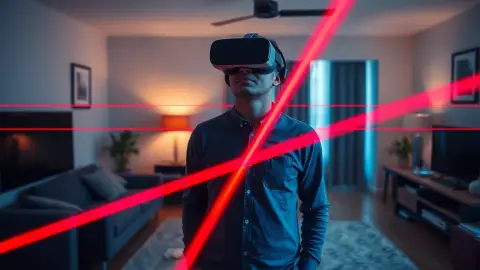
You live in an apartment, the clear floor is more like 2 × 2 metres than 3 × 3, and you still want to try a mixed reality laser heist. Good news: the game's support page says Laser Thief will work in smaller rooms. The honest caveat is in the very next sentence: the laser grids are designed around a space you can really move in. So here is how to make a small room work for you.
Be realistic about what changes
The recommended area is about 3 × 3 metres (10 × 10 feet), covered in our guide on how much space Laser Thief needs. In a smaller space you will have:
- Less room for big sideways steps, so you will lean and duck more.
- Less runway to crawl.
- A boundary that is closer, so every move needs more care.
None of that makes the game unplayable. It means you play deliberately, which is actually a decent way to learn the early levels.
Free up more space than you think
- Move the big stuff for the session. A coffee table, an armchair or a clothes rack can usually go into another room for an hour.
- Use the diagonal. The longest clear line in a room is across a corner. If your space is rectangular, stand slightly off-centre so you have most room along the long axis.
- Open a door into a hallway and use that as extra runway, as long as the headset's room setup and boundary include it and nobody will walk through.
- Fold or stack small furniture against walls, not in the middle.
Re-run room setup
After you rearrange, run Space Setup again so the headset has your actual, reduced layout. The game places beams and loot against it. Our setup guide covers the process. Keep boundary features on in a tight room so you get a warning before you reach a wall.
Play smart in tight quarters
- Slow is safe. Support advice for stray shield loss is the same: slow, deliberate movements near beams are safer than fast ones.
- Shuffle rather than stride. Small steps keep you inside the safe area.
- Plan the reach. Loot sits where you can grab it without breaking a beam, so lean your torso instead of stepping.
- Know where the wall is behind you before you duck. Tap a controller lightly against it in passthrough if needed to know its distance.
Which modes suit small rooms?
Free Play has no timer and uses random levels, so it is the most forgiving way to learn what your room can handle. Bomb Mode adds a 120-second clock that pushes you to move quickly, and that is when small rooms bite. Try it once you are used to your boundary. Our article on Free Play for beginners has a plan.
Noise and neighbours
Small apartments often mean shared walls and floors. Soft steps, a rug underlay and lowering volume help. We have a dedicated piece on playing Laser Thief without annoying the neighbours.
When a small room is just too small
If you keep touching walls, losing balance or feeling cramped, take the session somewhere bigger, like a living room at a friend's or a cleared hall. Safety beats completing levels. Then come back to the Laser Thief page when you have room.
Adjusting your technique when space is tight
In a compact room, small habits make a large difference. Keep your feet closer together so a dodge starts as a lean from the hips instead of a full step. Use your knees more than your stride when ducking, and turn your shoulders rather than your whole body when slipping through a gap. These smaller movements keep you inside the square and make it easier to recover if a grid asks for something unexpected.
It also helps to decide your "home" spot before each level starts: a centred stance where you can reach every side without leaving the clear floor. Returning to that spot between moves is a simple way to avoid drifting toward the walls without noticing.
FAQ
Does Laser Thief work in a small apartment?
Yes, a compact room is workable. Just remember the grids assume room to move, so you will lean more and step less.
What is the minimum room size for Laser Thief?
The game page gives a recommended size of about 3 × 3 metres rather than a hard minimum. If your area is smaller, keep boundary features on and move carefully.
Can I use a hallway as extra space?
Possibly, if the area is clear, included in your room setup and free of foot traffic. Check carefully for doors and corners.
Is Free Play better in small rooms?
It has no timer, so you can take your time with each beam, which suits tighter spaces.